Sodium Ion Battery for Off-Grid Hunting Cabins: Power That Survives a Two-Metre Winter
Sodium Ion Battery for Off-Grid Hunting Cabins: Power That Survives a Two-Metre Winter
A hunting cabin is the least glamorous and most demanding battery duty in the off-grid world. The building stands in a treeline two hours from the nearest road, it is shut down for most of the year, and then in the first week of November four people arrive, run a diesel stove, a water pump, a pair of heater fans, a spotlight and a phone-charging station, and want everything to keep working at minus 18. Whatever is installed has to survive nine months of near-total discharge followed by nine months of nothing at all. That pattern punishes lead-acid and treats lithium iron phosphate reasonably but not ideally. It is close to the ideal duty for a sodium ion battery, because the chemistry charges at low temperature, sits at a low self-discharge for a year without sulfation, and costs less per kilowatt-hour than the lithium equivalent. What follows is a real sizing exercise for a cabin like that, the inverter and charge-source logic that goes with it, and the two or three decisions that decide whether the place actually works.

The Load Profile Nobody Writes Down
A typical two-room hunting cabin runs four circuit groups. Lighting is small: four LED fixtures at 9 watts each, on a switch, about 150 watt-hours a day when the hunters are in. Water is the unpredictability: a 12 volt pump that draws 8 amps when it runs, but runs two minutes per hour in summer and fifteen minutes per hour when the system is frozen, so 1.5 to 8 amp-hours a day. Heating is the big one and it is the one people get wrong: a 1,500 watt oil-filled radiator on a thermostat is a resistive load that will flatten a 10 kilowatt-hour bank in seven hours, and a diesel stove plus a 900 watt electric backup is the only survivable combination. Electronics add a standing 40 to 70 watts across a router, a freezer thermostat, a satellite messenger and a wired trail camera. Realistic winter average is 700 to 1,100 watts with the electric heater engaged and 150 to 250 watts with just lights, pump and electronics, which is a 4 to 8 kilowatt-hour daily swing that has to be handled by behaviour, not by the pack alone.
Why Lead-Acid Fails This Specific Duty
Flooded and AGM batteries do not fail on a hunting cabin because of cycling; they fail because of standing. A lead-acid bank at 0 percent state of charge, which is what a cabin reaches after a long absence followed by an unnoticed parasitic load, enters a hard sulfation process within days and can never give full capacity again. Equalisation charges help but never fully recover a bank that has sat flat through a winter. A second failure is self-discharge: 4 to 6 percent a month at 20 degrees and considerably worse below zero means an idle cabin loses a meaningful share of its bank every season. Third is the deep-cycle expectation: hunters size a 200 amp-hour lead-acid bank believing they can use 100 amp-hours every night, which shortens the bank to roughly three seasons. The result is a cabin that works perfectly for a year and then spends every visit half-dark, which is a terrible user experience for a place people drive two hours to reach.
How Sodium-Ion Changes the Standing Problem
Sodium-ion addresses exactly those three failure modes. The cell operates over a 2.0 to 3.8 volt window with a nominal near 3.0 volts, it uses an aluminium current collector at the negative electrode rather than copper, and it tolerates partial-state and empty standing far better than lead-acid because there is no lead sulfate crystal that hardens with time. Commercial sodium-ion pouch cells are commonly specified for charge down to minus 20 degrees Celsius, which lithium iron phosphate is not: LFP must not be charged below roughly 0 degrees or lithium plates on the anode, so an unheated cabin battery needs either a thermostat heater or a derated winter. And the pack can be left near empty for months without the capacity loss that ends a lead-acid bank. For a cabin that is empty nine months a year, that single property is worth more than the energy density, which matters little when the pack lives in a floor cupboard under a bunk.
Sizing the Cabin Pack
Work from the worst night, not the average one, then add the standing margin. Suppose the cabin runs 900 watts average with electric heat for eight hours of a cold day, which is 7.2 kilowatt-hours, plus 0.4 kilowatt-hours of lighting and pump, so 7.6 kilowatt-hours on the peak day. A sodium-ion pack charged only by a 600 watt panel and a 1.2 kilowatt wind or a small generator has to recover most of that. Provide 10 kilowatt-hours of nameplate with a usable band of 85 percent, so 8.5 kilowatt-hours available, then add one full day of margin for the greyest week, giving an order quantity of 12 to 14 kilowatt-hours. That is roughly 40 to 48 pouch cells in a 2.5 kilowatt-hour cluster configuration, which fits in a single vented cabinet 600 by 500 by 900 millimetres. Compare with LFP: the same job needs 12 to 14 kilowatt-hours too, but costs 15 to 30 percent more per kilowatt-hour and either needs a heater or loses a third of its winter charge capability in an unheated cabin.
Charge Sources, Inverter and the Winter Mix
Three sources feed the cabin and the control order matters more than the hardware. A roof panel of 400 to 600 watts handles 70 percent of the year. A small wind turbine or a 2 kilowatt generator covers the grey weeks. The inverter should be a 2.5 to 3 kilowatt pure sine unit with a low idle draw, because a hunting cabin’s inverter sits awake for months and a 15 watt idle is 110 kilowatt-hours of wasted standing loss over a season, which is more than most packs hold. Set the generator to start at 25 percent state of charge rather than letting the pack reach its floor, and set the low-voltage cut-off at 10 percent so the cells never see a true zero. Sodium-ion tolerates the deep end better than lithium but not infinitely, and a pack that is cycled to 5 percent every visit will lose the cycle-life advantage that justified buying it in the first place.
Cold Weather Detail: Charge Limits and Cabinet Design
Design the cabinet as a cold-weather enclosure, not a heater. Set it into the floor over a insulated base, keep it off the concrete, and let it see interior cabin temperature rather than outside air. If the pack must live in an unheated tool shed, specify sodium-ion precisely because it can charge at minus 20, and confirm that from the cell datasheet rather than a marketing page: some compositions lose rise capacity sharply below minus 10 on charge even though discharge is fine. Add a 25 watt self-limiting heater on the BMS board only, not on the cells, to keep the electronics above 0 degrees, because the BMS is what stops the pack working and a frozen BMS is a cabin with no power at all even when the cells are healthy. Ventilation should be passive and vermin-proof: a pack in a cabin has days where it is warm and damp, and condensation on a busbar is the second most common fault after a flat bank.
Cost, Life and Total Ownership
Sodium-ion packs in this size class typically land 15 to 30 percent below an equivalent LFP pack per kilowatt-hour, driven by the removed nickel, cobalt and copper content, and the installation detail that dwarfs both is the low-temperature charge capability that deletes the heater and its parasitic load. Cycle life quoted for stationary sodium-ion is 6,000 to 10,000 at partial rate, which on three deep cycles a season is over a decade of cabin service; the pack will almost certainly be replaced by a cheaper inverter before the cells wear out. Maintenance is a twice-yearly visual: check terminal torque, check for rodent damage on the cables, confirm the state of charge readout after a two-week absence. For the cost curves and the performance data that most off-grid business cases cite, the national laboratory reference is NREL, and the annual price survey that anchors the capital cost assumption in your own model is published by BloombergNEF.
| Option | Usable energy | Winter charge floor | Idle loss | Standing after 9 months |
|---|---|---|---|---|
| Sodium-ion 14 kWh | 12 kWh | Minus 20 °C | Low | Tolerated |
| LFP 14 kWh, unheated | 11 kWh winter | Minus 5 °C derated | Low | Tolerated |
| LFP 14 kWh, heated | 13 kWh | Minus 20 °C | Plus 40 W heater | Tolerated |
| Flooded 200 Ah bank | 2.4 kWh usable | Minus 20 °C | Medium gassing | Sulfation risk |
| AGM 200 Ah bank | 2.4 kWh usable | Minus 20 °C | Low | Sulfation after flat winter |
| Generator only | Unlimited | Unlimited | Fuel and oil | Nothing to degrade |
People Also Ask
Can I leave the sodium-ion pack at zero for the whole closed season? Yes, and that is the point of the chemistry. A pack stored near empty will not suffer the irreversible hardening that a flat lead-acid bank does. It is still better practice to trickle a small maintenance charge every six weeks or to leave the BMS’s low-current standby active, because the BMS board itself has a small parasitic draw and you want the pack above roughly 30 percent when the first hunters arrive.
How big does the inverter need to be for a cabin with an electric heater? Size it for the heater, not the lights. A 1,500 watt radiator plus 300 watts of continuous load needs a 2.5 kilowatt inverter with a 5 kilowatt surge rating, because the radiator’s thermostat draws inrush and a modest unit will trip. If the heaters are diesel and the electric load stays under 800 watts, a 1.2 kilowatt unit is comfortable and the whole system costs half as much.
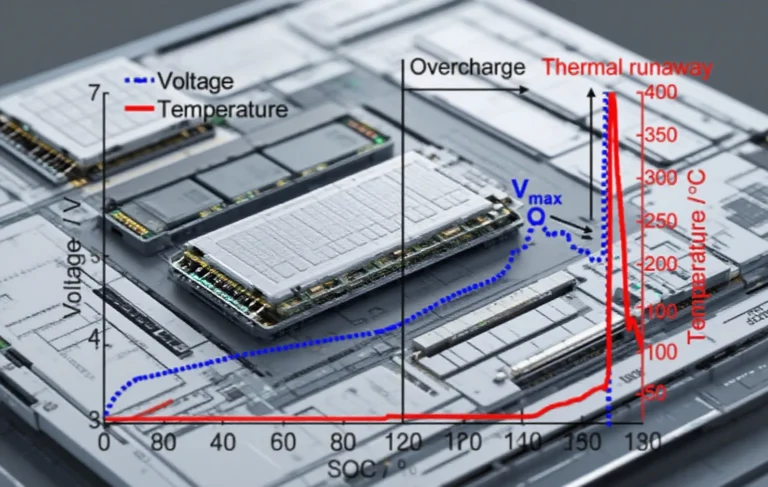
Is sodium-ion safe enough to sit inside a wooden cabin? Sodium-ion has no cobalt or nickel content and releases less energy in a runaway event than a high-nickel lithium pack, and mainstream stationary cells are tested to IEC 62619 with the installations following the local fire code for energy storage. Keep the cabinet on a non-combustible base with a clear floor gap, bolt the pack down so it cannot be moved by a horse or agraze, and you are in a better position than with a lead-acid bank sitting in the same cupboard.
Written by Karl at China Battery Technology. Request a quote.