Sodium Ion Battery Hard Carbon Anode Explained
Sodium Ion Battery Hard Carbon Anode Explained
Unlike lithium cells, sodium ions are too large to fit neatly into graphite, so the sodium ion battery hard carbon anode is the material that makes the chemistry work. A sodium ion battery lives or dies on this disordered-carbon host, and understanding it helps a lithium battery manufacturer tune cell performance.
Why Not Graphite?
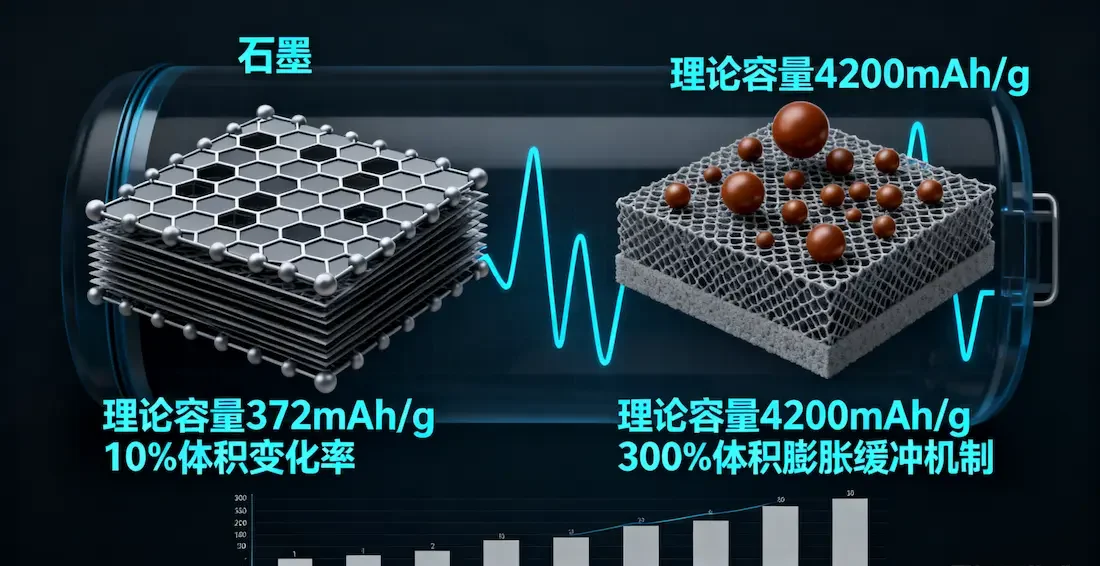
Lithium intercalates cleanly into graphite layers; sodium’s larger ionic radius does not form a stable stage compound, so graphite holds almost no sodium. Hard carbon — a disordered, porous carbon with many defect sites — instead stores sodium in pores and on surfaces, giving usable capacity.
What “Hard Carbon” Means
Hard carbon is produced by pyrolysing biomass, resins, or polymers at high temperature without graphitising. Its random structure creates nanoscale voids that accommodate sodium, plus a sloping and a plateau capacity region during charge.
Performance Levers
Capacity, rate capability, and first-cycle efficiency depend on precursor, calcination temperature, and pore structure. Higher temperatures reduce defects (raising efficiency) but can shrink pores (lowering capacity) — a classic optimisation balance.
| Anode | Na storage | 1st-cycle efficiency | Use in Na-ion |
|---|---|---|---|
| Graphite | Very low | n/a | No |
| Hard carbon | Good | ~80-90% | Yes |
| Soft carbon | Moderate | Medium | Limited |
Why It Matters for Buyers
Hard carbon is abundant and cheap versus graphite-plus-cobalt systems, reinforcing sodium’s cost story. When evaluating sodium cells, ask about anode capacity and first-cycle efficiency — they directly set the pack’s usable energy and the formation loss you pay for.
Frequently Asked Questions
Can sodium use graphite? Effectively no; hard carbon is the practical anode.
Is hard carbon expensive? It is low-cost and widely sourced, supporting sodium’s affordability.
What limits energy density? Hard carbon’s capacity and the sodium cathode together set the ceiling, below lithium’s.
Written by Karl at China Battery Technology. Request a quote.