Sodium-Ion Battery for Distributed Solar: Cheaper Storage at Scale
Sodium-Ion Battery for Distributed Solar: Cheaper Storage at Scale
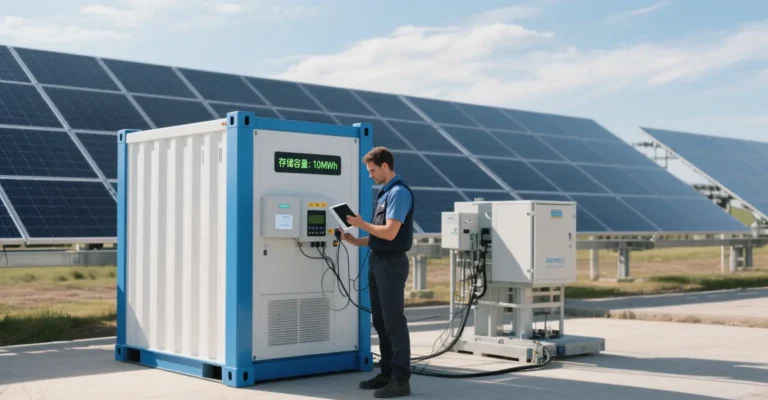
Rooftop and community solar, microgrids, and behind-the-meter arrays all face the same constraint: storage cost sets the payback. Sodium ion battery technology is reaching commercial maturity at exactly the right moment, offering an abundant, non-critical chemistry whose material bill undercuts lithium as project size grows — a strong fit for distributed solar where weight and volume matter less than price and durability.
Why Sodium Fits Distributed Solar
Sodium-ion cells use aluminum current collectors and iron- or manganese-based cathodes with hard-carbon anodes — none of the lithium, nickel, or cobalt whose prices swing with supply shocks. For a 100 kWh school array or a 2 MWh community microgrid, that material stability translates into predictable capital cost and a smaller exposure to commodity markets, which finance teams notice when they model a 15-year project.
Cold-Climate Advantage
Distributed solar often sits where winters are real. Sodium-ion retains >90% capacity at −20 °C without heaters, so a rural cooperative or a northern warehouse keeps storing the morning surplus instead of waiting for the pack to warm up. That resilience simplifies enclosure design and avoids the energy overhead of battery heating, recovering several percent of round-trip efficiency in cold months.
Storage Chemistry Comparison
| Attribute | Sodium-Ion | LFP (LiFePO4) |
|---|---|---|
| Material cost | Lower | Medium |
| Cold performance | Excellent | Good (needs heat) |
| Energy density | Low–Medium | Medium |
| Cycle life | 3000–6000 | 4000–7000 |
| Supply risk | Low | Medium |
Sizing a Distributed Array
Match the battery to the duty: self-consumption wants 1–2 hours of evening shift, while a school or clinic may prefer backup resilience over arbitrage. Because sodium is lower density, site the container or cabinet where footprint is cheap, and pair it with an inverter that supports self-consumption logic and remote state-of-health reporting so the asset earns its keep without a site visit.
Project Economics
The sodium case strengthens with scale and with longer duration. Where a lithium pack’s energy-density edge would save land you do not have, sodium’s cheaper materials dominate the levelized storage cost. Add time-of-use arbitrage and demand-charge savings where tariffs allow, and a community array can turn a pure self-consumption project into a revenue-generating node on the local feeder.
Deployment Tips
Start with a single-string pilot on one array to validate round-trip efficiency and the monitoring feed, then replicate across sites with identical configuration to simplify spares. Favor systems with open communication protocols so the battery integrates with existing solar SCADA rather than becoming a silo that nobody can see during a fault.
Choosing the Right Supplier
Pick a supplier that publishes independent cycle-life data at your target depth of discharge and offers a clear degradation warranty rather than a flat calendar date. Confirm the system carries the certifications your authority requires, and insist on open monitoring so the pack is not locked to one vendor’s software. Reference sites of similar size are the fastest way to de-risk a first sodium project and to learn the real round-trip numbers.
People Also Ask
Is sodium-ion ready for commercial solar? Yes — multi-megawatt and community-scale installations were operating across Europe and Asia through 2025–2026, with costs falling as lines scale and yields improve.
When is lithium still the better choice? When space is tight or you need maximum energy per cubic meter; LFP remains the practical pick for compact, high-density sites such as urban carports.
Written by Karl at China Battery Technology. Request a quote.
Related reading: Sodium-Ion Battery for Offshore Platforms: Safer Remote Power