Sodium-Ion Battery for Desert Solar Farm: Heat-Tolerant Storage
Sodium-Ion Battery for Desert Solar Farm: Heat-Tolerant Storage
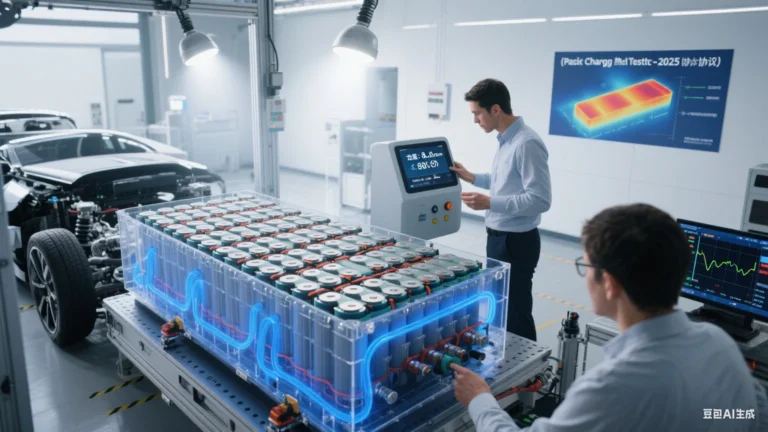
Desert solar farms produce electricity exactly when nobody needs it and go quiet exactly when the evening peak arrives. Storage closes that gap, but the desert is hostile to batteries: ambient air above 45 °C for months, dust that clogs filters, and a day-night temperature swing that stresses every seal. A sodium ion battery handles this environment with fewer compromises than most operators expect, because its chemistry tolerates heat and its raw materials do not depend on lithium or cobalt supply.
Why Heat Is the Real Enemy
Calendar ageing in lithium cells roughly doubles for every 10 °C rise above 25 °C. A container sitting in the Gulf or the American Southwest can hold cells at 40 °C internal temperature for eight months a year, which quietly halves the service life the financial model assumed. Operators respond with aggressive HVAC, and that parasitic load can consume 4 to 8% of the throughput. Sodium-ion cells degrade more slowly at elevated temperature, which lets designers relax the cooling setpoint and recover part of that lost energy.
Cold Nights Matter Too
Deserts drop 20 to 25 °C after sunset, and high-altitude sites can reach freezing before dawn. Sodium-ion retains a much larger share of its capacity below 0 °C than lithium iron phosphate, so a morning dispatch does not require pre-heating the pack. For a solar farm whose grid contract includes an early-morning ramp obligation, that difference removes both a hardware cost and a failure mode.
Safety and Transport Advantages
Sodium-ion cells can be shipped and stored at 0 V, which is a genuine logistics advantage for remote sites. A fully discharged cell cannot support a thermal runaway propagation event during shipping, and installers can rack the containers before commissioning without maintaining a state-of-charge window. Thermal runaway onset temperatures are also higher than for most lithium chemistries, which simplifies the fire strategy for a site that may be ninety minutes from the nearest brigade.
Chemistry Comparison for Desert Sites
| Attribute | Sodium-Ion | LFP | NMC |
|---|---|---|---|
| Energy density (Wh/kg) | 120–160 | 150–180 | 200–260 |
| Performance above 45 °C | Excellent | Good | Fair |
| Performance below 0 °C | Excellent | Fair | Fair |
| Cycle life | 3000–5000 | 4000–6000 | 2000–3000 |
| Ship and store at 0 V | Yes | No | No |
| Critical mineral exposure | Low | Medium | High |
Where Sodium Loses, and Why It May Not Matter
Sodium-ion is heavier and bulkier per kilowatt-hour than LFP. On a vehicle that is decisive. On a solar farm with hundreds of hectares of land already fenced, an extra 20% container footprint is a rounding error against the balance-of-plant cost. The trade the developer actually makes is footprint versus cooling load, degradation rate and supply security, and in hot climates that trade increasingly favours sodium.
Dust, Sealing and Maintenance
Whatever the chemistry, desert enclosures need IP55 or better, sealed liquid cooling rather than open-air ventilation, and filter service intervals written into the O&M contract. Sand abrasion destroys fan bearings first and door gaskets second. Specify stainless fasteners, UV-stable cable glands, and light-coloured container coatings, because a white roof can lower internal temperature by several degrees before any active cooling starts.
System Design Notes
Size the storage to the curtailment profile, not to a round number. Most desert PV plants clip midday output for two to four hours, and a two-hour to four-hour storage duration captures the majority of that lost energy. Pair the pack with an inverter capable of reactive power support after sunset, since many grid codes now pay for that service and it uses hardware the plant already owns.
People Also Ask
Is sodium-ion commercially available at utility scale? Yes. Multiple Chinese manufacturers shipped grid-scale sodium-ion systems from 2024 onward, and 2026 project pipelines include several hundred megawatt-hours in hot-climate markets.
How does the cost compare to LFP today? Cell prices are close and converging. Sodium-ion currently wins on total cost of ownership in hot climates, where reduced cooling and slower degradation offset a slightly higher energy-specific price.
Can sodium-ion be retrofitted into an existing container design? Often yes, if the racking accommodates a modestly larger module footprint and the BMS firmware is matched to the sodium voltage window, which differs from LFP.
Written by Karl at China Battery Technology. Request a quote.
Related reading: Sodium-Ion Battery for Offshore Platforms: Safer Remote Power