Semi-Solid Battery for Underwater Robots: More Dive Per Charge
Semi-Solid Battery for Underwater Robots: More Dive Per Charge
ROVs and autonomous underwater vehicles (AUVs) live or die by energy density — every watt-hour is ballast and payload you do not have to sacrifice. A semi solid state battery packs more energy than standard lithium while cutting the free electrolyte that makes a flooded pack dangerous, giving underwater robots longer missions and safer pressure-rated cells.
The Underwater Energy Problem
Below the surface, a battery must deliver full power while crushed by depth and surrounded by conductive seawater. Standard liquid lithium is energy-dense but vulnerable: a breach lets electrolyte leak, and the cell swells as pressure changes. Vehicle designers end up wrapping packs in heavy pressure housings that eat the very buoyancy and payload the energy bought.
Why Semi-Solid Helps
Semi-solid cells replace much of the liquid electrolyte with a gel or composite, raising volumetric energy density and lowering leakage risk if the shell is breached. The softer cell also tolerates the squeeze of repeated dives better than a rigid pouch, and the reduced free electrolyte narrows the thermal and chemical hazard envelope — important when a fault happens 3,000 meters down with no rescue.
Underwater Power Comparison
| Attribute | Semi-Solid | NMC (liquid) | LiFePO4 |
|---|---|---|---|
| Energy density | High | High | Medium |
| Leak risk if breached | Low | Medium | Medium |
| Pressure tolerance | Good | Medium | Medium |
| Cycle life | Medium–High | 800–1500 | 3000–6000 |
| Maturity / cost | Medium | Very high | High |
Pressure Housing and Sealing
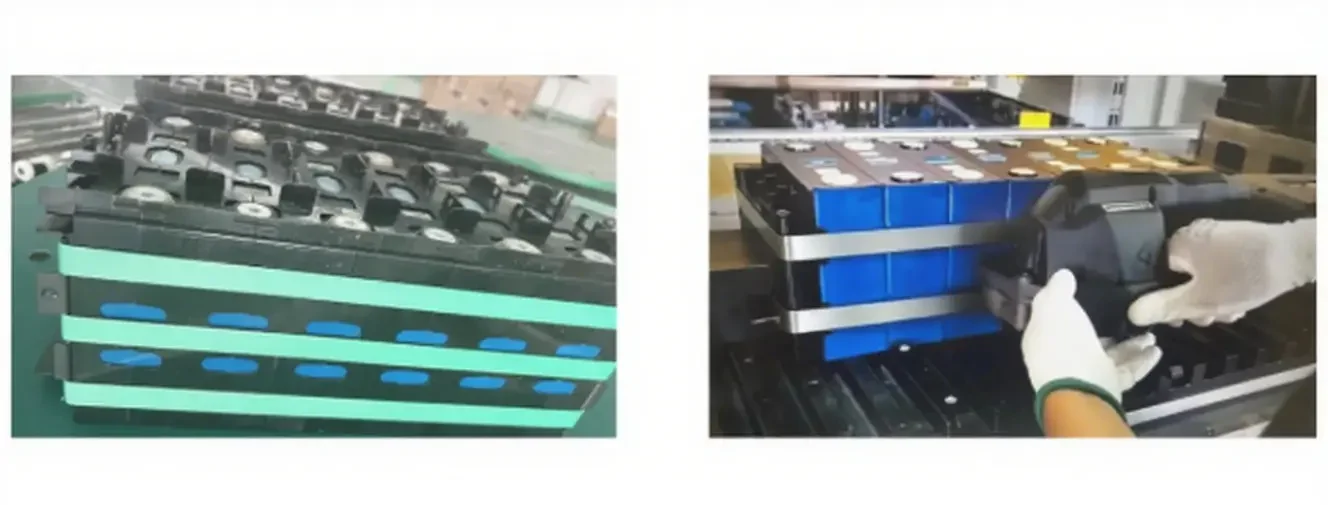
Even a robust cell needs a pressure-compensated or rigid housing. Oil-filled compensators equalize external pressure so the pack is not crushed, while a rigid titanium or anodized-aluminum can protects shallow ROVs. Specify the BMS for the low-temperature, high-humidity interior, and build in a pressure-rated disconnect so a fault isolates the pack without venting into the vehicle.
People Also Ask
Are semi-solid cells available for AUVs now? Yes — several suppliers ship semi-solid cells for premium marine and defense pilots as of 2025–2026, with full solid-state still scaling.
Do they really add dive time? In field programs, the higher energy density typically extends AUV range 15–30% for the same hull volume versus equivalent liquid lithium.
Written by Karl at China Battery Technology. Request a quote.