Lithium Battery for Remote Telecom Sites: Off-Grid Power That Stays Up
Lithium Battery for Remote Telecom Sites: Off-Grid Power That Stays Up
Remote telecom sites — cell towers, microwave relays, fiber huts, and border repeaters — sit far from a reliable grid, often on a mountain, a desert mast, or an island. A single outage knocks out coverage for thousands of subscribers and triggers penalty clauses with the operator. Diesel generators are the legacy fix, but they are expensive to fuel, slow to service, and noisy. A trusted lithium battery manufacturer can specify an off-grid or hybrid lithium bank that rides through outages, stretches diesel intervals from days to weeks, and reports state-of-health back to the network operations center.
Why Remote Sites Need Lithium
Telecom loads are steady but non-negotiable: the rectifier, radio, and microwave draw a few hundred watts around the clock, with brief surges when transmitters key up. Lead-acid handles this poorly because it degrades in partial-state-of-charge and loses capacity in heat. Lithium, especially LiFePO4, thrives on shallow cycling and shrugs off ambient swings, so the same bank that backs up a grid-connected site also runs an islanded site for days without generator support.
Sizing an Off-Grid Tower Bank
Start from the site’s continuous load in watts and the autonomy you must guarantee — typically 3 to 7 days of bad weather for solar-hybrid sites. Multiply load by hours, divide by the usable depth-of-discharge (0.8 for lithium vs 0.5 for lead-acid), and add a margin for battery aging. A 500 W site needing 5 days wants roughly 7.5 kWh usable, so a 10 kWh LiFePO4 bank is a sensible starting point before solar or generator input is counted.
Hybrid Diesel Plus Lithium
Where diesel is unavoidable, lithium turns it from a primary source into a topping charger. The generator starts only when the battery falls below a set point, runs a short bulk charge, then stops — cutting runtime, fuel, and maintenance by 60–80% versus continuous or daily cycling. The BMS logs every cycle so the operator can prove the savings to finance.
Chemistry and Enclosure Choices
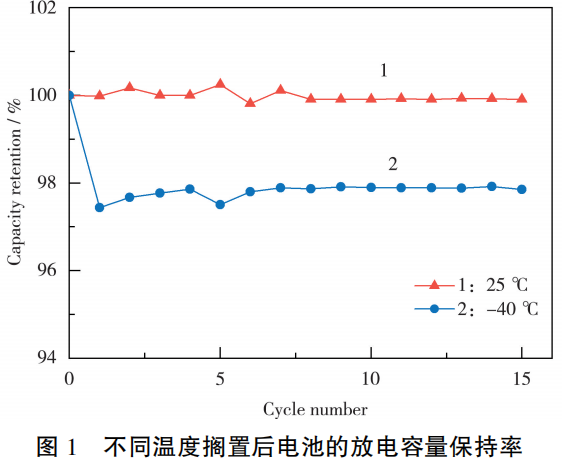
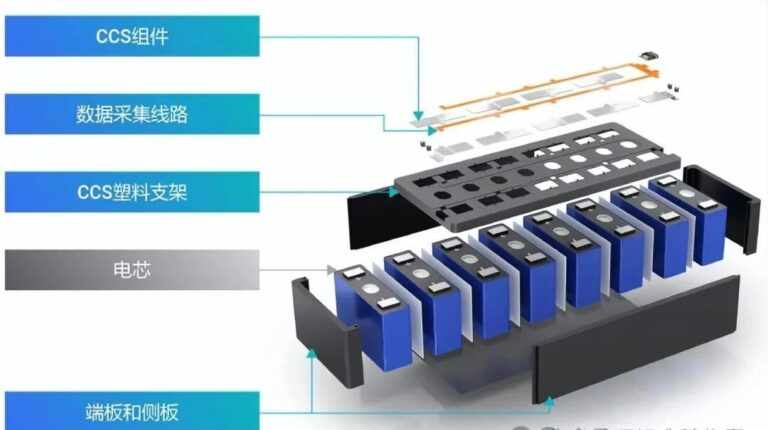
LiFePO4 is the default for stationary telecom: safe, long-lived, and tolerant of temperature. Specify IP65 cabinets with passive or active thermal control for sites from −30 °C to +50 °C, cell-level fusing, and a BMS that speaks the site controller’s protocol (CAN/RS485/Modbus). For space-limited cabinets, NMC trades some safety margin for higher energy density.
Telecom Battery Comparison
| Attribute | LiFePO4 | Lead-Acid | NiCd |
|---|---|---|---|
| Usable DoD | 80% | 50% | 60% |
| Cycle life | 3000–6000 | 300–500 | 1000–2000 |
| Round-trip loss | Low | Medium | Medium |
| Remote maintenance | Rare | Frequent | Periodic |
| 10-year cost | Low | High | Medium |
People Also Ask
Can lithium replace an existing lead-acid telecom bank? Usually yes — keep the rectifier, swap the bank and confirm the float profile matches lithium, then let the BMS manage the cells.
How long does a remote telecom lithium battery last? 8–12 years in typical tower duty, versus 2–4 years for lead-acid, because shallow cycling and low self-discharge preserve capacity.
Written by Karl at China Battery Technology. Request a quote.