Home Energy Storage for Weekend Cabin: Stay Powered Off-Grid
Home Energy Storage for Weekend Cabin: Stay Powered Off-Grid
A weekend cabin is only relaxing if the lights, fridge, and Wi-Fi actually work when you arrive. Many getaway properties sit beyond the utility line, or on a grid that browns out every storm. A well-sized home energy storage system turns intermittent solar or a small generator into reliable, silent power for the whole weekend — no fuel cans, no cold food, no dead phones on Monday morning.

Why Cabins Are a Storage Sweet Spot
Weekend use is bursty: you arrive Friday night, run loads hard through the weekend, then leave the system idle until next time. That duty cycle punishes lead-acid, which sulfates when left partially discharged, and rewards lithium and LiFePO4, which hold a partial charge for months without damage. A cabin battery sized for two or three days of autonomy covers the typical visit with margin for cloudy weather.
Sizing Your Cabin Battery
List the loads you actually run: LED lighting (low), a 12 V fridge (moderate, continuous), a water pump (short spikes), phones and laptops (small), maybe a small heater or induction cooktop (large, occasional). Add the watt-hours, multiply by the number of days you stay, then by 1.3 for inverter losses and a safety buffer. Most weekend cabins land in the 5–15 kWh range with a 3–5 kW inverter.
Cabin Power Source Comparison
| Option | Upfront cost | Noise | Maintenance | Best for |
|---|---|---|---|---|
| Solar + storage | Medium | Silent | Low | Off-grid, sunny sites |
| Generator + storage | Low | Loud | Medium | Cloudy/wooded sites |
| Grid-tied + backup | Low | Silent | Low | Near utility line |
| Lead-acid bank | Low | Silent | High | Budget, frequent use |
Hybrid Charging Strategy
The most robust cabin setup pairs a modest solar array with a generator-assist input on the inverter. Solar does the steady work; if the battery drops below a set point before you leave, the generator auto-starts, tops up, and shuts off — silent most of the weekend, fueled only when needed. This hybrid cut fuel use by 70–90% versus running a generator continuously.
Winter and Idle Care
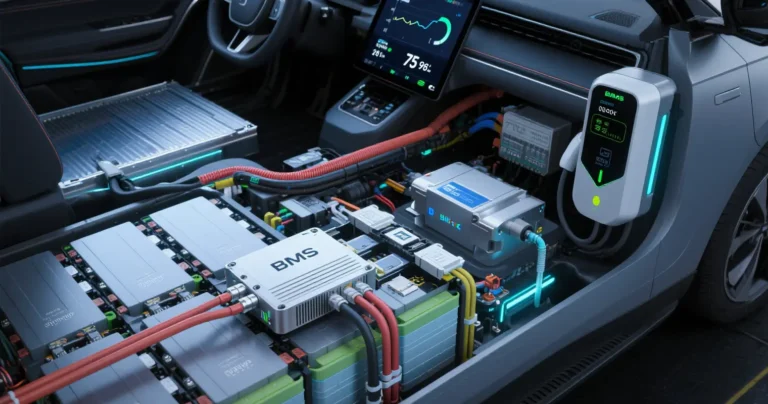
If the cabin freezes, choose a battery with a built-in low-temperature cutoff and self-heating, or keep the bank in an insulated, vented box. Before closing for the season, charge to storage level (around 50–60% for lithium) and isolate the loads. A quality BMS with Bluetooth lets you check state-of-charge from town so you never arrive to a dead bank.
Monitoring and Remote Checks
Most cabin owners visit only monthly, so visibility matters. A BMS with Bluetooth or cellular reporting shows state-of-charge, solar yield, and any fault from your phone in town. Set alerts for low state-of-charge or low temperature so a weak winter week never surprises you on arrival. Reviewing weekly yield also tells you whether to add a panel before the next trip.
Permitting, Grounding, and Safety
Treat the cabin bank like any fixed electrical install: bond the inverter chassis to a ground rod, use fused disconnects, and keep lithium cells in a vented, critter-proof enclosure away from sleeping areas. If the cabin sits in a fire-risk zone, locate the battery outside or in a fire-rated box. Label breakers and keep a paper wiring diagram in the panel for the next handy friend who visits.
People Also Ask
Can I run a cabin entirely on battery? Yes for lighting, refrigeration, and electronics; large resistive heat (electric stove, space heater) needs either a much bigger bank or propane.
How long will the battery last between visits? A LiFePO4 bank loses only 2–3% per month and survives 10+ years of weekend duty, far outlasting lead-acid in the same role.
Written by Karl at China Battery Technology. Request a quote.