Home Energy Storage for Tiny Homes: Capacity Planning That Actually Works
Home Energy Storage for Tiny Homes: Capacity Planning That Actually Works
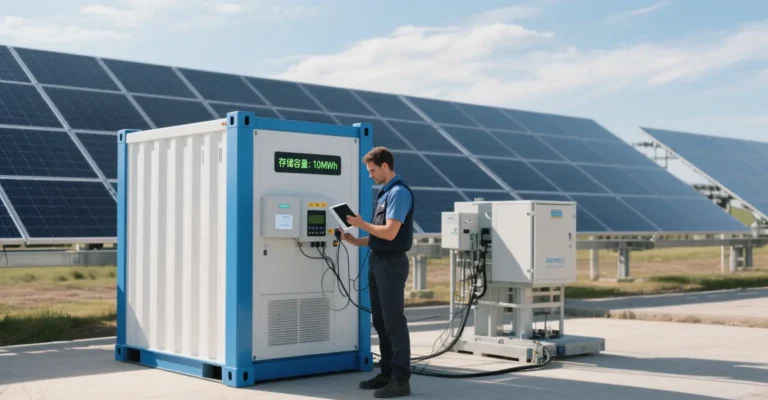
Tiny houses are the clearest case in residential storage for starting from consumption
rather than from a catalogue. A 20 m sq home with an induction hob, a heat pump and decent
LED lighting does not need a giant pack, and oversizing is the single most common mistake we
see. The pack you pick should follow the shape of your load curve, and it is worth
understanding the trade before you talk to a home energy
storage system supplier about what to install.

The typical tiny home runs between 4 and 9 kWh on a weekday, with a strong evening peak
as cooking and heating coincide with the sun going down. A plug-in hybrid or full electric
push that peak higher. The right storage capacity is usually two to four hours of your
average daily draw, which puts most projects between 6 and 20 kWh. Anything above that is a
backup guarantee rather than a self-consumption play, and it should be priced as such.
Start from the load curve, not the square footage
Upload twelve months of meter data if you have it. If you do not, do a week of manual
readings at half-hour intervals and note anything with a demand spike above 3 kW, because
that single number sets your inverter rating and it is usually a kettle, an oven or a
compressor. A pack that cannot deliver the spike is a pack you will blame for failing while
the real problem is a 4 kW element pulling through a 3 kW inverter.
The four choices that change the outcome
Format, chemistry, inverter coupling and wiring all matter more than raw capacity. The table
below is the shorthand we use in a first review with a homeowner.
| Decision | Common option | What to watch for |
|---|---|---|
| Format | Stacked tower or wall unit | Stacked needs a flat interior floor; wall units need structural fixing into studs |
| Chemistry | Lithium iron phosphate | Check cycle rating; 6,000 cycles is the floor for daily cycling |
| Coupling | AC-coupled retrofit vs DC-coupled new build | AC-coupled is simpler to add later; DC-coupled is more efficient in a new install |
| Wiring | 240 V split phase in North America | Confirm the pack supports the split before ordering |
Realistic savings and the winter problem
In most markets, storing your own solar saves less than you expect because export tariffs
have improved and buy-sell spreads have narrowed. The value case is strongest where export is
capped, where a demand tariff charges you for your highest fifteen-minute window, or where
you need backup in an area with unreliable supply. Winter is the honest test: a tiny home in
a cold climate may need a heat source that draws more than the array produces for four
consecutive days, and no battery of a sane size will cover that. Size for the two or three
days you expect to be cloudy, and accept that the rest is grid.
Backup, surge and everyday constraints
If a grid outage is the real motivation, ask explicitly whether the system will carry the
circuits you need, not the whole house. A subpanel approach that preserves, say, lights,
refrigeration, internet and one socket is cheaper and far more reliable than trying to carry
an induction hob. Surge rating matters too: a well pump or a circular saw will ask for three
to five times rated power for a few milliseconds, and a pack that cannot answer that spike
will trip an inverter under no fault of its own.
People Also Ask
How big a battery does a tiny home need? Six to ten kWh covers most
routine self-consumption. You need more only if you run a heat pump through a cold snap or
you want whole-house backup.
Can I add storage to a tiny house that already has solar? Usually yes, by
AC-coupling a pack to the existing inverter. It is slightly less efficient than a
DC-coupled design but much cheaper to retrofit.
Does a tiny home battery work without sun for days? No pack does. Plan for
two to three days of cover and treat anything longer as a generator or grid question.
Is LFP the right chemistry for a small domestic pack? For nearly every
tiny home, yes. The cycle life and the flat safe voltage make it the boring, correct choice
where weight is less critical than in a vehicle.
Written by Karl at China Battery Technology. Request a quote.