Battery Solutions for Courier Fleets: Powering Last-Mile Delivery
Battery Solutions for Courier Fleets: Powering Last-Mile Delivery
Last-mile delivery is the most battery-dependent business in urban logistics. A courier fleet may run e-cargo bikes through a pedestrian zone in the morning, light electric vans on ring-road routes at midday, and handheld scanners and portable printers across every shift. Practical battery application solutions for this work are less about maximum energy density and more about turnaround: how fast a depleted pack becomes a working one, and how few vehicles sit idle waiting.

Map the Route Before Sizing the Pack
Courier routes are remarkably predictable, which is a gift for battery sizing. Pull two weeks of telematics and look at the 90th-percentile daily distance, the stop count, and the elevation gain. An e-cargo bike on a dense city round rarely exceeds 45 km but stops 120 times, so motor duty is low and auxiliary load matters. A light van on a suburban route may cover 160 km with far fewer stops and much higher average power. Sizing to the fleet average strands the hardest routes; sizing to the absolute worst case buys weight and cost nobody uses.
The workable answer is to size to the 90th percentile and solve the remaining tail with either a mid-shift swap or one long-range vehicle assigned to the outlier route.
Swappable Versus Fixed Packs
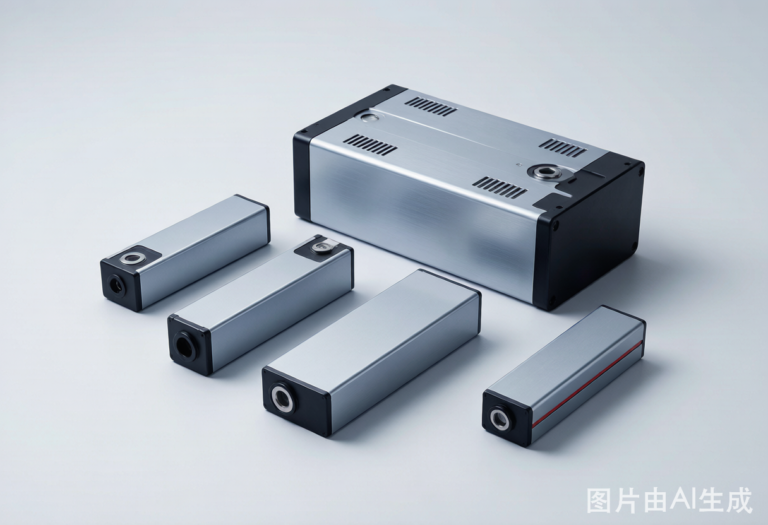
Swappable batteries transform fleet economics for two-wheelers and cargo bikes. A rider returns to a hub, exchanges a 1.5 kWh module in under a minute, and rides out again while the depleted pack charges gently at low C-rate, which extends its life. Fixed packs suit vans, where depot charging overnight covers the duty and swap hardware would add cost and failure points. Many mature fleets run both: swappable for the bike tier, fixed for the van tier, with a shared BMS platform so the depot software sees one asset pool.
Format Comparison for Courier Fleets
| Attribute | Swappable Modules | Fixed Vehicle Pack | Portable Device Packs |
|---|---|---|---|
| Typical capacity | 1–3 kWh | 20–80 kWh | 30–150 Wh |
| Turnaround | <1 minute | 4–8 hours AC | Hot-swap |
| Best chemistry | LFP or NMC | LFP | Li-ion / LFP |
| Depot hardware | Swap cabinets | AC chargers | Bench cradles |
| Downtime cost | Lowest | Medium | Low |
Depot Charging and Grid Limits
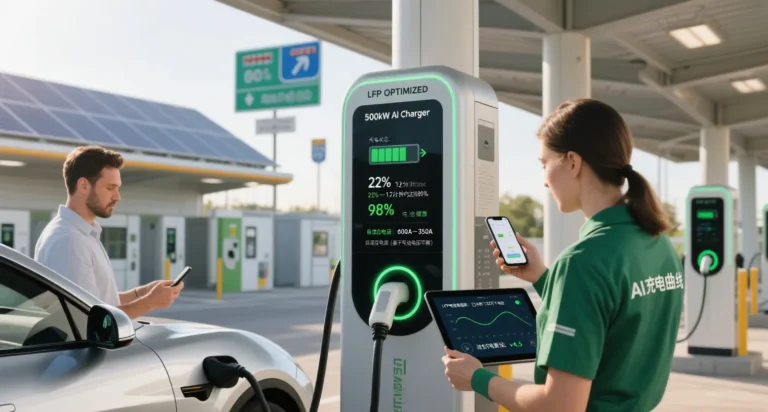
Most urban depots hit a grid ceiling long before they run out of parking. Twenty vans charging simultaneously at 11 kW is 220 kW of demand the connection may not have. Sequenced charging spread across the overnight window, combined with a modest stationary buffer that shaves the peak, usually beats paying for a service upgrade. Sequencing also lets the fleet target a lower charge rate, which measurably slows capacity fade across a five-year contract.
Total Cost of Ownership
Judge packs on cost per delivered parcel, not per kWh. The dominant variables are cycle life, vehicle uptime, and pack replacement frequency. An LFP module at 4,000 cycles used once daily lasts beyond the vehicle lease; a cheaper cell at 1,200 cycles needs replacing mid-contract, and the labour plus downtime usually erases the savings. Depot electricity tariffs matter too — shifting charge into off-peak windows often cuts energy cost by a third.
Safety and Handling in a Busy Hub
A courier hub is a fast, crowded place where modules get dropped and connectors get yanked. Specify IP65 modules, keyed connectors that cannot be mated backwards, drop-test validation, and swap cabinets with per-slot thermal monitoring and fire-rated separation. Train riders on damage reporting; a dented module must leave service immediately, and the process only works if reporting is trivially easy.
Choosing the Right Supplier
Look for a partner who will supply matched cabinets, modules, and fleet software rather than cells alone, and who provides UN 38.3 and IEC 62133 or 62619 documentation for every format. Ask about second-life pathways: retired courier modules make excellent stationary buffers for the same depot, which improves the economics of the original purchase.
People Also Ask
How many battery modules does a courier fleet need per bike? Plan on 1.5 to 2 modules per bike — one on the vehicle and a rotating spare in the cabinet — so no rider ever waits for a charge.
Is swapping better than fast charging? For light two-wheelers, yes: swapping takes under a minute and lets modules charge slowly, which extends life. For vans, overnight depot charging is simpler and cheaper.
What chemistry suits last-mile delivery? LFP is the usual choice for its cycle life and thermal safety, with NMC reserved for weight-critical cargo bikes that need maximum range in a small frame.
Written by Karl at China Battery Technology. Request a quote.
Related reading: Battery Solutions for Self-Service Kiosks: Reliable Unattended Power