Battery Pack Manufacturer with In-House BMS Engineering
Battery Pack Manufacturer with In-House BMS Engineering
The difference between a pack that survives and one that fails in the field usually lives in the BMS firmware—and the firmware is only as good as the team that owns it. This guide explains why in-house BMS engineering is the single most important capability to vet in a lithium battery manufacturer, and how to verify it before you commit.
Why in-house BMS matters
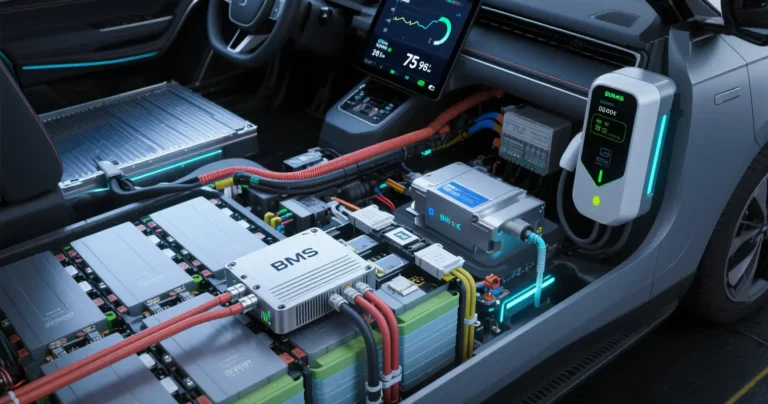
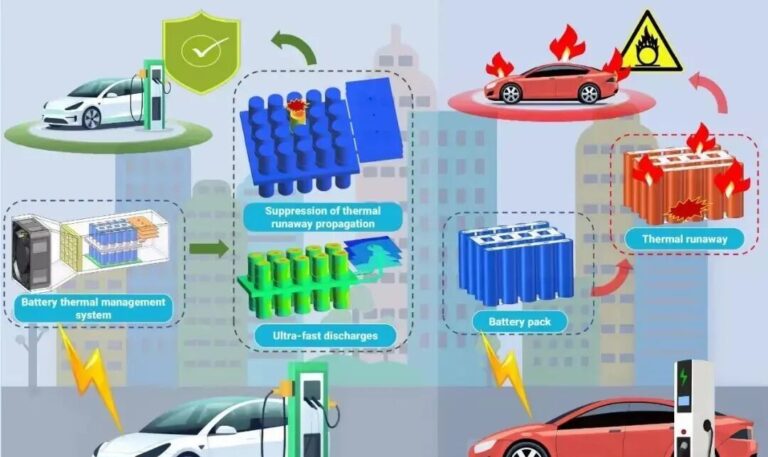
A BMS bought off the shelf and dropped into a pack protects against the obvious faults—over-voltage, under-voltage, over-current, short, over-temperature. But real-world packs fail in subtler ways: a cell drifts, a connector heats, a host device asks for more current than the bus admits. A supplier that owns its BMS firmware can tune protection thresholds, add state-of-health reporting and adapt the logic to your exact load. A supplier that resells a generic module cannot—and when something goes wrong, you are waiting on a third party that doesn’t know your product. For a battery application solutions program, that gap is the difference between a quick fix and a stalled line.
What in-house actually looks like
| Capability | In-house (good) | Resold module (risky) |
|---|---|---|
| Firmware team | Dedicated engineers, version control | None; depends on vendor |
| Configuration tool | Supplier provides tuning software | Locked, no access |
| Comms | CAN/RS485/SMBus to your host | Fixed, may not match |
| SOH reporting | Customizable telemetry | Often absent |
| Recall responsiveness | Fast, owns the code | Slow, waits on vendor |
Questions that expose a fake claim
Ask to see the BMS configuration tool. Ask which microcontroller and which balancing topology (active vs passive). Ask how a firmware update is delivered to field units. Ask for a sample SOH telemetry stream. A genuine in-house team answers in specifics and shows you the software; a reseller hedges, deflects or shows a datasheet someone else wrote. The configuration tool is the tell—if there isn’t one, the firmware isn’t theirs.
Matching BMS to chemistry and load
LFP’s flat voltage curve needs coulomb-counting for accurate state-of-charge; NMC’s sloping curve tolerates voltage estimation but needs tighter thermal margins. A home energy storage system on LFP wants a BMS tuned for thousands of shallow cycles and active balancing; a high-C drone pack wants one tuned for burst current and thermal derating. In-house engineering means the BMS is matched to your chemistry and duty, not a generic preset that happens to fit the enclosure. Confirm the supplier has shipped your chemistry at your C-rate before, not just “lithium in general.”
Communication and integration
The BMS must speak your host’s language. CAN J1939 for vehicles, RS485/Modbus for stationary, SMBus for portable computing. A BMS that speaks the wrong bus is useless no matter how good its protection—your dash will show no state-of-charge or, worse, a false one. In-house engineering lets the supplier implement your exact CAN matrix or Modbus register map, which is what makes the pack feel integrated rather than bolted on. Get the communication spec into the requirement document before the prototype, not after the first integration meeting.
Telemetry, SOH and fleet management
For fleet and medical use, state-of-health reporting turns the battery from a dumb component into a managed asset. An in-house BMS can log cycle count, per-cell voltage, temperature history and balance state, and surface it over the bus or a gateway. That data predicts end-of-life, justifies warranty claims and feeds a maintenance schedule. A resold module rarely offers this; you get a green light and a red light and nothing in between. For operators running two shifts, that visibility is worth more than a few dollars of cell cost.
Roadmap: semi-solid and sodium BMS needs
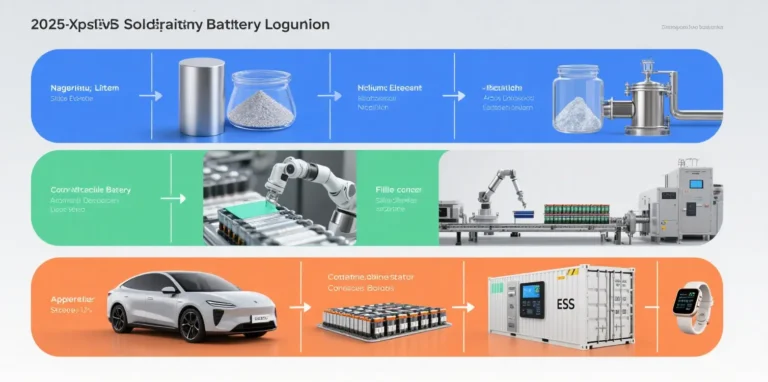
New chemistries change the BMS math. A semi-solid-state battery has a different thermal and voltage profile than LFP or NMC, and a sodium-ion battery charges and balances differently again. A supplier with in-house firmware can re-tune the BMS for a new chemistry on the same hardware; a reseller must wait for the module vendor to catch up. Ask how they handled a chemistry transition before—the answer reveals whether their “in-house” claim is real or rented.
Verification before you sign
- Request a live demo of the BMS configuration tool.
- Ask for a sample SOH telemetry stream from a shipped pack.
- Confirm firmware update path for field units.
- Verify prior shipments at your chemistry and C-rate.
- Include BMS ownership and support SLAs in the contract.
Active vs passive balancing deep dive
Passive balancing bleeds energy from the highest cells to equalize, which is cheap and fine for small packs but slow and wasteful at scale. Active balancing moves charge between cells, faster and more efficient, and is the right choice for large stationary banks where imbalance quietly caps usable capacity. Ask the supplier which they implement and at what current; a 50 mA passive balancer on a 200 Ah bank is cosmetic, not functional. For a home energy storage system expected to last a decade, active balancing protects cycle life and usable capacity far better than a token passive circuit, and it is a question only an in-house team can answer with specifics.
Firmware update and security
In-house BMS teams can deliver field firmware updates—critical when a bug or a new chemistry profile emerges after deployment. Ask how updates are signed, authenticated and rolled out; an unauthenticated update path is a security hole in a connected pack. A mature team versions firmware, can recall a bad update, and logs every change. This is where “in-house” pays beyond protection: the same team that wrote the code can fix it in the field, instead of you waiting on a module vendor’s roadmap you do not control. Make update path and versioning part of the acceptance criteria, not an afterthought.
The cost of BMS failure: a case vignette
Consider a fleet of floor-cleaning machines whose packs used a resold BMS with no state-of-health reporting. Units began dropping at end-of-shift with no warning, and the supplier could not tune the cutoff because they did not own the firmware. Downtime cascaded, service cost spiked, and the brand took the blame. A competitor using an in-house BMS pushed a firmware fix that smoothed the cutoff and added SOH alerts, cutting failures sharply. The $2 difference in BMS cost was dwarfed by the $20,000 in downtime. BMS ownership is a reliability decision, not a component line item, and the invoice never shows the cost of getting it wrong.
Selecting BMS topology for your pack
Centralized BMS is cheap and fine for small, low-cell-count packs; distributed (slave-per-module) scales to large banks and eases service. For modular systems, distributed lets you replace a faulty module without disturbing the string. Match the topology to your pack size and service model, and confirm the supplier has shipped your chosen topology at your voltage and current. A mismatch—centralized on a 100 kWh bank—creates a single point of failure and a service nightmare. The topology is an architecture choice; decide it with the pack, not after a failure forces it, and have the in-house team confirm the design rather than a sales engineer guessing.
Red flags that the BMS is not really in-house
Several signals betray a resold module dressed as in-house engineering. The supplier has no configuration tool you can see. They cannot show a sample telemetry stream. Firmware updates depend on “the module vendor.” The BMS is a black box with no access to thresholds. Or the “engineering team” is a single sales engineer who quotes datasheets. Any one of these means the firmware is not theirs, and you have inherited a dependency you cannot manage. Probe with a specific ask—”show me how I change the over-current trip in your tool”—and the answer tells you everything. A genuine in-house team demonstrates; a reseller deflects, and the deflection is the data point you need. The practical upshot is to score BMS ownership alongside cells and enclosure in your selection matrix. A pack with a mediocre cell behind a great in-house BMS will fail safe and be fixable; a great cell behind a resold black-box BMS will fail opaquely and strand you. Weight the firmware team as heavily as the cells, because in the field those two risks are the same risk wearing different labels.
Frequently asked questions
Can a resold BMS be good enough? For simple stationary packs, sometimes—but you lose tuning, telemetry and fast recall response.
How do I prove the team is in-house? Ask for the configuration tool and a telemetry sample; a reseller cannot show either credibly.
Does in-house BMS cost more? Usually a little up front, but it pays back in fewer field failures and faster fixes.
What if I need a custom communication bus? In-house engineering can implement your CAN matrix or Modbus map; resold modules usually cannot.
Written by Karl at China Battery Technology. Tell us your chemistry, load and communication needs and we will show you our BMS toolchain—request a quote for a technical review.
Related Reading
- custom lithium battery manufacturer
- Lithium Battery for AGV and AMR: Powering Autonomous Logistics
- Lithium Battery for E-Bike: A Conversion and Sizing Guide