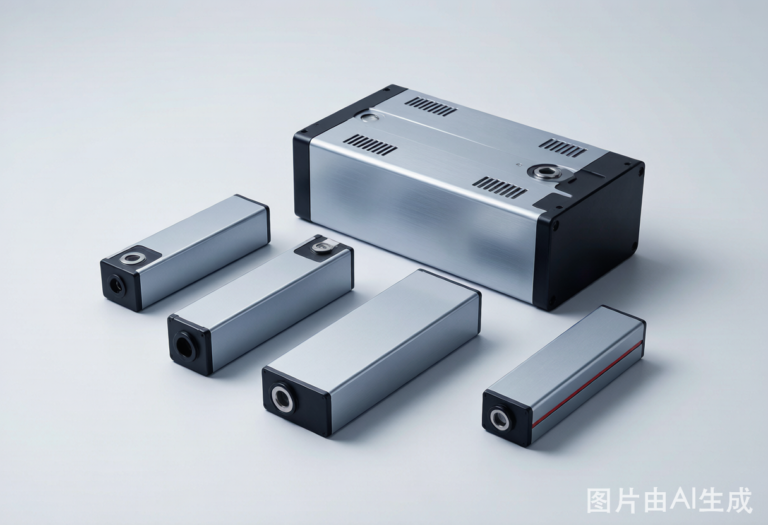
Battery Application Solutions for Electric Agricultural Sprayers: Chemical-Proof Power in the Field
Battery Application Solutions for Electric Agricultural Sprayers: Chemical-Proof Power in the Field
The self-propelled agricultural sprayer is one of the harshest battery environments in commercial agriculture. The machine drives a twelve metre boom across a field at 6 to 10 kilometres an hour, pumps liquid at 8 to 20 litres a minute, carries 600 to 1,200 litres of crop protection product in the tank, and does it for ten hours a day in 35 degree heat with dust, vine residue and a fine spray of chemicals coating every surface on the machine. The engine version of this machine dominated for decades because a diesel tank is simple; the electric version only became credible when a pack could deliver sustained high current inside that environment without dying in two seasons. That is now a solved engineering question and it is what this guide covers: the voltage platform, the discharge profile, sealing against agrochemical, the thermal reality inside a hopper, the sizing arithmetic for a full day, and the certification paperwork a dealer needs before he can put the machine on a rental yard. These are the battery application solutions that actually hold up in a sprayer.
What the Pump and Drive Actually Demand
Start with the power. A typical 12 metre boom sprayer carries three diaphragm pumps or one high-volume roller pump delivering 10 to 18 litres a minute at 3 to 5 bar, which is a 1.5 to 3 kilowatt hydraulic load. The traction drive adds 2 to 5 kilowatts when the machine is working the headland and steering against a covers crop, and the fan, the boom agitation jets and the cab environment controller take another 0.5 to 1 kilowatt. Total continuous draw while spraying sits at 4 to 9 kilowatts, with peaks near 12 kilowatts when the operator lifts the boom and reverses against a hedge. That peak matters more than the average because it is a 6 to 10C pulse from a pack that has to fit inside the machine’s existing engine bay, and the pack therefore needs a rated continuous discharge of at least 8C and a peak of 15C for three to five seconds. This is the specification that separates a sprayer pack from a tractor pack.
Voltage Platform: 48 V vs 72 V vs 96 V
Three platforms are in play and the choice is driven by the pump size. Older conversions sit at 48 volts nominal using 16 prismatic cells, which is convenient because the machine already has 48 volt ancillaries, but at 6 kilowatts the pack carries 125 amps and the copper in the pump run becomes heavy and lossy. The modern baseline for a 12 metre machine is 72 to 80 volts nominal, built from 23 to 25 prismatic cells, which halves the current for the same power and lets the pump controller use a smaller rectifier and less cable. Above 12 metres and on high-clearance machines, 96 to 100 volts nominal is appearing, built from 30 or 31 cells, because the boom is long and the cable run from the pack to the rear pump would otherwise be a copper problem. The practical advice is to match the platform to the pump: below 8 kilowatts continuous, 48 volts is fine; from 8 to 15 kilowatts, go 72 or 80; above that, 96.
Cell Chemistry and Format for a Sprayer
Lithium iron phosphate prismatic is the default for a reason that has nothing to do with energy density: a 50 or 100 amp-hour prismatic cell terminates in a copper or aluminium tab rated for 150 to 250 amps, so the builder can clamp cells onto a busbar plate with a bolted joint instead of relying on nickel strip spot welds that vibrate loose in a field. Vibration and shock matter here because the machine crosses headlands at speed and the pack is bolted above the axle. Pouch cells run cooler per cycle but demand a rigid housing to stop the stack swelling, and a pouch pack in a sprayer hopper is a repair job nobody budgets for. Where the machine is compact and the pack has to be light, high-nickel NMC buys 50 to 80 percent more energy into the same box, but it brings a tighter thermal management requirement and a higher insurance conversation; on a machine that sits in a heated cab of a field, LFP at 3,000 to 5,000 cycles wins on total cost.
Sealing, Chemical Exposure and Material Compatibility
This is where sprayer packs fail and where generic spec sheets are useless. Crop protection product is not water: glyphosate and sulfonylurea concentrates are acidic or alkaline depending on the formulation, and a pack sitting in a machine where a leaking tank line drips onto the tray will corrode an unsealed busbar in one season. Specify an IP67 or IP68 enclosure with potted busbar connections, gasketed lid, vent with a hydrophobic membrane so pressure can equalise without letting spray in, and chemical-compatible seals on the output stud, which for most builders means EPDM rather than nitrile. The BMS should live on a separate sealed PCB inside its own potted housing, not on the cell tray, because the board is what dies first when a fine aerosol work its way under a connector. And the pack lid should carry a drain path: a tank vent condensation loop inside a sprayer hopper is constant, not occasional.
Sizing for a Ten-Hour Day
Work it from the tank, not the motor nameplate. A 1,000 litre tank at 14 litres a minute empties in 1.4 hours, but a working day is ten hours, so the machine fills three or four times. Each fill cycle is short high-power spraying plus a longer low-power idle while the operator refills from a bowser, which is the duty cycle that makes an electric sprayer viable: the pack recovers during the fill. Take 6 kilowatts average over the spraying portion and 1 kilowatt over the 40 minute fill, four times a day, plus 0.4 kilowatt baseline. That is 6 times 5.5 hours, which is 33 kilowatt-hours, plus 0.7 kilowatt-hours of fill, plus 4 kilowatt-hours of baseline, so roughly 38 kilowatt-hours delivered. With 85 percent usable depth and 15 percent margin for cold and ageing, the order quantity is 53 kilowatt-hours, which is a 72 volt 740 amp-hour pack or two 26 kilowatt-hour modules in parallel. A comparable engine machine carries roughly 2.5 times that mass in fuel and fluid and burns 12 to 18 litres an hour, which is 120 to 180 litres a day.
Thermal: The Hopper Is an Oven
The pack in a sprayer sits under the tank or in the engine bay, where on a 35 degree day the internal air temperature runs 55 to 65 degrees after four hours of pumping. Cells must be specified for continuous 60 degrees operation with the charger temperature-compensated, and the enclosure needs a duct or a fan moved by the hydraulic pump rather than a passive fin that does nothing. Thermal throttling is acceptable if it is predictable: a BMS that reduces peak discharge above 50 degrees cell temperature is fine, because the operator simply slows the boom. What is not acceptable is a pack that silently derates its usable energy mid-season and therefore runs out of spray on a Friday afternoon. Ask the builder for the discharge curve at 45 degrees ambient, not the 25 degree curve on the datasheet, and compare the two at 60 percent state of charge and 8C, which is where the real distinction shows.
Standards, Shipping and the Dealer Question
Dealers and rental yards ask for specific paperwork. A pack shipped to the field needs UN38.3 test documentation and a transport safety declaration; stationary or machine-mounted family members are covered by IEC 62619, and the cells inside are commonly certified to IEC 62133-2 or UL 2054, with UL 1970 called up in some insurance schedules for the assembled pack. The Agrochemical environment has one extra expectation: most jurisdictions now require the machine to be shipped with the pack’s state of charge recorded and a lockable disconnect, and the standard’s structure and test sequence are published by the IEC. The wider question of what these applications are being asked to do for emissions and efficiency is tracked in the clean transport and machinery work at the U.S. Department of Energy battery technologies office, which is useful when you are writing a grant or a case for a fleet conversion.
| Pack option | Nominal | Day capacity | Peak rate | Sealing | Best fit |
|---|---|---|---|---|---|
| 48 V 600 Ah LFP | 51.2 V | 28 kWh | 8C cont. | IP67 | 8-10 m boom, budget builds |
| 72 V 400 Ah LFP | 73.6 V | 31 kWh | 10C cont. | IP67 | 12 m boom, mainstream electric |
| 80 V 740 Ah LFP, 2 modules | 81.9 V | 60 kWh | 8C cont. | IP68 | Long-day high-clearance machines |
| 96 V 350 Ah NMC | 96.5 V | 30 kWh | 12C peak | IP67 | Weight-constrained compact rigs |
| 72 V 400 Ah semi-solid pouch | 73.6 V | 29 kWh | 15C peak | IP68 | Prototype and high-power demos |
| Diesel tank only, no pack | N/A | Unlimited | Unlimited | None needed | Old machines, high capital cost |
People Also Ask
How do I stop the pack corroding when the tank leaks or the boom drips on it? Move it out from under the tank and build a bunded tray beneath the pack with a drain to a sealed collection point, so any product that arrives is contained rather than sitting on the busbar. Add a chemical-resistant secondary cover and inspect the terminal studs every 250 machine hours; that inspection takes ten minutes and is the single highest-value maintenance task on an electric sprayer.
Will an electric sprayer lose the spray pressure when the pack gets low? Only if the pack sags badly or the BMS cuts under load. A healthy pack holds voltage flat to 20 percent state of charge and only steps down in the last few percent, so the pump keeps pressure and the machine warns you before it drops. If you see pressure wobble at 40 percent state of charge, you have a weak cell or an undersized pack, not a chemistry problem.
Does a semi solid state battery make sense in a sprayer? Not on current pricing. Semi-solid cells buy energy density and peak rate for aircraft, wearables and high-value prototypes. A sprayer has physical space for the cells, needs the lowest cost per usable kilowatt-hour and wants 8C thermal margin, so conventional prismatic LFP or NMC wins on both count and cost. Revisit it if the pack weight starts limiting tank volume, which is a different machine class.
Written by Karl at China Battery Technology. Request a quote.