Battery Application Solutions for Ceramics Studios: Kiln-Ready Power
Battery Application Solutions for Ceramics Studios: Kiln-Ready Power
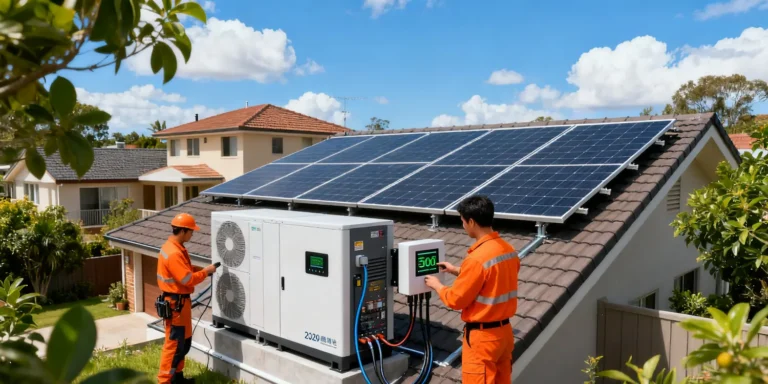
Few small businesses have a load as unfriendly as a ceramics studio. A single kiln draws more current than the rest of the workshop combined, holds it for eight hours, and cannot be interrupted halfway through a firing without ruining every piece inside. Practical battery application solutions give a studio the peak power of an industrial supply on a domestic or shared connection, buffer the firing against voltage dips, and keep the wheels and glaze room running when the kiln is at full draw.
Why Kilns Are the Hardest Studio Load
A medium studio kiln on a 240 V supply pulls 20–40 A continuously for the whole ramp, and the current never varies enough to give cabling or a transformer any relief. Installing one on an ordinary studio connection usually means an expensive upgrade, or a firing schedule built around what the landlord’s fuse will tolerate. A battery sits between the two: it charges slowly at a low rate and releases the draw the kiln demands at the moment it demands it.
Sizing for Firing Cycles
Work from the firing log rather than the nameplate. A bisque firing of a 200-litre kiln typically consumes 30–50 kWh over eight to twelve hours; a glaze firing to cone 6 may reach 70 kWh. That is a genuine energy quantity, so most studios size storage to shave the peak — covering the top third of the ramp — rather than to run the whole cycle off-grid. The result is a much smaller battery for nearly the same grid-connection saving.
Working Around a Limited Supply
Where the available supply is genuinely fixed, the battery becomes a load leveller. It trickles in at 3 kW for ten hours and delivers 10 kW through the ramp, which is enough to fire on a connection that would otherwise be unusable. Studios that fire two kilns simply stagger the starts and let the pack absorb the overlap, a far cheaper answer than a supply upgrade on a leased unit.
Power Quality and Workshop Safety
Kilns use contactors that click on and off every few seconds during the ramp, which produces repetitive transients and flicker on a weak supply. An inverter with a fast response smooths that behaviour and protects the sensitive electronics on modern controllers. Keep the pack out of the kiln room itself: ambient temperatures there regularly exceed 40 °C, and glaze dust is both conductive and abrasive.
Mobile and Shared Studios
Community studios and pop-up workshops have a different problem again — no connection at all. A trolley-mounted battery and a portable kiln can run a full day of raku or small-scale firings from a single 13 A socket, recharged overnight. For shared buildings, a metering arrangement on the battery output makes it straightforward to bill each member for the energy their firing actually used.
Studio Power Options Compared
| Option | Upfront cost | Peak available | Lead time | Portable |
|---|---|---|---|---|
| Supply upgrade | Very high | Unlimited | Months | No |
| Grid connection only | Low | Limited by fuse | None | No |
| Battery peak shaving | High | 10–30 kW | Weeks | No |
| Battery load levelling | High | 5–15 kW | Weeks | No |
| Trolley battery pack | Medium | 3–7 kW | Days | Yes |
| Diesel generator | Low | 5–20 kW | Days | Yes |
What to Ask a Supplier
Give the supplier your firing log — ramp duration, peak current and total energy per firing — and ask them to size against that rather than against the kiln nameplate. Confirm the continuous power rating at 40 °C ambient rather than at 25 °C, the response time to a contactor step load, and whether the system can be programmed to hold charge specifically for a scheduled firing start.
People Also Ask
Can a battery run a pottery kiln on its own? It can cover the upper ramp, but a full firing is usually 30–70 kWh, so most studios use the battery to shave the peak rather than to fire entirely off-grid.
Will it stop the lights dimming during a firing? Yes. An inverter that responds within milliseconds removes the flicker caused by the kiln’s contactor switching.
How hot can the room around the battery be? Check the derating curve. Continuous power often falls above 40 °C, so the pack belongs outside the kiln room.
Is battery power cheaper than upgrading the supply? Usually, and far faster. A supply upgrade can take months and involve the landlord, while a battery is a weeks-long install with no permanent works.
Written by Karl at China Battery Technology. Request a quote.