Semi-Solid Battery for Industrial Sensors: Powering the IIoT Edge
Semi-Solid Battery for Industrial Sensors: Powering the IIoT Edge
Industrial sensors — vibration probes, gas detectors, asset trackers — increasingly sit where mains power never reaches: inside rotating machinery, on remote pipelines, under factory floors. A semi solid state battery gives these nodes the thin, safe, long-lived power they need to report for years without a service call. It is the practical bridge between today’s lithium cells and tomorrow’s full solid-state, available now for harsh industrial duty.
Why Sensor Nodes Need a Different Cell
Most industrial sensors draw micro-amps most of the time and a burst when they sample or transmit. They also live where temperature swings, shock, and vibration are normal. Conventional liquid-electrolyte cells slowly self-discharge and can swell or leak in heat; a semi-solid cell removes most of the free liquid, cutting leakage risk and widening the safe operating window — exactly what an unattended node needs.
Safety and Form Factor
Replacing much of the flammable liquid with a gel or composite electrolyte lowers thermal-runaway risk and lets the cell be built thin or in odd shapes to fit a probe housing. For Intrinsically Safe (Ex i) zones, the reduced free electrolyte simplifies the hazard assessment and enclosure design. The softer cell also tolerates the flex and shock of mounted-on-equipment sensors better than a rigid pouch.
Industrial Sensor Battery Comparison
| Attribute | Semi-Solid | Li-SOCl2 | Liquid Li-ion |
|---|---|---|---|
| Self-discharge / year | Very low | Lowest | Medium |
| Safe in heat | High | High | Medium |
| Rechargeable | Yes | No | Yes |
| Form flexibility | Good | Poor | Poor |
| Energy density | High | High | Medium |
Deployment Tips
Match the cell to the duty cycle: for energy-harvesting nodes, a small semi-solid buffer smooths gaps; for bursty wireless nodes, size for the transmit current plus margin. Specify an operating band of −40 °C to +85 °C for process sites, and qualify the pack with the sensor’s BMS for the target service life — often 5–10 years.
People Also Ask
Can semi-solid replace Li-SOCl2 in meters? For rechargeable or high-vibration nodes, yes; Li-SOCl2 still wins on single-use 20-year shelf life.
Is it safe in explosive atmospheres? The reduced free electrolyte lowers risk, but you still need Ex-rated encapsulation and certification for the zone.
Installation and Monitoring
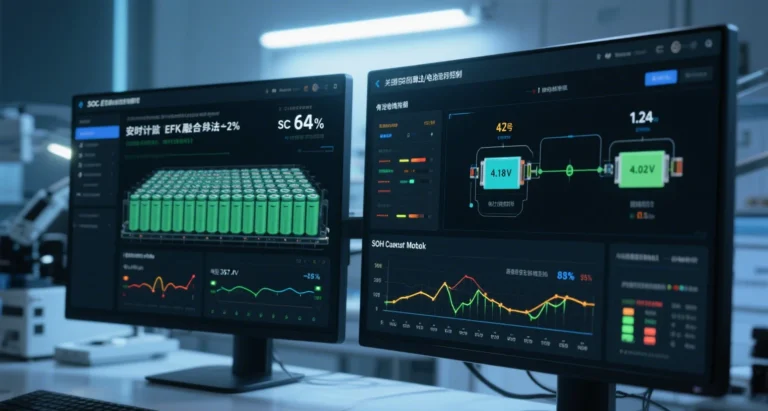
Mount the cell in the sensor’s existing housing or a small IP-rated enclosure, route the BMS comms (often I2C or one-wire) to the sensor MCU, and set a low-state-of-charge alert before the node goes silent. For a fleet of hundreds of nodes, a single dashboard that aggregates last-seen time and battery health tells you which probes need service — turning an unplanned failure into a scheduled visit. Tag each pack with its install date so warranty tracking and rotation stay simple, and keep spare cells on the shelf sized to the same form so a swap needs no redesign.
Cost and Lifecycle
Semi-solid cells cost more per watt-hour than bulk lithium today, but the math flips once you count truck rolls. A node that reports for eight years instead of two avoids three site visits, each of which can cost more than the battery itself. Specifying the right capacity — not the biggest — keeps the bill down while still covering the worst-case transmit burst and the coldest week of the year. Factor the labor saved by not climbing towers or opening cabinets every season, and the semi-solid route usually wins on total cost of ownership.
People Also Ask (more)
How do I know when to replace it? Track reported state-of-health; plan a swap when it drops below the margin your duty cycle needs, typically years before total failure.
Can it ship by air? Small semi-solid cells usually follow the same rules as other lithium cells; confirm the watt-hour rating and packaging with your logistics team before dispatch.
Written by Karl at China Battery Technology. Request a quote.