Semi Solid State Battery for Oyster Farms: Power on the Water
Semi Solid State Battery for Oyster Farms: Power on the Water
Shellfish farming looks low-tech until you notice how much of it now runs on electricity. Grading machines, depuration pumps, chilled storage, automatic feeders and the telemetry buoys that report water quality every fifteen minutes all need power on a floating platform, in permanent salt spray. A semi solid state battery fits that duty because its gel-like electrolyte removes the free liquid that corrodes terminals and swells cells when a conventional pack spends its life in a damp, moving enclosure.

Why Oyster Farms Need Power at All
Modern shellfish operations are measurement businesses. Tide and temperature loggers feed stock models, depuration plants must run pumps continuously for the mandated purification period, and grading and bagging lines appear at harvest. Most of that equipment sits on a pontoon or a barge, where running a cable is impractical and a petrol generator is both a contamination and a maintenance problem.
Corrosion and Salt Air
Salt aerosol is the real enemy. It creeps into connectors, tracks across circuit boards and turns a terminal into a green crust within a season. Semi-solid cells reduce one failure route by eliminating free liquid electrolyte, but the enclosure still has to be sealed to IP67, vented through a hydrophobic membrane, and fitted with tinned copper cable and marine-grade glands. Anything less will fail long before the cells do.
Sizing Around the Tide
Tidal schedules set the working day, and they shift by roughly fifty minutes daily. A depuration plant running 2 kW of pumps for an eight-hour purification cycle needs around 16 kWh; add chilling, lighting and telemetry and a realistic pontoon figure is 20–25 kWh a day. Size for the longest cycle plus one slack day of autonomy, because a storm can keep the service boat away for 48 hours.
Safety on Floating Gear
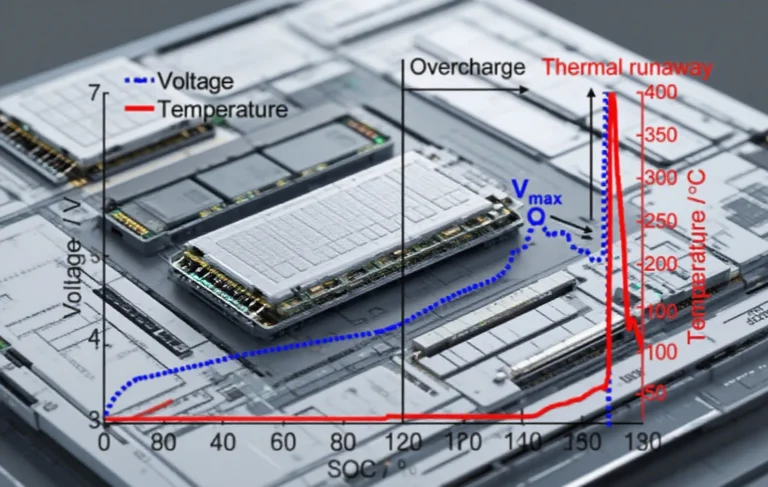
A sealed battery on a moving platform has to be mechanically restrained as well as electrically protected. Bolt the enclosure to a frame rather than relying on its own weight, keep it above the wash line, and fit a battery management system that disconnects on impact as well as on over-current. Semi-solid chemistry raises the thermal runaway threshold, which matters when the nearest fire service is a boat ride away.
Cold Chain and Processing
The most valuable load is the chiller. Shellfish lose condition fast above 5 °C, and a failed chiller can write off a whole harvest. Putting the refrigeration on a protected circuit with its own reserve, and giving the battery a state-of-charge alarm that texts the skipper rather than only lighting a panel lamp, is the cheapest insurance a farm can buy.
Farm Power Options Compared
| Option | Salt tolerance | Noise | Daily fuel or charge | Service life afloat |
|---|---|---|---|---|
| Semi-solid battery | Excellent | Silent | Solar or shore | 8–12 yr |
| Conventional Li-ion | Moderate | Silent | Solar or shore | 4–7 yr |
| Marine lead-acid | Poor | Silent | Shore | 2–4 yr |
| Diesel generator | Moderate | High | Diesel | 5–10 yr |
| Solar plus battery | Excellent | Silent | None | 8–12 yr |
| Shore cable | Poor | Silent | None | Varies |
What to Ask a Supplier
Ask for the enclosure’s ingress rating, the salt-spray test standard it was validated against, and the operating temperature window for charging — cold-water sites often charge below 10 °C. Request cycle life at the depth of discharge a tidal schedule actually imposes, confirmation that the management system logs impact events, and whether state of charge can be read over the same telemetry link the water-quality buoys already use.
People Also Ask
How long does a battery last in a marine environment? Eight to twelve years for a sealed semi-solid pack in a properly rated enclosure, against two to four for a marine lead-acid bank in the same position.
Can it run a depuration plant through a full cycle? Yes. A 25 kWh pack covers a typical eight-hour purification cycle for 2 kW of pumps with reserve left for chilling and telemetry.
Do I still need a generator? Rarely. Solar plus a semi-solid pack covers most pontoon loads, though seasonal sites keep a small set as a winter backup.
What kills batteries fastest afloat? Salt ingress at the terminations, not the cells. Marine glands, tinned cable and a hydrophobic vent matter more than any chemistry choice.
Written by Karl at China Battery Technology. Request a quote.