Semi-Solid-State Battery for Stadium and Arena Backup Power
Semi-Solid-State Battery for Stadium and Arena Backup Power
A stadium is a safety-critical venue with an unforgiving load profile: tens of thousands of people, a hard event start time, and lighting, turnstiles, PA and broadcast systems that cannot go dark. The backup bank has to deliver a very large amount of power in a very small plant room, on short notice, and then sit untouched between match days. A semi solid state battery fits that brief because it packs considerably more energy into the same footprint than conventional lithium designs while staying within familiar safety practice.
Why Venue Backup Is Different
Unlike a data centre, a stadium bank may sit at full charge for weeks and then be asked for everything at once. The load is dominated by the floodlighting and the concourse, plus the life-safety layer — emergency lighting, PA, CCTV, turnstile release, and the control room. Regulations generally require emergency systems to carry on for a defined period after a supply failure, and the venue also has a commercial problem: an abandoned event costs far more than the battery.
Space Is the Binding Constraint
Most existing arenas were not designed with a large battery room. Plant space under the stands is expensive, structurally limited and hard to ventilate, which is exactly where higher energy density pays off. Semi-solid-state cells deliver more usable kilowatt-hours per square metre than standard lithium-iron-phosphate racks, so a venue can meet a longer autonomy requirement without taking out a hospitality box or rebuilding a plant room. Where floor loading is limited, that density advantage may be the only way to meet the specification at all.
Thermal Behaviour in Crowded Plant Rooms
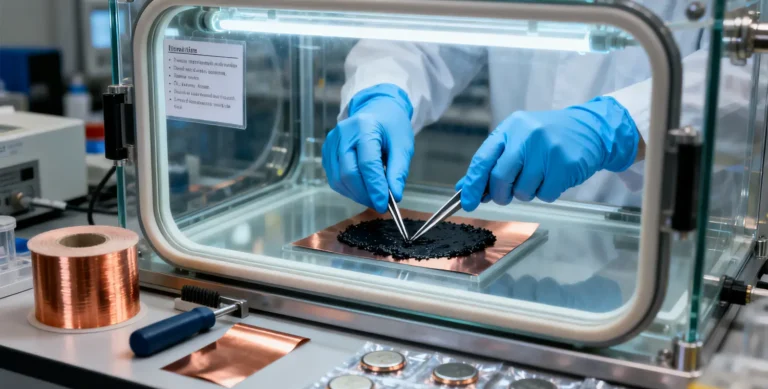
The gel or semi-solid electrolyte reduces the amount of free liquid organic electrolyte in the cell, which lowers the consequence of an internal fault and makes thermal propagation less aggressive. For a room that sits beneath a stand full of people, that containment behaviour matters more than a few percentage points of efficiency. It does not remove the need for proper design: gas detection, compartment separation, a defined exhaust path and a suppression system sized by a fire engineer are still required.
Stadium Backup Technology Compared
| Attribute | Semi-Solid-State | LiFePO4 | Lead-Acid VRLA |
|---|---|---|---|
| Energy density | High | Medium | Low |
| Plant-room footprint | Smallest | Moderate | Largest |
| Thermal propagation risk | Low | Low–medium | Low |
| Standby calendar life | Long | Long | Short |
| High-rate discharge | Excellent | Good | Poor |
| Capital cost | Higher | Medium | Lowest |
Designing for the Event Window
Size the bank to the event, not just to the code minimum. The usual approach is to guarantee the life-safety load for the full statutory duration, then add enough capacity to hold playable lighting or a safe, orderly evacuation plus concourse egress for the crowd. Ask the integrator to model both cases separately: floodlights and emergency lighting have very different durations and both should appear in the commissioning test.
What to Ask a Supplier
Ask for the energy density figure measured at rack level, including thermal management and service access — cell-level numbers are not comparable. Request thermal-propagation test data at module level and the recommended compartment size. Confirm the warranty terms for a low-cycle, high-standby application, ask what monitoring the BMS exposes to the venue building management system, and require a full-load transfer test as part of handover rather than a simulated one.
People Also Ask
How much autonomy does a stadium actually need? Most venues specify the statutory emergency duration for life-safety systems, then add 30–90 minutes of egress and concourse lighting. Broadcast and floodlighting are usually sized case by case.
Can it be retrofitted into an existing plant room? Often yes, and that is the main argument for higher density. Have a structural engineer confirm floor loading before committing to a rack layout.
Is semi-solid-state safe in a venue under a stand? It has better containment behaviour than liquid-electrolyte cells, but it still needs compartmentation, gas detection and an engineered suppression and exhaust path.
Does higher density mean shorter life? Not necessarily. Cycle and calendar life depend more on the cell chemistry and the standby conditions than on density; always read the warranty against your actual duty.
Written by Karl at China Battery Technology. Request a quote.