Lithium Battery for Observatory: Quiet Power for Remote Domes
Lithium Battery for Observatory: Quiet Power for Remote Domes
An observatory draws modest but unforgiving power: the dome must keep rotating, the mount must keep tracking, and the camera must stay cool through a long exposure. A generator is too loud and too dirty for a site chosen for its darkness. That is why most professional and advanced amateur installations now pair solar or a weak grid feed with a bank from an experienced lithium battery manufacturer that can guarantee low electrical noise and a decade of silent service.
What an Observatory Actually Loads
A typical site runs a dome motor, mount drives, a cooled CMOS or CCD camera, a focuser, filter wheel, dew heaters, a weather station, and a modest network stack. Continuous draw rarely exceeds 300–600 W, but it is on for 8–12 hours straight and must not sag when the dome motor starts. Lithium’s flat discharge curve keeps tracking accuracy intact, while lead-acid voltage droop near the end of the night commonly triggers mount errors and aborted exposures.
Chemistry and Noise
LiFePO4 is the preferred chemistry for fixed observatory banks. It is thermally stable in unheated domes, tolerates the partial-state-of-charge cycling typical of solar charging, and delivers 3000–6000 cycles. Just as important, a good pack has a clean DC output: switching noise from a poor BMS or inverter shows up directly as banding in long sub-exposures. Specify a unit with documented ripple figures and keep the inverter electrically separated from the camera power path.
Observatory Power Comparison
| Criterion | LiFePO4 | AGM Lead-Acid | Diesel Generator |
|---|---|---|---|
| Acoustic noise | Silent | Silent | High |
| Usable capacity (DoD) | 90–95% | 50% | n/a |
| Cycle life | 3000–6000 | 400–700 | n/a |
| Cold-site behaviour | Heating blanket needed below 0 °C charge | Capacity loss | Starts reliably |
| Maintenance visits / year | 0–1 | 2–4 | 6–12 |
Sizing for Autonomy
Start from a nightly energy budget. Multiply each device’s wattage by its duty hours, add 25% for dew heaters on humid nights, then divide by the usable depth of discharge. A site averaging 4 kWh per night wants roughly 5 kWh of LiFePO4 capacity for one night of autonomy, or 10 kWh for two cloudy nights. Size the solar array to recharge that bank in a single clear day, which at mid-latitudes means about 1.5–2 kW of panels per 10 kWh of storage.
Cold, Altitude and Condensation
Mountain sites routinely fall below freezing, and lithium cells must not be charged below 0 °C. Insist on a pack with integrated low-temperature charge cut-off and self-heating, and mount the bank inside an insulated enclosure rather than on the cold pier. Keep the enclosure sealed against condensation, with a small desiccant breather, and route cables through gland plates so the seal survives a winter.
Remote Monitoring
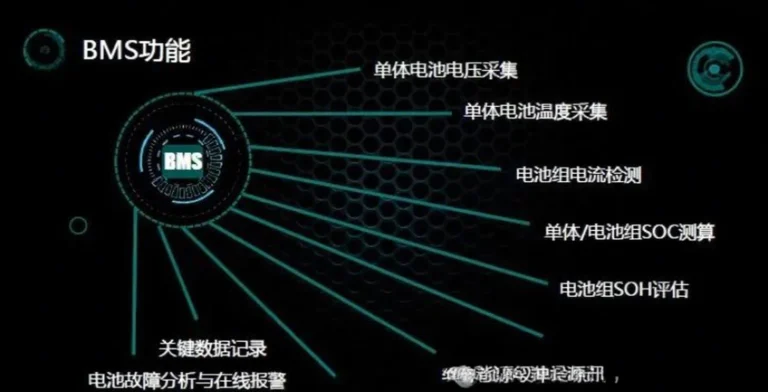
Because a visit to a remote dome is expensive, monitoring is not optional. Choose a battery with CAN or RS485 output that logs state of charge, cell balance, temperature and charge/discharge current, and forward it to a dashboard with alert thresholds. A pack that reports a drifting cell months before failure lets you schedule maintenance during the bad-weather season instead of losing an imaging run.
Specifying the Pack
Give the manufacturer a load profile rather than a single wattage: peak motor inrush, continuous nightly current, and the autonomy window. Confirm IP rating for the enclosure, cell-level fusing, a BMS with low-temperature protection, and transport certification (UN38.3) if the site is reached by air or rough road. Ask for cycle-life data at the actual depth of discharge you plan to use, not a headline number.
People Also Ask
How many nights can a lithium observatory battery cover? That depends entirely on capacity versus nightly draw. Most sites design for one to two full nights of autonomy, with solar recharging during the day; three or more nights requires either a much larger bank or a generator backup.
Will the battery or inverter ruin my images? Not if it is specified correctly. Keep the camera on a clean linear supply or a low-ripple DC-DC stage, and separate instrument cabling from motor and inverter runs to avoid induced noise.
Can I charge lithium from my existing solar controller? Usually yes, but the controller must support a lithium charge profile and low-temperature cut-off. Older lead-acid controllers float at a voltage that keeps a lithium pack permanently stressed.
How long will the bank last at a remote site? In typical 50–70% nightly cycling, a quality LiFePO4 bank runs 8–12 years, compared with 2–4 years for AGM under the same duty.
Written by Karl at China Battery Technology. Request a quote.