Sodium-Ion Battery for Radar Station: Reliable Off-Grid Power
Sodium-Ion Battery for Radar Station: Reliable Off-Grid Power
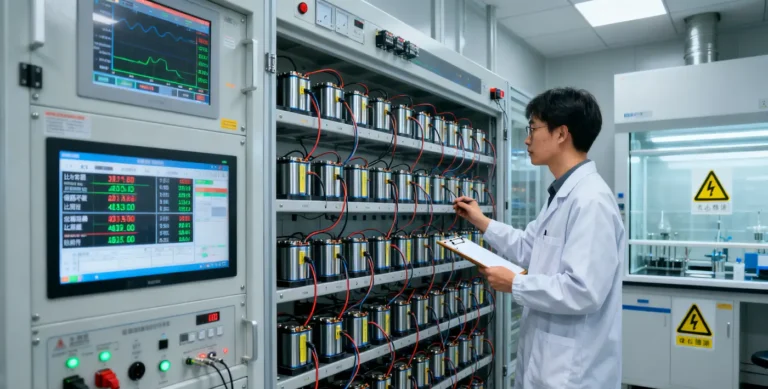
Radar installations — weather, air-traffic, coastal surveillance, and navigation — often sit on hilltops, islands, or arctic fringes where grid power is weak or absent. They need backup that starts instantly and survives long cold standby. A sodium ion battery is becoming a practical choice for these sites because sodium is abundant, low-cost, and performs well below freezing without heaters.
Why Radar Sites Need Resilient Backup
A radar feed that blinks during a storm is a safety gap, not a glitch. Sites draw a steady transmit-and-processing load plus surge from rotation motors and transmitters, and they may run entirely off solar-plus-storage in remote locations. Sodium-ion’s long cycle life and tolerance for partial state of charge make it well suited to daily solar cycling and rare deep backup events alike.
Sodium vs Lithium for Remote Sites
Sodium-ion uses iron, manganese, and hard-carbon rather than lithium, nickel, and cobalt, so material cost and supply risk drop. For a bulky stationary enclosure where weight is irrelevant, that saving is pure margin. It also keeps capacity at −20 °C far better than LFP, eliminating the heater load that chews into a lithium bank’s winter autonomy.
Radar Station Battery Comparison
| Attribute | Sodium-Ion | LFP (LiFePO4) |
|---|---|---|
| Material cost | Lower | Medium |
| Cold (−20°C) capacity | >90% | Reduced (needs heat) |
| Cycle life | 3000–6000 | 4000–7000 |
| Supply risk | Low | Medium |
| Footprint | Larger | Smaller |
Sizing for Continuous Load
Add the transmitter, receiver, rotation motor, and shelter heating to get continuous watts, then multiply by the required autonomy window — often 24–72 hours for a remote site. Because sodium handles deep discharge well, you can use a larger fraction of nameplate capacity than you would with lead-acid, shrinking the bank for the same runtime.
Cold-Weather Advantage
Arctic and alpine radar benefits most. A sodium bank avoids the heater penalty that drains a lithium system in winter, and its stable chemistry simplifies enclosure fire design for unattended sites. For tropical coastal stations, the lower cost per kWh is the bigger draw.
Deployment Tips
Ventilate the enclosure, protect against condensation, and choose a BMS with remote monitoring so a failing cell is flagged before it takes the site down. Pair the battery with a solar array or generator transfer so the bank cycles gently rather than sitting fully charged for months.
Integration with Renewables
Most remote radar sites already carry a solar or wind array, and sodium-ion absorbs that variable generation smoothly while discharging through long standbys without the sulfation risk that kills lead-acid in partial state of charge. Sized correctly, the battery can carry the site through multi-day cloud cover, and the lower heater load in winter means more of the stored energy actually reaches the transmitter rather than warming the enclosure.
Monitoring and Service
Treat the battery as a managed asset. A BMS with remote telemetry lets a central operator watch every remote site’s state-of-health, catch a weak cell before it causes an outage, and schedule a single planned truck roll instead of an emergency callout. For sites reachable only seasonally, that visibility is the difference between planned maintenance and a failed surveillance window during the worst weather.
Site Survey Checklist
Before specifying the bank, record the site’s continuous load, autonomy requirement, temperature extremes, and available generation. A short site survey prevents both undersizing (outages) and oversizing (wasted cost), and gives the supplier the numbers needed to quote a tuned sodium-ion system rather than a generic box that leaves margin on the table.
People Also Ask
Is sodium-ion ready for unattended sites? Yes — stationary sodium cells are already deployed in remote and cold storage projects as of 2025–2026, with cycle lives suited to multi-year service.
When should I still pick lithium? When space is tight or you need maximum energy density per cubic meter; LFP remains the compact choice for constrained enclosures.
Written by Karl at China Battery Technology. Request a quote.
Related reading: Sodium-Ion Battery for Offshore Platforms: Safer Remote Power