Semi Solid State Battery for Electric Kick Scooter: Lighter Urban Rides
Semi Solid State Battery for Electric Kick Scooter: Lighter Urban Rides
Electric kick scooters are the definition of weight-sensitive: every gram the rider carries or the deck supports changes handling and range. A semi solid state battery trades some of the flammable liquid electrolyte for a composite or gel layer, lifting energy density and safety without the cost and manufacturing risk of full solid-state cells — a practical step toward longer, lighter last-mile rides.
Why Scooters Benefit First
A kick scooter’s frame is small and its payload tight, so battery mass is a larger share of total weight than in a bike or moped. Replacing a liquid Li-ion pack with a semi-solid one of equal weight adds range; holding range constant lets makers slim the deck or strengthen the stem. Either way the rider feels it on hills and curbs.
Safety on Shared Streets
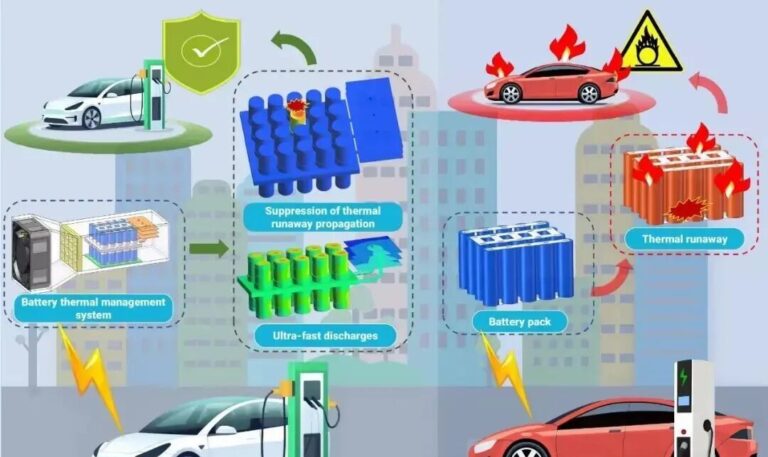
Scooters get dropped, rained on, and charged in bedrooms. Less free liquid electrolyte means lower leakage and thermal-runaway risk, which matters for the many units stored and charged inside homes or shared fleets. The softer cell also tolerates minor swelling better than a rigid pouch.
Scooter Battery Comparison
| Attribute | Semi-Solid | Liquid Li-ion | Full Solid-State |
|---|---|---|---|
| Energy density | High | Medium | Highest |
| Safety | High | Medium | Very high |
| Weight (same Wh) | Lower | Baseline | Lowest |
| Availability | Shipping 2025–26 | Today | Limited |
| Cost | Medium-high | Low | High |
What to Ask a Supplier
Request the cell’s gravimetric and volumetric energy density, cycle life at your typical partial depth of discharge, and the tested operating temperature range. For a shared fleet, ask about the BMS’s over-current and over-temperature cutoffs and whether the pack is certified to the relevant e-mobility standard. A manufacturer with e-bike or micromobility references is worth more than the cheapest quote.
Cost and Market Outlook
Semi-solid cells still carry a premium over commodity 18650/21700 packs, but the gap is narrowing as volume grows. For premium and shared scooters where range, weight, and fire-safety perception drive sales, the uplift is justified; for budget models, liquid Li-ion remains the value choice for now.
Real-World Gains
In a typical 350 Wh commuter scooter, swapping to a semi-solid pack of the same mass can add 50–100 Wh of usable energy — roughly two to four extra kilometers per charge — or let the maker cut 0.5–1 kg from the deck. For delivery riders doing multiple loops, that weight saving reduces fatigue across a shift.
People Also Ask
Are semi-solid scooter batteries available now? Early premium and pilot scooters are adopting them in 2025–2026; broader rollout follows as cell volume scales.
Do they charge like normal Li-ion? Yes — they use the same CC-CV charging profile, so existing scooter chargers work without modification.
Will range really improve? At equal weight, yes — higher density packs add 15–30% range depending on the cell grade.
Can I retrofit my current scooter? Only if the pack voltage and BMS protocol match; most riders buy it built into a new deck rather than swapping cells.
How long do they last? Like other lithium cells, 800–1500 cycles to 80% capacity under typical scooter partial discharge, after which range slowly tapers rather than failing suddenly.
Charging Best Practices
Charge in a cool, dry place and avoid leaving the pack at 100% for weeks between rides — store around 50–70% for long idle periods to preserve cell health. Use the manufacturer’s charger rather than a generic one, and inspect the deck connector for corrosion after wet rides. For shared fleets, schedule balanced charging so no single pack is deep-cycled far more than its siblings, which would age the fleet unevenly.
Written by Karl at China Battery Technology. Request a quote.
Related reading: Semi-Solid State Battery for VR Headsets: Lighter, Safer Immersion