Solid-State Battery for Aerospace: Lighter, Safer Flight Power
Solid-State Battery for Aerospace: Lighter, Safer Flight Power
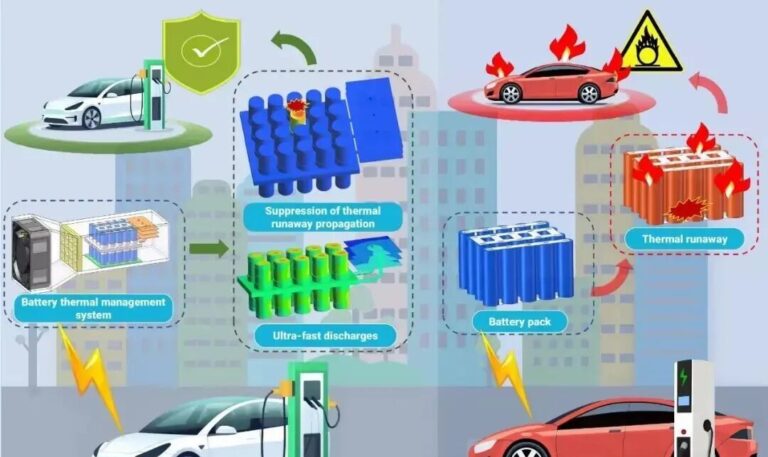
In aerospace, every gram of battery is paid for in fuel, payload, or flight time. Liquid-electrolyte lithium works, but its flammable electrolyte and swelling behavior are a poor match for pressurized cabins and long-duration spaceflight. A semi solid state battery removes most of the liquid, raising energy density and removing the dominant ignition path — which is why aerospace programs are funding it for drones, eVTOL, and satellites where failure is not an option.

Why Aerospace Pushes the Chemistry Frontier
Flight platforms reward energy density harder than any consumer product. A drone that gains 20% endurance from a better cell can carry more sensor or deliver more range; a satellite that survives more charge cycles needs fewer replacements on a multi-year mission. Aerospace also tolerates higher cell cost than cars do, which is exactly the condition under which new chemistries first scale from lab to production line.
Where Semi-Solid Fits Today
Fully solid-state cells are still climbing the manufacturing curve, so semi-solid — a composite or gel electrolyte replacing much of the liquid — is the available step. It keeps rolled-electrode production, lifts energy density 20–40% over conventional lithium, and sharply reduces leakage and thermal risk. That makes it attractive for high-value, weight-sensitive platforms now, while full solid-state matures.
| Attribute | Semi-Solid | Liquid Li-ion | Full Solid-State |
|---|---|---|---|
| Energy density | High | Medium | Highest |
| In-flight fire risk | Low | Medium | Very low |
| Pressure tolerance | Good | Poor (vents) | Excellent |
| Maturity / supply | Medium | Very high | Low |
| Relative cost | High | Low | Very high |
eVTOL and Urban Air Mobility
Electric vertical-takeoff aircraft need a pack that sustains brutal discharge on takeoff and climb, then absorbs heavy regen on descent without overheating. Solid-state chemistry tolerates that pulse better and removes the cabin-fire concern that regulators weigh heavily for crewed flight. Early eVTOL programs are qualifying semi-solid packs precisely because they close the safety gap while full solid-state volumes ramp.
Satellites and Deep Space
In orbit, batteries must hold capacity through vacuum, radiation, and thousands of shallow cycles with no maintenance. Solid-state cells avoid the electrolyte loss and pressure-venting issues that limit liquid cells, extending mission life. For lunar and deep-space craft, the weight savings compound with every kilogram saved at launch.
Certification and the Road to Volume
Aerospace cells must pass vibration, altitude, and thermal-cycling qualification far beyond automotive. Work with a supplier that documents cell-level traceability and qualification data, not just a spec sheet, and plan for a multi-year qualification window before flight adoption.
Weight Savings Become Mission Payload
On any aircraft, mass removed from the battery is mass available for sensors, cargo, or range. A 30% lighter pack can mean an extra science instrument on a satellite or another kilometer of eVTOL range per charge. That conversion — grams of battery into mission value — is why aerospace programs accept solid-state’s premium today while the rest of the market waits for price to fall.
Cost Trajectory and When to Adopt
Solid-state cells still carry a price premium, but the curve is steep. As semi-solid lines reach automotive-scale volume, aerospace benefits from the spillover without funding the entire ramp. The practical advice for program managers is to qualify semi-solid now for weight-critical subsystems, bank the certification work, and step up to full solid-state when volume pricing arrives rather than waiting on the sidelines and losing the qualification head start.
People Also Ask
Are solid-state batteries flying yet? Semi-solid cells are already in premium drones and aerospace pilots; full solid-state is in flight-test and demo programs as of 2025–2026.
Why not just use more lithium-ion? Weight and fire-safety limits cap lithium-ion on crewed and enclosed platforms; solid-state chemistry removes both constraints at the cost of near-term price.
Written by Karl at China Battery Technology. Request a quote.
Related reading: Semi-Solid State Battery for VR Headsets: Lighter, Safer Immersion