Semi Solid State Battery for Exoskeleton Suit: More Shift Time, Less Weight on the Hips
Semi Solid State Battery for Exoskeleton Suit: More Shift Time, Less Weight on the Hips
Every gram an exoskeleton carries is a gram the wearer carries. That is the brutal arithmetic behind wearable robotics, and it is why pack energy density decides whether a suit gets used for a full shift or abandoned after two hours. A semi solid state battery delivers roughly 300 to 360 Wh/kg at cell level against 240 to 270 for a good conventional lithium-ion pouch, which on a typical logistics exoskeleton means either an extra ninety minutes of assistance or half a kilogram removed from the lumbar module.
The Load Profile of a Powered Suit
Exoskeletons are not steady-draw devices. A hip-assist unit idles at 15 to 30 W while the wearer stands, then spikes to 250 to 400 W during a lift, several hundred times a shift. Full-body industrial suits push peaks past 800 W. The pack therefore needs modest average energy but respectable pulse capability, and it must handle thousands of shallow partial cycles rather than a few hundred deep ones. Cells optimised purely for capacity fade quickly under that pattern.
What Semi-Solid Changes
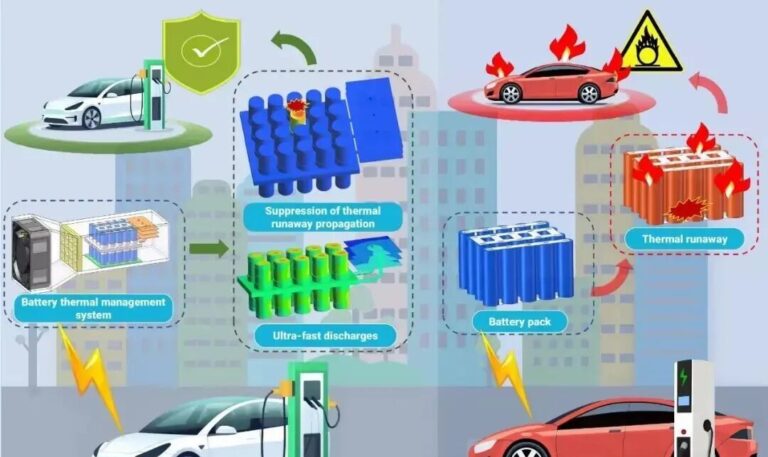
Semi-solid cells replace most of the liquid electrolyte with a gel or quasi-solid matrix, which allows thicker electrodes and a silicon-rich anode without the swelling problems that plague conventional pouches. Practically, that means higher energy per kilogram, a lower rate of gas generation and a thermal runaway onset around 30 to 50 °C higher than a comparable NMC liquid cell. For a battery strapped to a human torso, that last point is not a specification detail — it is the whole argument.
Pack Comparison for Wearable Robotics
| Cell type | Energy density | Pack mass for 500 Wh | Peak rate | Runaway onset |
|---|---|---|---|---|
| Semi-solid NMC | 300–360 Wh/kg | 1.8–2.1 kg | 3C | ~200 °C |
| Conventional NMC pouch | 240–270 Wh/kg | 2.4–2.8 kg | 5C | ~150 °C |
| LiFePO4 cylindrical | 140–170 Wh/kg | 3.8–4.4 kg | 3C | ~250 °C |
| Full solid-state (pilot) | 350–450 Wh/kg | 1.4–1.7 kg | 1–2C | >250 °C |
Form Factor and Wearer Comfort
Mass placement matters as much as mass itself. A pack carried at the lumbar spine, close to the body’s centre of gravity, feels roughly half as heavy as the same pack on the shoulders. We build exoskeleton packs as thin stacked pouches, typically 12 to 18 mm thick with a gentle curve to follow the lower back, in a glass-filled nylon shell with an elastomer bump layer. Hard corners become pressure sores over an eight-hour shift, and no amount of runtime compensates for a suit that hurts to wear.
Hot-Swap Instead of Fast Charge
Fast charging a wearable pack is the wrong optimisation. Shift patterns favour swapping: two 400 Wh packs on a dock, one on the worker, exchanged at the break. That keeps charge rates gentle at 0.5C, which materially extends cycle life, and it removes the thermal stress of high-rate charging next to a person. Design the connector for one-handed blind mating with a mechanical latch and a keyed polarity, because it will be operated by someone wearing gloves without looking.
Safety, Standards and Certification
Wearable packs face a stricter bar than industrial ones because the failure mode is a burn injury. Target IEC 62133-2 for the cells, UN38.3 for transport, and IEC 63327 or the relevant ISO 13482 personal-care robot clauses at system level. We add a crush test beyond standard requirements — a worker will eventually fall or be pinned — and specify a BMS with independent secondary overvoltage protection so a single controller fault cannot vent a cell against someone’s spine.
Cost and Availability Today
Semi-solid cells currently cost roughly 1.6 to 2.2 times a comparable NMC pouch and lead times run longer because capacity is still ramping. For consumer devices that premium is hard to justify. For an exoskeleton priced in the tens of thousands, where extra shift time directly drives the customer’s return on investment, the pack is a small share of total cost and an outsized share of perceived quality. Expect the gap to narrow substantially as pilot lines convert to volume production over the next few years.
People Also Ask
How long does a 500 Wh semi-solid pack run an exoskeleton? Typically six to nine hours of mixed lifting duty on a hip-assist suit, or three to four hours on a full-body powered frame.
Are semi-solid cells safe against puncture? They are markedly more tolerant than liquid cells because there is little free electrolyte to ignite, but the pack still needs mechanical protection and a proper BMS.
Can I retrofit semi-solid cells into an existing suit? Sometimes, if the voltage window and connector match. The gain is usually more runtime in the same envelope rather than a lighter pack.
What cycle life should I expect? Around 1,000 to 1,500 full-equivalent cycles to 80 percent capacity, which for shallow shift cycling usually means three to four years of daily use.
Written by Karl at China Battery Technology. Request a quote.
Related reading: Semi-Solid State Battery for VR Headsets: Lighter, Safer Immersion