Battery Solutions for Cold Chain Monitoring Devices: Power That Outlasts the Journey
Battery Solutions for Cold Chain Monitoring Devices: Power That Outlasts the Journey
A pharmaceutical shipment can survive a delayed flight, a customs hold and a rough forklift driver — but if the temperature logger’s battery dies on day nine of a twelve-day journey, the entire consignment may be rejected for lack of evidence. Selecting the right cell is therefore not a component decision but a compliance decision. Our team designs battery application solutions for cold chain hardware makers, and the recurring lesson is that room-temperature datasheets tell you almost nothing about -25 C reality.
What Cold Does to Common Chemistries
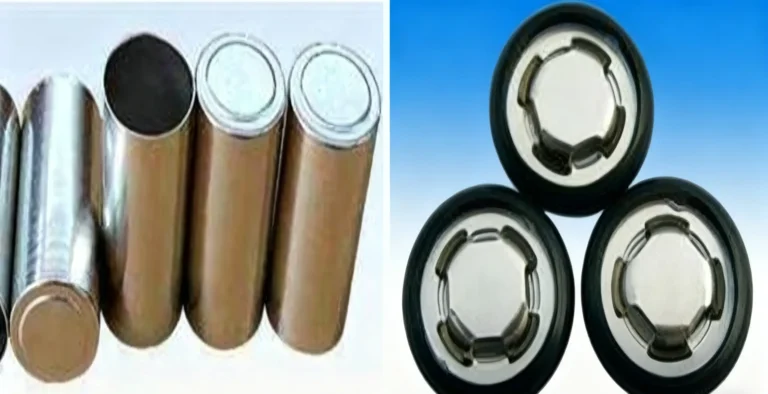
At -20 C, a standard alkaline cell delivers under 40 percent of its rated capacity and its internal resistance triples, causing brownouts during radio transmission bursts. Consumer lithium-ion fares better on capacity but cannot be charged below 0 C without plating damage. The chemistries that genuinely work in reefer containers are primary lithium types: Li-SOCl2 (lithium thionyl chloride) and Li-MnO2, both rated to -40 C and -30 C respectively with usable capacity above 70 percent.
Sizing for a Real Shipment Profile
Consider a cellular tracker logging every 10 minutes and uploading hourly: sleep current 15 uA, sensor reads at 2 mA for 100 ms, and a 2 A LTE-M transmission burst lasting 3 seconds each hour. That averages out near 2.1 mAh per day for logging plus roughly 60 mAh per day for radio — call it 65 mAh daily. A 30-day journey needs about 2 Ah at room temperature; applying a 0.7 cold-derating factor and a 30 percent end-of-life margin, specify at least 3.7 Ah. A single D-size Li-SOCl2 cell at 19 Ah covers ten such journeys.
Cell Options Compared
| Chemistry | Min temp | Capacity at -20 C | Pulse ability | Best use |
|---|---|---|---|---|
| Li-SOCl2 bobbin | -55 C | ~80% | Weak, needs capacitor | Multi-year loggers |
| Li-SOCl2 + HLC hybrid | -40 C | ~75% | Strong | Cellular trackers |
| Li-MnO2 (CR) | -30 C | ~70% | Moderate | Short-haul BLE tags |
| Alkaline | -18 C practical | <40% | Poor | Not recommended |
The Passivation Trap in Li-SOCl2
Thionyl chloride cells build a passivation layer during storage that causes a voltage dip on the first heavy pulse — sometimes enough to reset a tracker that has sat in a warehouse for six months. The fixes are well known: a depassivation pulse routine in firmware at first boot, or pairing the bobbin cell with a hybrid layer capacitor (HLC) that handles radio bursts. Any supplier who cannot explain their passivation strategy has not shipped serious cold chain volume.
Certification and Shipping Logistics
Trackers travel inside cargo, so the batteries must comply with UN38.3 and the relevant packing instruction — PI 968/970 for lithium metal cells. Devices permanently installed in reefer containers face additional CSC plating scrutiny. Ask your battery partner for test summaries per cell lot, not per model; auditors increasingly check lot-level paperwork.
People Also Ask
Can rechargeable cells work for reusable cold chain trackers? Yes, with care: LTO (lithium titanate) charges safely at -30 C and cycles thousands of times, at the cost of lower energy density. It is the only sensible rechargeable choice for deep-frozen returnable assets.
How do I estimate battery life remaining mid-journey? Coulomb counting beats voltage reading for primary lithium, whose discharge curve is flat until the end. Good trackers integrate consumed mAh in firmware and report it with each upload.
Do batteries need conditioning before winter shipments? Store cells at 15-25 C, run a depassivation cycle if they have been idle over three months, and never install cells straight from a freezing warehouse — condensation during handling corrodes contacts.
Written by Karl at China Battery Technology. Request a quote.
Related reading: Battery Solutions for Self-Service Kiosks: Reliable Unattended Power