
Sodium Ion Battery for Grid Storage: Cheap Capacity
Stationary grid storage lives or dies by cost per stored megawatt-hour, and sodium ion attacks that metric head-on. A trusted sodium ion battery supplier can fill long-duration roles where weight is irrelevant. The economics favour stationary use strongly.
Long Duration Economics
Because the pack never moves, low energy density is no penalty, and cheap materials dominate the lifetime cost calculation.
Four-hour and longer discharges suit sodium well, shaving renewable curtailment and shifting midday solar into evening peaks.
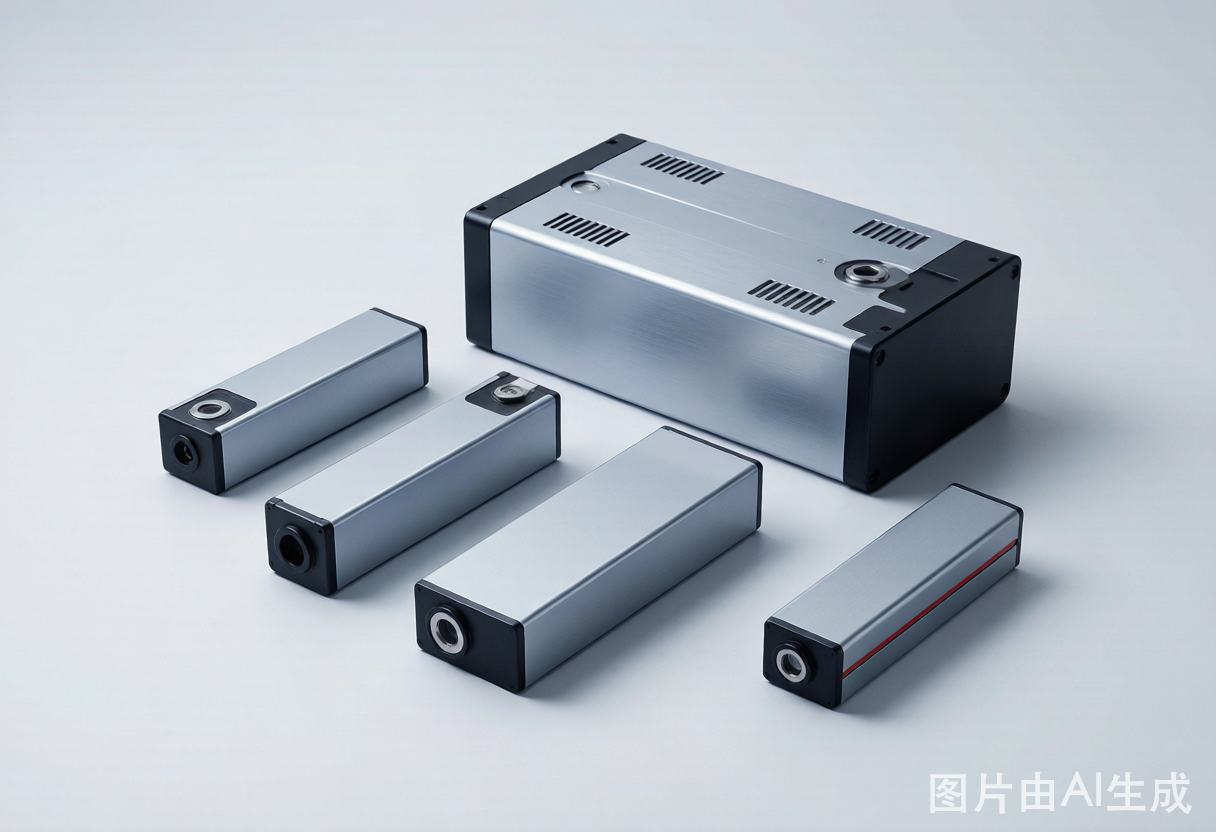
Siting and Safety
Sodium’s stable chemistry simplifies fire-safety review for large stationary installations near communities and substations.
Pair the battery with inverters and controls that meet grid-code frequency and voltage support from first energisation.
Deployment Scale
Standardise one container or cabinet format so spares, controls, and operator training stay simple across a multi-site portfolio.
Instrument each site for state-of-health so you replace on condition, not on a conservative calendar that wastes useful life.
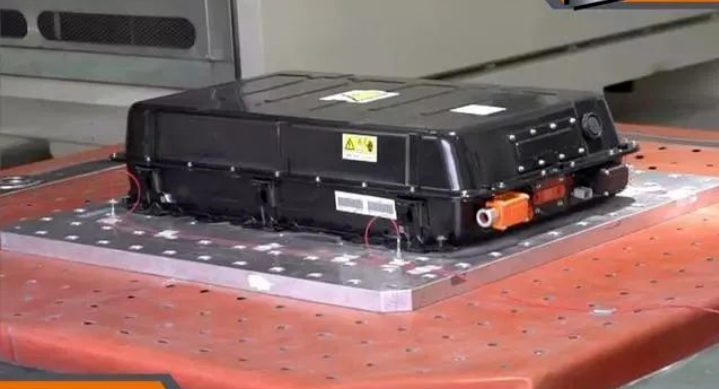
Comparison at a Glance
| Need | Spec | Note |
|---|---|---|
| Duration | 4 h+ | LDES |
| Cost | Low | Per kWh |
| Safety | Margin | Easier |
People Also Ask
Why sodium for grid storage? Stationary use ignores weight, so cheap abundant materials win on lifetime cost per cycle.
Frequently Asked Questions
Does density matter stationary?
No; low density is irrelevant when the pack sits still in a container.
What duration fits?
Four-hour and longer discharges where cost per cycle dominates revenue.
Key Takeaways
- Target LDES hours.
- Simplify fire review.
- Standardise format.
- Monitor health.
Selection Criteria
When you evaluate a sodium ion battery for grid storage, the lowest quote is rarely the best value, because the cheapest pack can fail earliest once it meets real load and temperature swings. A qualified sodium ion battery will help you match capacity, peak discharge rate, and certification to your actual duty cycle rather than a marketing figure on a spec sheet. Prioritise Target LDES hours., Simplify fire review., and Standardise format. during supplier review, and confirm warranty and field-support terms in writing before you commit to a purchase.
Remember that total cost of ownership also includes energy efficiency, expected cycle life, and the availability of spares and local service, all of which frequently matter more than the initial sticker price you are quoted today. Ask for references from operators running the same application, and validate the battery against a representative duty cycle before scaling the deployment across your whole fleet.
- Target LDES hours.
- Simplify fire review.
- Standardise format.
- Monitor health.
As a practical next step, shortlist two or three suppliers and request a reference installation in an application close to yours. A credible sodium ion battery will share independent case studies, validated test data, and an operator contact you can call. Compare the support offered after the sale as carefully as the headline specification, because that ongoing support often decides whether the sodium ion battery for grid storage delivers its promised value across the full service life rather than only on the first day of operation.
Finally, document your acceptance criteria before delivery: the test results, warranty terms, and service response time you expect in writing. Clear expectations prevent disputes later and give both sides a measurable standard for a successful and repeatable handover of the system.
Round-Trip Efficiency and Degradation
Sodium-ion grid storage typically lands at 85-90% round-trip efficiency, a few points below mature lithium iron phosphate but acceptable where land and materials are cheap. The degradation curve is flat: most cells lose capacity slowly to around 80% state of health after 4,000-6,000 cycles, which on a one-cycle-per-day site is roughly 12-16 years. Because sodium tolerates partial state-of-charge operation without the lithium plating risk that penalizes LFP at high SoC, you can run a sodium bank between 10% and 90% daily with little penalty. Size the bank for the delivered megawatt-hours after efficiency, not the nameplate, or you will under-deliver during the evening peak you built it for.
Grid-Code Compliance and Inverter Selection
A stationary bank is only as useful as the power-conversion system in front of it. Specify inverters that provide frequency-watt and volt-var support, low-voltage ride-through, and a response time under 100 ms for grid-forming duty. In the EU, the installation falls under IEC 62933 for energy storage systems and IEC 62477 for power electronics; in North America, UL 9540A fire propagation testing and UL 1973 cell marking are the baseline. Pair the battery management system with a plant controller that can island the site during a disturbance and resynchronize without a manual restart. Confirm the inverter’s dc voltage window matches the sodium string, which often sits higher per cell than an LFP equivalent.
Oversizing vs Stacking Cabinets
Because sodium is inexpensive per kWh, designers often oversize the bank to extend life rather than running it hard. A bank run at 0.2C daily instead of 0.5C can add years of service, and the marginal cost of the extra cells is low compared with a second inverter later. The alternative is a modular cabinet design where you add strings as load grows; that protects capital but adds balance-of-system and commissioning cost per stage. For a multi-site portfolio, standardize one cabinet format so spares, controls, and operator training stay identical across sites, which is where most of the lifetime saving actually comes from.
Recycling and End-of-Life
Sodium-ion avoids cobalt, nickel, and lithium, so the black-mass from recycling is simpler and the material is less geopolitically exposed. Today the economics rely on recovering aluminum, copper, and the sodium-bearing salts, with several hydrometallurgical routes already at pilot scale. Plan the decommissioning path at procurement: require the supplier to take packs back or name a regional recycler, and keep state-of-health telemetry so you replace on condition rather than on a conservative calendar that wastes useful life. A bank still at 82% SoH does not belong in a skip; it belongs in a less demanding second-life role such as a solar street-light buffer.
Frequently asked questions
Is sodium efficient enough for daily cycling? At 85-90% round-trip it is fine for four-hour and longer shifts where cheap capacity, not peak efficiency, drives the business case.
Which standards apply? IEC 62933 and IEC 62477 in Europe, UL 9540A and UL 1973 in North America, plus local grid-code frequency and voltage support.
How long will it last? Expect 4,000-6,000 cycles to 80% SoH, roughly 12-16 years at one cycle per day, with flat degradation that is easy to plan around.
Does low energy density matter for grid use? No, because the bank never moves; footprint is a siting question, not a performance one.
Written by Karl at China Battery Technology. Request a quote.
Related reading: Sodium-Ion Battery for Offshore Platforms: Safer Remote Power
Related Reading
- sodium-ion battery technology guide
- Sodium Ion Battery for Low Speed Vehicle: Value Fleet
- Sodium Ion Battery for Solar Street Light: All-Night