Solid State Battery Electrolyte Types Compared
Solid State Battery Electrolyte Types Compared
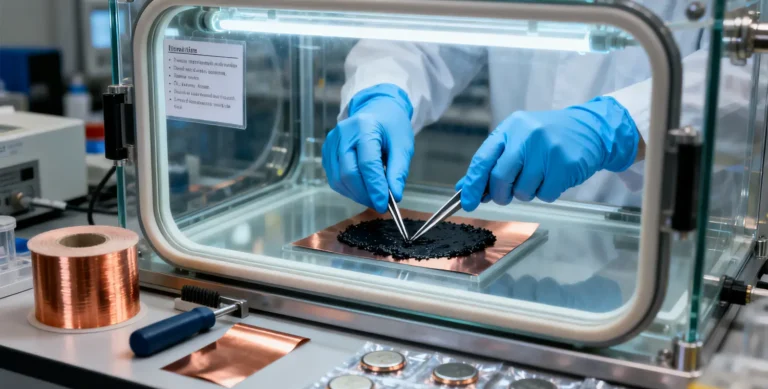
The electrolyte is the defining component of any next-gen cell, and the three solid state battery electrolyte types — polymer, sulfide, oxide — split sharply on the properties that matter. A semi solid state battery may even blend them. Understanding the trade-offs helps a lithium battery manufacturer pick the right path for your application.
Polymer Electrolytes
Polymer electrolytes are flexible and easy to process into thin films, but their ionic conductivity is poor at room temperature — they typically need heating to ~60 °C to perform. That limits them to warmed environments or niche use.
Sulfide Electrolytes
Sulfides offer the highest room-temperature conductivity and are press-formable, which suits mass production. The downside is sensitivity to moisture (releasing toxic H2S) and a narrower electrochemical window, demanding careful cell engineering.
Oxide Electrolytes
Oxides (e.g. garnet, NASICON) are stable, wide-window, and chemically robust, but brittle and hard to densify without high-temperature sintering, complicating large-format manufacturing.
| Type | Conductivity | Processability | Key challenge |
|---|---|---|---|
| Polymer | Low (warm) | Excellent | Needs heat |
| Sulfide | High | Good (press) | Moisture sensitivity |
| Oxide | Medium | Brittle | Sintering cost |
Blended and Semi-Solid Approaches
Many 2026 products use a semi-solid electrolyte — a small amount of liquid in a polymer or ceramic host — to capture most of the safety gain while keeping conductivity and processability practical. This is the pragmatic bridge most manufacturers are shipping now.
Frequently Asked Questions
Which type will win? No single winner; sulfide leads for EVs, oxide for specialty, polymer for warmed devices.
Why not pure solid? Pure solid layers struggle with interfacial contact and yield, so blends are pragmatic.
Does type affect safety? All remove flammable solvent; sulfide needs careful moisture control during build.
Written by Karl at China Battery Technology. Request a quote.