Semi-Solid Battery for Robotic Surgery: Safe, Precise Power
Semi-Solid Battery for Robotic Surgery: Safe, Precise Power
Surgical robots demand power that is compact, leak-safe, and utterly reliable — a fault mid-procedure is not an option. A semi solid state battery offers higher energy density than conventional cells with a meaningful safety margin, making it attractive for next-generation robotic surgical platforms, powered instrument arms, and portable endoscopic drives where space inside the sterile field is scarce.
Why Surgical Robots Need Better Cells
Robotic arms, endoscopes, and powered instruments must be small, sterilizable, and free of flammable liquid leaks near a patient. Conventional Li-ion is mature but carries electrolyte fire risk and swelling; full solid-state is still scaling. Semi-solid cells replace much of the liquid electrolyte with a composite, raising safety while keeping familiar, manufacturable rolled electrodes that suppliers can produce today rather than in a future pilot line.
Semi-Solid vs Liquid vs Full Solid-State
| Attribute | Semi-Solid | Liquid Li-ion | Full Solid-State |
|---|---|---|---|
| Energy density | High | Medium | Highest |
| Leakage risk | Low | Medium | Very low |
| Form-factor flexibility | Good | Poor | Excellent |
| Maturity / cost | Medium | Very high | Low / high |
| Patient safety margin | High | Medium | Very high |
Integration Considerations
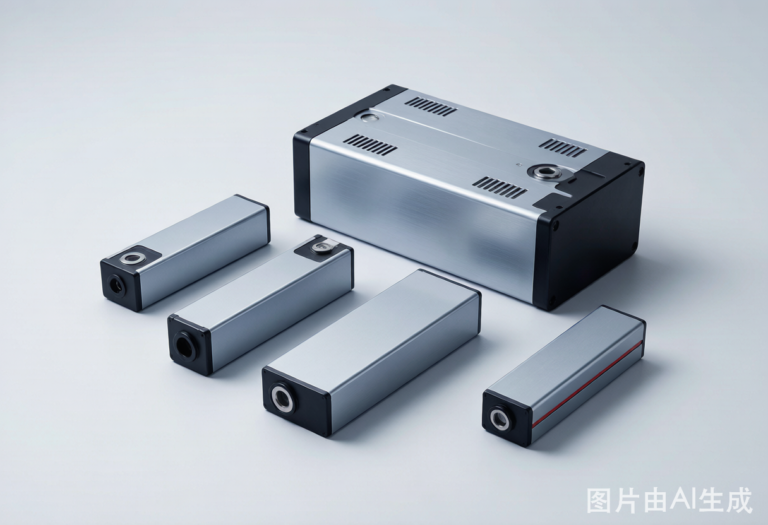
Specify cells to the instrument outline, validate the micro-BMS for the duty cycle, and qualify the pack for autoclave or single-use housings. Redundant isolation, certified medical-grade assembly, and full traceability protect the patient and the manufacturer. Work with a supplier experienced in regulated device documentation rather than a generic cell vendor, because surgical power carries liability and audit requirements ordinary consumer packs never meet.
Why Not Wait for Full Solid-State
Full solid-state promises the ultimate in safety and density, but interface resistance, dendrite control, and volume manufacturing are still being solved at medical grade. Semi-solid is the practical bridge: it captures most of the safety and density upside, ships in volume today, and reuses existing electrode lines, so device makers can launch improved instruments now instead of waiting years for a perfect cell.
Deployment and Lifecycle
In a hospital, treat the battery as a managed consumable. Track each pack’s cycle count, store it at partial state-of-charge between cases, and rotate single-use versus reusable instrument batteries according to the sterilizer’s thermal profile. A clear end-of-life pathway — return to the supplier for certified recycling — keeps the sterile supply chain clean and satisfies the facility’s environmental obligations.
Regulatory and Documentation
Surgical power sits under medical-device quality systems, so the cell supplier must provide design history, biocompatibility evidence for any patient-contact housing, and a recall traceability plan. Build the battery’s identity into the hospital’s asset register, link it to the instrument’s service record, and keep sterile-processing staff in the loop so a swapped pack is logged before the next case. That paper trail is what turns a clever cell into a defensible clinical product.
Cost vs Risk Trade-off
Semi-solid cells cost more than commodity Li-ion today, but in surgery the relevant metric is cost per safe procedure, not cost per watt-hour. Avoiding a thermal event, a leak near an open incision, or an unplanned pack swap mid-operation outweighs the cell premium many times over. Budget for the certified assembly and lifecycle service, and the total becomes competitive against the labor and risk of managing a less suitable chemistry.
People Also Ask
Are semi-solid cells available for medical devices now? Yes — several suppliers ship semi-solid cells for premium and medical pilot programs as of 2025–2026.
When will full solid-state reach the OR? High-volume medical-grade solid-state is still scaling; semi-solid is the practical step available today.
Written by Karl at China Battery Technology. Request a quote.