Lithium Battery for Electric Reach Truck: Powering Warehouse Vertical Lift
Lithium Battery for Electric Reach Truck: Powering Warehouse Vertical Lift
Reach trucks live a harsh life: short, brutal accelerations, a mast that lifts loads three stories, and opportunity charging between picks rather than a long overnight rest. Lead-acid was never designed for that profile. A trusted lithium battery manufacturer now supplies LiFePO4 packs built for exactly this duty — high peak current, fast recharge, and a battery management system that keeps the truck available through every shift.

Why Reach Trucks Suit Lithium
A reach truck draws a few hundred amps when the mast extends and the truck reverses, then sits idle for seconds between moves. Lithium accepts that burst-and-rest pattern without memory effect, and it absorbs a partial charge in minutes during a picker’s coffee break. Lead-acid needs a full, slow charge or it sulfates; lithium just tops up and goes back to work, so one battery often covers a full multi-shift day without a swap.
LiFePO4 vs Lead-Acid for Reach Trucks
| Attribute | LiFePO4 | Lead-Acid |
|---|---|---|
| Effective run time / shift | Full shift, no swap | Often needs mid-shift swap |
| Charge time to 80% | ~1 hour (opportunity) | 6–8 hours |
| Maintenance | None | Watering, equalize, vent |
| Weight saved | ~40–60% | — |
| Cycle life | 3000–5000 | 800–1500 |
| 10-year cost | Lower | Higher |
Sizing and Integration
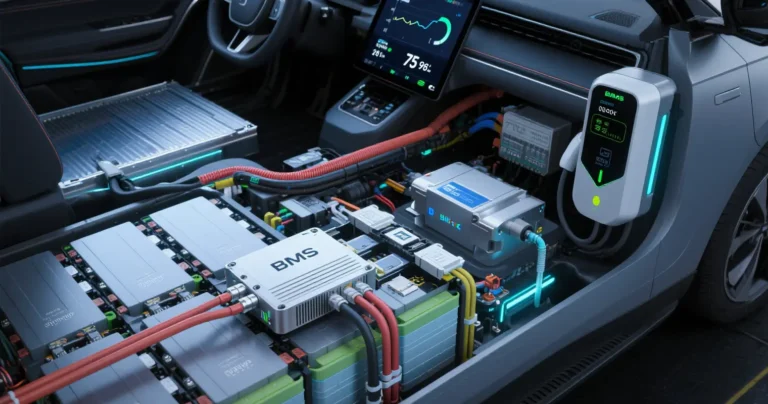
Size the pack to the worst-case lift-plus-travel draw plus a margin for cold aisles, and confirm the BMS supports CAN communication to the truck controller so state-of-charge and fault codes show on the dashboard. Choose a drop-in footprint that matches the existing battery compartment, and specify an IP54-or-better enclosure against dust and the occasional pallet-wrap snag. A qualified supplier provides the charger profile and cell-level fusing needed for a clean retrofit, plus the documentation your safety team expects for an indoor industrial battery.
Charging Strategy
Move from battery rooms to opportunity charging: a 15-minute top-up during breaks keeps the fleet moving and removes the labor and space cost of swapping packs. Centralize a few high-power chargers near break areas, and let the BMS balance cells automatically so no technician spends Fridays equalizing banks. Track each pack’s throughput in the fleet portal so you can schedule maintenance before capacity fades mid-season rather than reacting to a truck that dies at the rack.
Safety and Floor Space
Removing the lead-acid battery room also removes the ventilation, spill containment, and acid-handling rules that come with it. Lithium packs are sealed and stationary, so the footprint becomes productive storage or picking space. Keep the battery behind a latch only a trained tech can open, label the disconnect, and train operators to report a BMS alarm instead of pushing through it.
People Also Ask
Can lithium replace lead-acid in my existing reach truck? In most cases yes — with a matching voltage, a drop-in tray, and a lithium-compatible charger profile. Confirm the truck’s controller accepts the BMS communication before commissioning.
How much uptime do I gain? Operators typically recover 1–2 hours per shift previously lost to swaps and watering, and eliminate the battery room footprint entirely.
Does it pay back versus lead-acid? For multi-shift operations the avoided swaps, watering labor, and battery replacements usually return the premium in 2–4 years, after which the lithium pack keeps saving.
Bottom Line
For reach-truck fleets the math is simple: one lithium pack per truck, no swaps, no battery room, and a BMS that tells you before something fails. Specify it with a lithium battery manufacturer that understands warehouse duty, and the truck pays you back in uptime.
Written by Karl at China Battery Technology. Request a quote.