Lithium Battery for Electric Bus: Depot and On-Route Power
Lithium Battery for Electric Bus: Depot and On-Route Power
A city bus runs 16 to 20 hours a day and covers 200 to 350 km, which makes the battery the single most consequential component in the whole vehicle. Get the pack and the charging strategy right and the bus is cheaper to run than diesel; get it wrong and you have an expensive vehicle that cannot finish a route. This guide walks through depot charging, on-route opportunity charging, pack sizing, chemistry choice, thermal behaviour and the procurement scorecard a fleet buyer actually needs. For a lithium battery manufacturer serving transit, the difference between a good bus pack and a bad one is almost always in the duty-cycle engineering, not the cells.
Why buses switched to lithium
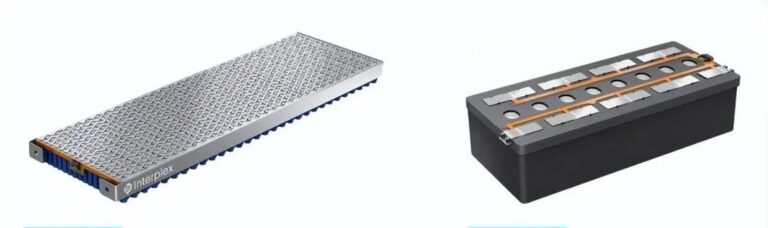
Lead-acid and nickel chemistries never worked for buses because the energy density was too low and the cycle life too short. A diesel bus runs all day on one tank; an early electric attempt needed midday swapping that stranded vehicles. Lithium, specifically LFP, changed the math: 3,000 to 6,000 cycles at 80% depth-of-discharge, energy density around 120 to 160 Wh/kg at the cell level, and a flat, predictable voltage curve. That is enough to put a usable 200 to 350 kWh pack on a 12-meter bus without eating the passenger floor. The shift was not about novelty; it was about a pack that finally survived the duty.
Depot charging architecture
Depot (overnight) charging is the backbone of most electric bus fleets. The bus returns to the garage, plugs into a 50 to 150 kW DC charger, and replenishes overnight across an 8 to 10 hour window. The advantage is simplicity: one charge event, no en-route infrastructure, and the pack is cool and rested. The disadvantage is that you need enough depot bays and enough grid connection to charge the whole fleet before the first departure. A 300 kWh pack on a 100 kW charger takes roughly 3.5 hours from empty, so a depot with 20 buses needs either many chargers or smart scheduling so vehicles stagger their charge across the night. A home energy storage system style buffer at the depot can shave peak demand and let you charge more buses on a weaker grid connection, which is a real cost saver in older depots.
On-route opportunity charging
Opportunity charging puts a fast charger (150 to 450 kW) at a terminus or busy stop and tops the bus during the layover, typically 5 to 10 minutes. The bus carries a smaller pack because it tops up several times a day, which lowers upfront vehicle cost but adds infrastructure and grid stress at the charging point. The trade is operational: smaller pack, more charging events, more points of failure. The right choice depends on route length and layover time. A short, frequent urban loop with long terminal layovers suits opportunity charging; a long cross-town route with no layover suits a big depot-charged pack. A battery application solutions study should simulate the actual timetable before committing, because the wrong mix strands buses mid-route.
Pack sizing worked example
| Parameter | Depot model | Opportunity model |
|---|---|---|
| Daily distance | 250 km | 250 km |
| Consumption | 1.3 kWh/km | 1.3 kWh/km |
| Daily energy | 325 kWh | 325 kWh |
| Pack size (80% DoD) | ~410 kWh | ~160 kWh |
| Charge events/day | 1 overnight | 4 to 6 layovers |
| Peak charger power | 100 to 150 kW | 300 to 450 kW |
The table shows the core trade: the depot model needs a big pack and modest chargers; the opportunity model needs a small pack and aggressive chargers. Both deliver the same daily energy. The depot model is gentler on the cells because one slow charge stresses less than several fast ones, so it tends to win on pack life even though the pack is larger. The opportunity model wins on per-vehicle capital if the depot grid cannot support many large overnight chargers.
Chemistry: LFP versus NMC for buses
Nearly every transit bus uses LFP, and the reason is safety and cycle life rather than energy density. A bus packs hundreds of kilowatt-hours close to passengers for 18 hours a day, so the lower thermal-runaway risk of LFP matters more than the extra range NMC would give. NMC’s higher density would shrink the pack, but the fire-safety case for carrying NMC under a crowded bus is hard to justify when LFP already covers the route. A semi-solid-state battery could eventually offer LFP-class safety with more energy, but it is not yet a volume bus product and the cost premium is unjustified for a weight-tolerant vehicle. For now, LFP is the rational default for bus packs.
Thermal management on the route
A bus pack sees wide temperature swings: a cold winter morning, a hot afternoon stuck in traffic, and the heat of charging. Lithium prefers 15 to 35 °C, and outside that band the BMS must manage charge rate and cooling. Depot charging overnight in a cool garage is easy; opportunity charging at noon in summer pushes the pack hot and the charger must throttle. Liquid cooling is now standard on serious bus packs because air cooling cannot pull heat fast enough during a 450 kW top-up. The BMS must log cell temperatures and ride through thermal events without tripping the bus offline, which is why thermal design is a first-class spec item, not a footnote.
Grid impact and charge scheduling
Charging a fleet is a significant electrical load. Twenty 300 kWh buses on 100 kW chargers is 2 MW of demand if they all charge at once, which can blow a depot’s connection and incur brutal demand charges. Smart scheduling spreads charging across the night, and a depot battery buffer absorbs the spikes. Some operators shift charging to midday solar, though a bus depot’s daytime load is low because vehicles are on the road. The cheapest grid strategy is usually to charge slowly overnight when rates are low and the connection is idle, which also happens to be gentlest on the cells. Model the demand charge before signing the power contract, because it often outweighs the energy cost.
Fixed pack versus swap
A few operators tried battery swapping: the bus pulls in, a robot swaps a depleted pack for a charged one in minutes. The appeal is zero charging downtime. The reality is expensive: standardized swap packs, a swap station with charged inventory, and a second pack per bus sitting idle. For most transit agencies the capital and complexity do not pay back versus depot or opportunity charging. Swapping survives mainly in niche high-uptime fleets. The procurement lesson is to question any vendor pushing swap as the default; for a normal city route, fixed-pack depot charging is simpler and cheaper, and the BMS, not the swap hardware, is what keeps the pack healthy.
Safety and fire containment
Bus packs sit under passengers, so containment is non-negotiable. The enclosure must meet thermal-runaway propagation standards so a single cell fault does not cascade through the pack, and the BMS must detect and isolate a failing module fast. Transit agencies increasingly require propagation resistance testing and a documented emergency response plan. A sodium-ion battery is intrinsically harder to thermal-runaway, which is interesting for future bus packs where weight is irrelevant and safety dominates, but sodium’s lower density means a larger pack for the same energy, and it is not yet a volume transit product. For today’s procurements, LFP with rigorous propagation testing is the safe, available choice.
Procurement scorecard for a bus pack
Score the pack on delivered cycle life at your real depth-of-discharge, not the brochure number; on the warranty expressed in cycles and years together; on the BMS’s ability to report state-of-health over the bus’s telemetry bus; on the thermal system’s certified propagation resistance; and on the supplier’s reference deployments at your climate. Divide pack price by expected cycles to get a true $/cycle and compare bidders on that, because the cheapest sticker usually carries the shortest life. A disciplined buyer treats the battery as a 12-year asset and buys the lowest total cost across the contract, not the lowest line item. Keep the charging strategy and the pack as one decision, because they are inseparable in practice.
Total cost of ownership over the contract
Over a typical 12-year transit contract, the pack’s purchase price is a fraction of what it costs to own. Energy, charger amortization, demand charges, cooling electricity, and pack replacement if it wears out early all stack up. A pack that lasts the full contract at 80% depth-of-discharge saves a mid-contract replacement that can run into six figures per vehicle. The TCO view also justifies spending more on a better BMS and cooling up front, because those few percent of bill-of-materials cost protect the entire cells investment. Buyers who model only sticker price systematically overpay; the contract is won on lifecycle math. This is where a lithium battery manufacturer with in-house BMS and thermal engineering earns its premium, because the integration quality shows up only after years of service.
Frequently asked questions
Which chemistry is best for a bus? LFP dominates transit because its safety and cycle life outweigh NMC’s density gain for a weight-tolerant, passenger-close vehicle.
Depot or opportunity charging? Depot is gentler on cells and simpler; opportunity lowers per-vehicle pack cost but needs aggressive chargers and grid at stops.
How big a pack do I need? Multiply your daily km by real-world consumption (about 1.0 to 1.5 kWh/km) and divide by your usable depth-of-discharge, then add margin.
What should the warranty say? Cycles at a stated depth-of-discharge and temperature plus years, so it is enforceable rather than a calendar that outlasts the cells.
Written by Karl at China Battery Technology. Tell us your route length, layovers and depot grid and we will size the pack and chargers—request a quote for a depot-and-route power plan.
Related Reading
- custom lithium battery manufacturer
- Lithium Battery for Electric Motorcycle: Range and Weight
- Lithium Battery for Electric Tractor: Field Duty Cycles