Home Energy Storage for Houseboat: Quiet Power on the Water
Home Energy Storage for Houseboat: Quiet Power on the Water
A generator solves the power problem on a houseboat and ruins the reason for being there. Noise, exhaust smell, fuel storage and the constant maintenance of a small petrol set are the top complaints owners report. Modern solar panels and battery banks have quietly crossed the point where they can carry most live-aboard loads, which is why a properly sized home energy storage system has become the default upgrade rather than an experiment.
Why Houseboats Need Storage, Not a Generator
A houseboat load profile is unusually storage-friendly. Refrigeration, lighting, pumps, electronics and phone charging run steadily at a few hundred watts; nothing needs the multi-kilowatt surge of a workshop. The heavy loads — air conditioning, washing machine, induction hob — are occasional and can be scheduled for sunny hours or a shore-power hookup. That pattern is exactly what a battery handles well and what makes a generator run inefficiently at low load.
Reading a Houseboat Load Profile
Measure before buying. Log amperage at the house bank for a normal week and separate continuous draws from intermittent ones: bilge pump, fresh-water pump, fridge, inverter standby, and chart plotter. Live-aboard boats typically land between 2 and 6 kWh per day. Add 20% for inverter losses and battery ageing, then choose autonomy of one to two days, since a couple of overcast days on a mooring is the realistic worst case. Owners who only cruise at weekends can size smaller and lean on shore power between trips, while live-aboards should size for the darkest week of the year rather than the average.
Marine Storage Chemistry Comparison
| Attribute | LiFePO4 | AGM Lead-Acid | Sodium-Ion |
|---|---|---|---|
| Usable capacity | 90% | 50% | 85–90% |
| Cycle life | 4000–6000 | 400–800 | 3000–5000 |
| Weight per kWh | Low | Very high | Moderate |
| Gassing in cabin | None | Vented | None |
| Upfront cost | Medium | Low | Medium |
Charging: Solar, Shore Power and Alternator
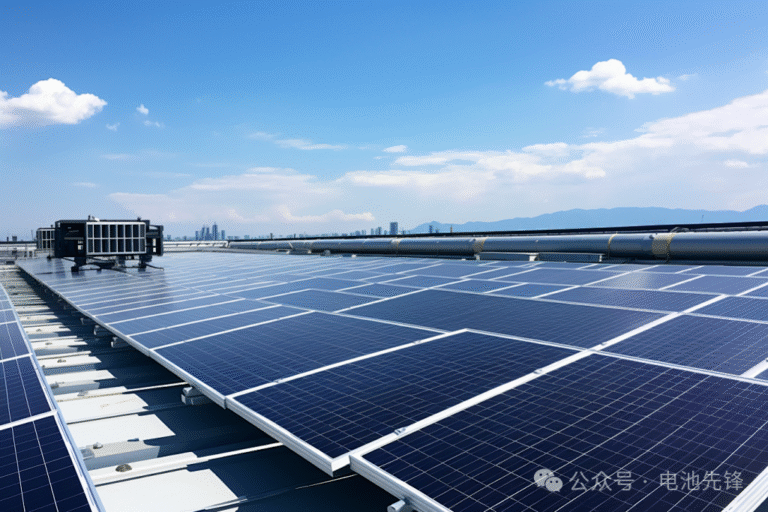
Solar is the primary source for most boats; a flat roof array of 600–1200 W covers a large share of daily consumption in summer and a modest share in winter. Shore power through a proper marine charger handles turnaround at the marina. Engine alternators are the awkward case: lithium banks accept current so readily that a standard alternator can overheat, so specify an external regulator or a DC-DC charger with alternator temperature protection.
Safety and Installation on Board
Marine installations punish shortcuts. Use tinned copper cable and marine-grade terminations, because salt air corrodes plain copper quickly. Secure the bank against movement in a seaway, keep it out of the bilge, and provide ventilation and a class-T fuse at the terminal. Confirm the battery management system can disconnect on low voltage and high temperature, and that all charging sources are galvanically isolated where the boat has a shore-power earth. Follow ABYC or ISO 13297 practice, and have the installation inspected before launch.
People Also Ask
How much battery does a live-aboard houseboat need? Most boats settle at 10–20 kWh of usable capacity, sized from one to two days of measured daily consumption rather than from a rule of thumb.
Can I charge the house bank from the engine alternator? Yes, but add a DC-DC charger or external regulator. A lithium bank will pull more current than a stock alternator is designed to deliver continuously.
Is lithium safe in a boat cabin? LiFePO4 does not gas under normal charging and is widely used in enclosed marine spaces, provided the BMS and fusing are correctly specified.
Do I still need a generator? Many owners keep a small one for air conditioning and winter charging, but find annual running hours drop by 70–90% once storage is installed.
Written by Karl at China Battery Technology. Request a quote.