Home Energy Storage for Detached Garage: Power Your Workshop and Toys
Home Energy Storage for Detached Garage: Power Your Workshop and Toys
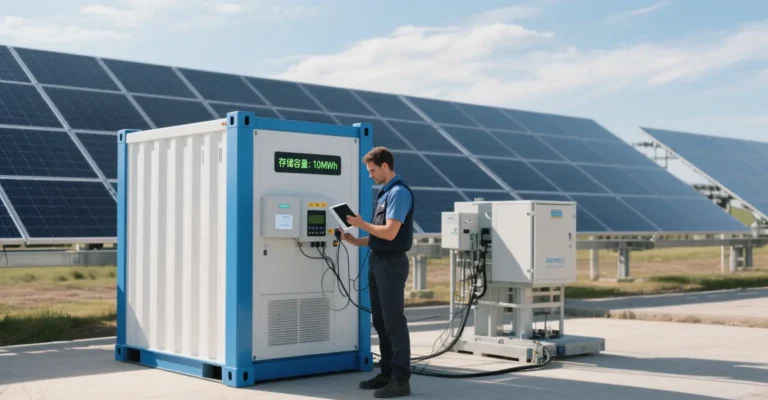
A detached garage is rarely just a place to park. It is a workshop, a gym, a hobby lab, and increasingly the spot where the EV charges overnight. Running all of that off a single branch circuit from the house is frustrating and sometimes impossible. A home energy storage system installed at the garage gives you local, backed-up power for tools, chargers, and freezers without trenching heavier cable to the main panel — and it keeps working when the grid does not.
Why the Garage Deserves Its Own Battery
The loads in a garage are different from the house. Circular saws, compressors, and welders draw sharp current spikes that sag a long feeder from the house. An EV charger can quietly eat the entire spare capacity of a residential service. Putting a battery and inverter at the garage lets those loads draw locally, smoothing the demand the house ever sees and avoiding a costly service upgrade.
What You Can Run
| Use case | Typical size | Primary benefit |
|---|---|---|
| Power tools and compressor | 5–10 kWh | No voltage sag, no trips |
| EV overnight charging | 10–20 kWh | Off-peak, solar-fed |
| Freezer or beer fridge | 3–5 kWh | Outage protection |
| Workshop backup | 8–15 kWh | Keep projects running |
Sizing a Garage Battery
Start from the biggest single load you actually use — often the compressor or the EV charger — and add the energy you want to ride through an outage. If solar already sits on the garage roof, size the battery to capture a midday surplus that would otherwise export cheaply, then serve the evening tool session. An all-in-one unit with a built-in inverter is simplest to install and monitor remotely.
Wiring and Safety
Keep the battery in a vented, weather-protected enclosure away from fuel cans and pilot lights. Feed your critical garage circuits — fridge, charger, a couple of outlets — through a transfer or backed-up sub-panel so a small battery covers the draws that matter. Choose equipment with certified inverters and ground-fault protection, and have a licensed electrician handle the interconnection.
Pairing with Solar
A garage is often the best solar location on the property: unshaded roof, no living-space heat load, and loads that arrive during the day. Storing that generation on-site rather than exporting it turns a detached building into a mini power plant that pays back through avoided grid imports and backup resilience during storms.
Cost and Payback
A garage battery is a smaller investment than a service upgrade or a long trench to a heavier feeder, and it starts saving the day it is installed. If the garage already has roof solar, the battery captures generation that would otherwise export at a low rate and serves evening tool use instead. For households that lose power a few times a year, the avoided spoiled food, frozen-pipe risk, and interrupted projects are a real, if harder to meter, return.
Monitoring and Maintenance
Choose a unit with remote monitoring so you can see state-of-charge, throughput, and any fault from your phone. LiFePO4 packs need essentially no maintenance beyond keeping terminals clean and the enclosure dry, but a quarterly visual check of the sub-panel and cables catches loose connections before they heat up. Set the inverter’s export and charge limits to match your utility’s rules if the garage is grid-tied.
People Also Ask
Do I need a new service panel? Usually not. A garage battery with a backed-up sub-panel works behind your existing service; you only upgrade if you add a very large continuous load.
Can it run the EV charger during an outage? Yes, if the charger is on the backed-up sub-panel and the battery is sized for the charge rate; most owners charge slowly overnight from storage.
Will it pay back? For garages with solar or frequent outages, payback is commonly 4–7 years through saved imports and avoided service upgrades.
Written by Karl at China Battery Technology. Request a quote.