Battery Application Solutions for Mining: Electrifying the Pit
Battery Application Solutions for Mining: Electrifying the Pit
Mines are among the harshest operating environments on earth, and they are also where electrification pays off fastest. Haul trucks, loaders, and drill rigs that once burned diesel are moving to battery power to cut fuel cost, emissions, and the ventilation burden underground. A complete battery application solutions approach for mining pairs the right cells with thermal management, fast charging, and fleet energy management so the equipment stays available on the toughest shifts.
Why Mining Is Going Electric
Diesel equipment underground forces massive ventilation and cooling investment just to keep air safe to breathe. Replacing it with battery-electric loaders and trucks removes the exhaust at source, shrinking both the ventilation bill and the carbon footprint. On the surface, electric haul trucks recover energy on downhill loaded runs, turning a parasitic loss into usable range. Operators also report lower noise, which reduces fatigue and hearing-protection requirements for crews.
What Mining Batteries Must Survive
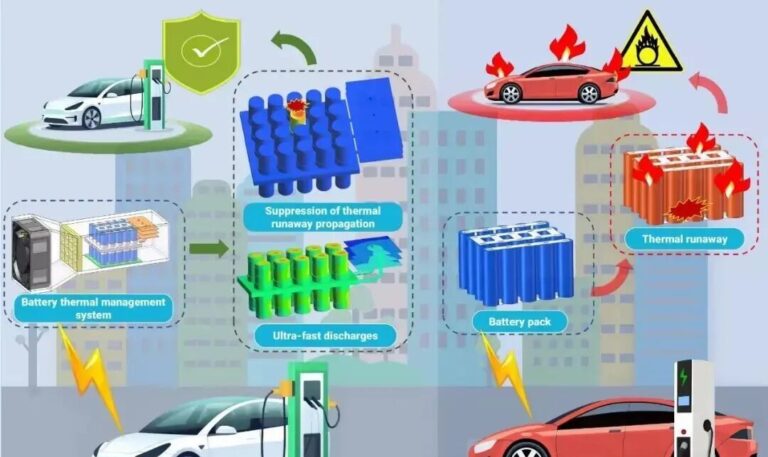
Mining duty means shock loading, dust, water ingress, and temperature swings from frozen pits to hot engine bays. Packs need IP6K9K sealing, reinforced mechanical mounting, and a BMS that logs cell-level data for predictive maintenance. High discharge for breakaway torque and opportunity charging during shift changes keep trucks in service. Thermal runaway propagation resistance is non-negotiable in a confined underground drive, so cell spacing and enclosure design are specified up front.
Choosing the Right Chemistry
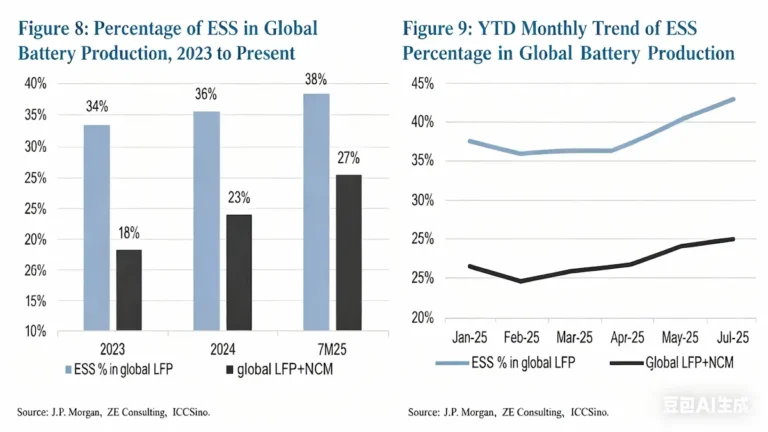
For most surface and underground mining fleets,LiFePO4 offers the best balance of safety, cycle life, and cost, while higher-energy NMC may be chosen where weight or space is the binding constraint. Sodium-ion is an emerging option for cold-climate sites where its low-temperature retention avoids heater losses. The right choice depends on duty cycle, ambient range, and how the pack will be charged across a 24-hour operation.
Mining Power Comparison
| Attribute | Battery-Electric | Diesel | Hybrid |
|---|---|---|---|
| Energy cost / ton | Low | High | Medium |
| Ventilation need | Minimal | High | Medium |
| Noise and heat | Low | High | Medium |
| Uptime dependency | Charging plan | Refueling | Both |
| Footprint | Battery bay | Exhaust system | Both |
Deployment and Charging
Site the charging at the shovel or portal where trucks naturally pause, and size the system for opportunity charging rather than full battery swaps. Use a fleet energy manager to stagger charging off-peak and balance pack wear. For extreme cold or deep pits, specify heated packs and reinforced cooling so capacity does not collapse mid-shift. Train operators on state-of-charge discipline so a truck never strands mid-ramp.
Getting Started
Begin with a pilot: convert one aisle or one shift to battery power, measure cycle cost against your diesel or lead-acid baseline, and validate charger compatibility on the bench before a fleet-wide rollout. Most operations see payback inside two years once watering labor, equalizing energy, and battery-room ventilation are removed from the equation. A phased approach also lets crews build confidence with the new technology before it touches the whole pit.
People Also Ask
Can batteries power a full-size haul truck? Yes — 200–400 tonne electric haul trucks are in commercial mining trials and deployment as of 2025–2026, with catenary and battery variants both in field use.
Is underground the best first step? Often yes — the ventilation savings alone can justify battery loaders and trucks before surface fleets are converted.
How do we charge a 24/7 operation? Through a mix of opportunity charging at load points, fast chargers at the workshop, and a battery-energy-storage buffer that shaves peak demand from the grid connection.
What about battery second life? Mining packs that age out of vehicles still hold 70–80% capacity and can be redeployed as stationary storage for site offices, lights, and comms, extending the asset’s payback before recycling.
Written by Karl at China Battery Technology. Request a quote.