
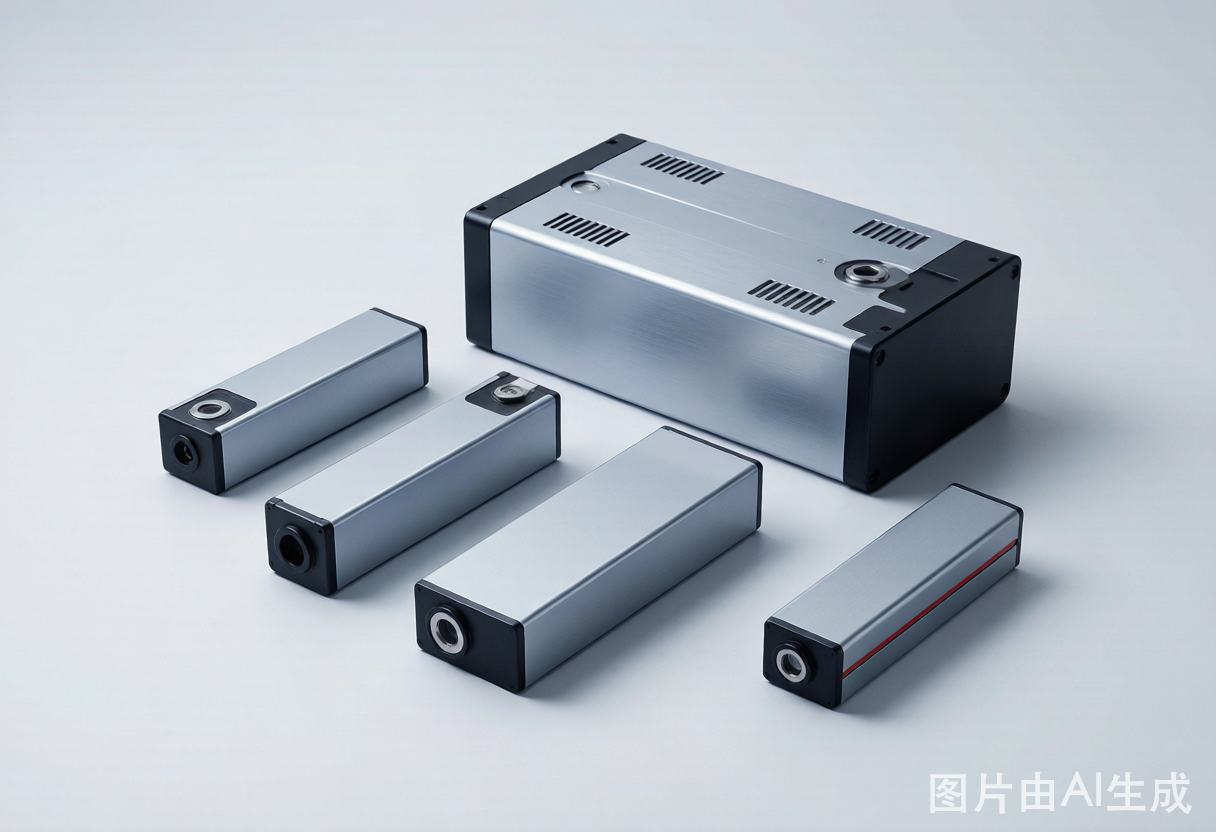
A sodium-ion battery stores and releases energy by shuttling sodium ions between a cathode and an anode — the same rocking-chair principle as lithium-ion, but built from one of the most abundant elements on earth. That single material choice reshapes the cost and supply-risk equation for stationary storage and weight-tolerant mobility. For procurement teams weighing chemistries in 2026, sodium-ion is no longer a lab curiosity: it is a shipped, certifiable option for home energy storage, telecom backup, microgrids, and budget mobility.
This guide explains how sodium-ion works, where it beats lithium (LFP), where it does not, the specifications buyers should put in a purchase order, and how to decide. When you know your duty cycle and space envelope, the choice is usually clear.
How a Sodium-Ion Battery Works
Like lithium-ion, a sodium-ion cell has a cathode, an anode, a separator, and an electrolyte. During discharge, Na⁺ ions travel from the anode through the electrolyte to the cathode; on charge they return. The most common production cathodes are layered oxides (NaₒMnO₂-type or Ni/Mn/Fe/Cu layered oxides) and polyanion compounds (e.g., NaₒFePO₄ and Na₃V₂(PO₄)₃F₃). Anodes are frequently hard carbon derived from biomass or coal tar pitch rather than graphite.
The practical consequences: sodium intercalates more easily at low temperature, hard-carbon anodes are cheaper and less constrained by graphite supply, and the cells avoid the cobalt and nickel intensity that drives lithium pricing. The trade-off is energy density — sodium is heavier per electron — which is why sodium-ion targets stationary and large-format applications where mass matters less than $/kWh and cold-weather behavior.
Sodium-Ion vs Lithium (LFP) at a Glance
| Factor | Sodium-ion | Lithium (LFP) |
|---|---|---|
| Energy density | 90–160 Wh/kg | 150–200 Wh/kg |
| Volumetric density | 160–250 Wh/L | 300–400 Wh/L |
| Material cost | Lower (abundant Na, Al current collector) | Higher (Li, Cu collector) |
| Low-temp (−20°C) | Good capacity retention | Reduced retention |
| Cycle life | 2,000–5,000+ | 3,000–6,000+ |
| Best use | Stationary, telecom, microgrid, budget mobility | Compact EV, portables, space-limited packs |
| Supply risk | Low (Na everywhere) | Moderate (Li price volatility) |
For residential and grid storage where the cabinet is bolted to a wall or a pad, the lower volumetric density is a non-issue. The lower $/kWh and steadier cold-weather output are what matter.
Key Advantages of Sodium-Ion
- Lower and more stable material cost. Sodium, aluminum current collectors, and iron/manganese cathodes avoid the lithium, nickel, and cobalt exposure that drives cell-price swings.
- Cold-weather performance. Sodium-ion holds far more capacity at −20°C than LFP, making it attractive for unheated cabins, telecom sites, and northern microgrids.
- Safety margin. Hard-carbon anodes and lower-energy cathodes tend to be more forgiving thermally; many cells pass nail-penetration tests without thermal runaway.
- Fast charge tolerance. Sodium cells generally accept high charge rates with less plating risk than graphite-anode lithium cells.
- Abundant, geopolitically calm supply. Sodium is available on every continent, simplifying long-term sourcing for large storage programs.
Limitations — When Not to Choose Sodium-Ion
- Weight- and space-critical packs. If the pack must fit in a vehicle floor or a handheld device, LFP or NMC wins on energy density.
- Maximum cycle life at high DoD. Top-tier LFP still edges sodium on absolute cycles for daily deep-cycling under heat.
- Ecosystem maturity. Cell formats and BMS tuning are less standardized than the lithium world, so specify carefully and validate the BMS behavior.
Best Applications
Sodium-ion is already a strong fit for large, stationary, or cold-exposed duties. Explore our deep dives:
- Sodium-ion for telecom backup — replacing lead-acid at remote sites.
- Sodium-ion for offshore platforms — pilot marine deployments.
- Sodium-ion for community microgrids — long-duration shared storage.
- Home energy storage systems — where cost and cold weather dominate.
For mobile and compact needs, review our lithium battery manufacturer guide on supplier selection.
Specifications Buyers Should Put in the PO
| Spec | Why it matters | Typical target |
|---|---|---|
| Nominal voltage / capacity | Sizing and BMS matching | Cell 2.5–3.3 V; pack per design |
| Usable energy (Wh) | Real runtime after BMS reserve | State usable, not nameplate |
| Continuous / peak discharge | Load surges (motors, inverters) | Match worst-case draw + 30% |
| Cycle life @ DoD | TCO over warranty | 2,000–5,000 @ 80–100% DoD |
| Operating temperature | Cold-site viability | −20 to +60 °C discharge |
| Certifications | Import & insurance | UN38.3, IEC 62619, CE |
Always request the discharge curve at 0°C and +40°C, confirmation of UN38.3 test documentation, and the real usable capacity after the BMS safety margin. Good suppliers publish these without being asked.
Cost Outlook for 2026
Sodium-ion cell pricing is tracking below equivalent LFP on a $/kWh basis as volume ramps in China and Europe. For stationary storage especially, the gap widens once you include the aluminum-current-collector saving and lower thermal-management cost. Expect sodium-ion to remain the cost-leading choice for stationary and cold-climate duties through 2026–2027, with density catching up gradually rather than suddenly.
Safety, Certifications & E-E-A-T
For stationary and marine use, confirm UN38.3 (transport), IEC 62619 (industrial cells), and relevant CE/UL marks for your market. Specify a BMS that reports state-of-charge and state-of-health honestly and limits both charge and discharge current. Our engineering team reviews every pack against the duty cycle you specify — not a generic datasheet.
Manufacturing & Supply Chain in 2026
Sodium-ion manufacturing reuses much of the lithium-ion electrode, coating, and cell-assembly line, which is why capacity is scaling fast. Cathode routes have consolidated around layered oxides and polyanion chemistries, while hard-carbon anode supply — from biomass and pitch — is expanding to remove graphite dependence entirely. For buyers, the practical read is: lead times are shortening, format choice is widening (prismatic and cylindrical), and price discovery is becoming steadier than lithium because the input basket is not exposed to lithium carbonate spikes.
When you qualify a supplier, ask for the cell-grade specification sheet, the formation and grading data, and the warranty defined in cycles or years at a stated depth of discharge. A credible battery manufacturer will also show you the low-temperature discharge curve and the BMS behavior under your worst-case continuous load — not just a nameplate number.
Frequently Asked Questions
Is sodium-ion safer than lithium?
Sodium cells avoid some thermal risks of high-energy lithium chemistries and are non-critical on raw-material supply, but proper BMS and certification are still required for any installed system.
When should I choose sodium over LFP?
Choose sodium when budget and cold-weather performance outweigh energy density — typically stationary storage, telecom backup, and low-speed or cold-climate mobility.
Can sodium-ion replace lead-acid now?
Yes. At most stationary and backup sites, sodium-ion’s cycle life and maintenance profile beat flooded and VRLA lead-acid, with a clear total-cost-of-ownership advantage over the system lifetime.
Does sodium need special fire systems?
Its higher thermal stability simplifies design, but you still install detection and isolation per local fire code and the relevant storage standard.
Written by Karl at China Battery Technology. Specifying a stationary or cold-climate pack? Request a quote and we will size the chemistry, capacity, and BMS to your duty cycle.
Decision Framework: Should You Spec Sodium-Ion?
Use this three-question filter before issuing a request for quotation:
- Is the pack stationary or large-format? If weight and volume are not the binding constraint — wall-mounted home storage, ground cabinet, telecom shelter, microgrid container — sodium-ion’s $/kWh advantage compounds over the system lifetime.
- Does the site see cold? If the pack sits below −10°C for weeks, sodium-ion’s capacity retention beats LFP materially and may remove the need for active heating.
- Is cycle life more important than peak density? For daily cycling at 80–100% DoD, confirm the quoted cycle count at your actual depth of discharge, not the marketing best case.
If you answer yes to two of three, sodium-ion is very likely your lowest-risk, lowest-cost chemistry. If all three lean the other way, spec LFP or NMC with a qualified lithium battery manufacturer instead.