Lithium Battery for School Bus: Safer Student Transport
Lithium Battery for School Bus: Safer Student Transport
School buses carry the most important cargo there is, so every component decision is a safety decision. Lithium is moving onto buses in two roles: as the traction battery for electric buses, and as the auxiliary bank that runs lights, lift, HVAC and electronics on conventional and hybrid buses. Done right, lithium improves reliability and safety; done carelessly, it adds a hazard into a vehicle full of children. This guide covers both roles and the procurement discipline that keeps students safe.
Two jobs: traction and auxiliary
An electric school bus uses a large lithium traction pack—often 150 to 300 kWh—to drive the wheels. A diesel or propane bus uses a smaller auxiliary bank, typically 5 to 20 kWh, to run the wheelchair lift, interior lights, stop arm, destination sign, telemetry and, increasingly, the idle-reduction HVAC that lets the bus heat or cool without running the engine. The safety and certification bar is far higher for traction, but the auxiliary bank still sits in a child-occupied vehicle and deserves the same rigor. A lithium battery manufacturer building for transit must treat both as safety-critical, not as consumer packs.
The auxiliary load profile
Idle-reduction HVAC is the big driver. A roof A/C unit pulls 2 to 4 kW; a fuel-fired heater far less. The lift draws 1 to 2 kW for its short cycle. Lights, sign, telemetry and stop-arm are a few hundred watts combined. Over a 6-hour route with pre-conditioning, an auxiliary bank may deliver 15 to 30 kWh/day. Size the bank to cover a full winter day without engine support, because the whole point of idle-reduction is to keep the engine off while children board. Undersize it and the driver restarts the diesel, defeating the emission and cost goal.
Sizing the auxiliary bank
| Load | Watts | Daily hours | Wh/day |
|---|---|---|---|
| Idle-reduction A/C | 3,000 | 4 | 12,000 |
| Wheelchair lift | 1,500 | 0.3 | 450 |
| Lights + sign + telemetry | 300 | 8 | 2,400 |
| Pre-conditioning | 2,000 | 1 | 2,000 |
| Total | — | — | 16,850 |
The table lands near 17 kWh/day for a heavily equipped bus. At 80% DoD that is a 21 kWh nameplate bank, about 410 Ah at 51.2 V. A bus that only needs lights and lift can use 5 to 8 kWh. Build the real load table per route, because a Phoenix summer route and a Maine winter route are different packs, and a one-size number from a catalog will strand someone. The battery application solutions approach is to model the route first, then specify.
Why lithium beats lead-acid under the hood
Conventional buses have used lead-acid or AGM for auxiliary loads, but those hate the partial cycling of idle-reduction duty and fail in cold mornings exactly when the lift and heat are needed most. LFP starts strong in cold, accepts partial charge, and lasts years where lead-acid lasts seasons. The weight saving also matters on a bus where every kilogram affects handling and fuel. The trade is cost and certification overhead, which a transit fleet absorbs through the longer life and fewer roadside failures. A home energy storage system shares the same LFP logic—stable, long-lived, partial-charge tolerant—just mounted on a building instead of a chassis.
Traction pack safety architecture
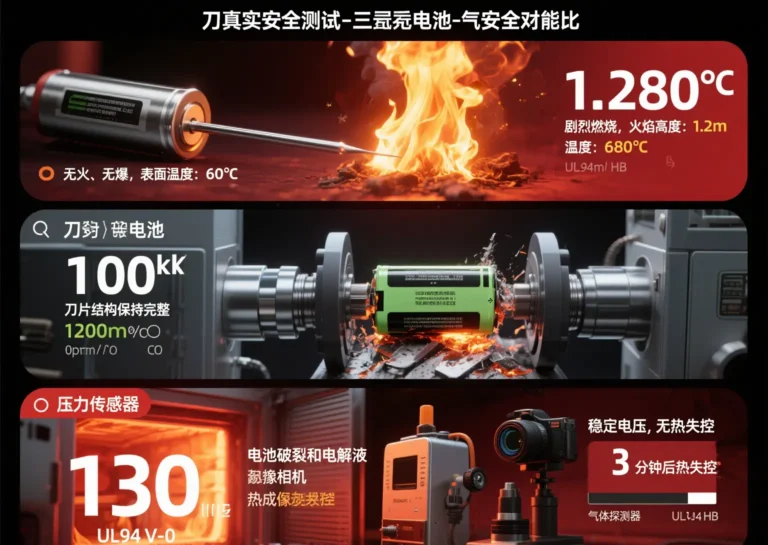
For electric buses the traction pack dominates everything. It must sit in a crash-protected, vented enclosure with automatic disconnects, thermal propagation resistance between modules, and a BMS that reports state-of-charge, state-of-health and cell-level temperature to the vehicle controller. Specifying “a big lithium pack” is not enough; you need the module-level isolation, the fire barrier, and the disconnect logic written into the requirement. The pack should survive a prescribed crash and still cut itself off before any thermal event spreads. This is where a semi-solid-state battery is worth watching: its lower flammable-electrolyte content could ease the thermal-propagation case, though today its premium and supply maturity make it a roadmap item for most fleets rather than a current buy.
Certification you must require
A battery on a school bus is a regulated safety component. Require UN38.3 for transport, plus the system-level safety mark your market mandates (in North America that is typically UL 2580 for EV traction batteries and UL 1973 for stationary-style systems; IEC 62619 is the international stationary benchmark). The dangerous-goods declaration must name lithium iron phosphate explicitly. Ask the supplier for the test report that references your exact pack model, not a sibling, and keep it with the vehicle records—insurers and regulators will ask. A sodium-ion battery is not yet a school-bus option; its lower density and young field record make it unsuitable for a safety-critical, weight-sensitive vehicle, so stay on LFP until its track record deepens.
Installation and crash protection
Mount the pack low and central, inside a sealed metal enclosure with a manual service disconnect drivers and mechanics can reach, and route the high-voltage cables away from the passenger compartment with shielded, secured harnesses. Fit a thermal event sensor and a system that isolates the pack on fault. Train mechanics explicitly: a lithium pack is not a starter battery, and a careless wrench across the terminals is a serious arc. The enclosure must meet the bus fire and crash standard, not a generic battery box spec. These details are what turn a safe cell into a safe vehicle installation.
Charging and depot infrastructure
Electric buses charge at the depot, typically overnight on a 50 to 150 kW connector, or via opportunity charging at layovers. The auxiliary bank charges from the alternator or a DC-DC converter and tops at the depot. Plan the depot feed before you buy the fleet, because a 300 kWh bus at a 100 kW charger still needs three hours, and a yard of twenty buses needs megawatt service. The BMS must manage charge temperature—cold-climate depots need the pack warm enough to accept full rate—and the depot must log charge cycles for warranty. A small miscalculation here strands a route; treat it as civil engineering, not an afterthought. A lithium battery manufacturer should confirm the charge window and the depot sizing with you before the purchase order is signed, because the depot is part of the battery system, not separate from it.
Procurement checklist for fleets
- Require crash and thermal-propagation test evidence for the traction pack.
- Specify UN38.3 plus the market system mark (UL 2580 / UL 1973 / IEC 62619).
- Confirm BMS reports SoC, SoH and per-cell temperature to the vehicle bus.
- Model the real route load before sizing the auxiliary bank.
- Require a manual service disconnect and a crash-rated enclosure.
- Ask for a reference fleet with the same duty and climate.
- Write the cycle-based warranty into the purchase order.
Battery management and telemetry on the bus
The auxiliary bank and the traction pack both need a BMS that talks to the vehicle, and for a fleet the telemetry is what keeps students moving. A BMS that reports per-module voltage, temperature and cycle count over the bus lets the depot see a weak module before it strands a route, and lets warranty claims be settled with data instead of argument. For the traction pack this is mandatory; for the auxiliary bank it is cheap insurance on a vehicle whose failure means missed school, not just inconvenience. Require the data export in a format the fleet owns, not locked in a supplier cloud, so the records survive a vendor change. A simple dashboard that flags “at 80% of rated cycles” turns reactive roadside failure into planned overnight swap, which is exactly the discipline a public fleet should run.
Warranty and second-life for transit fleets
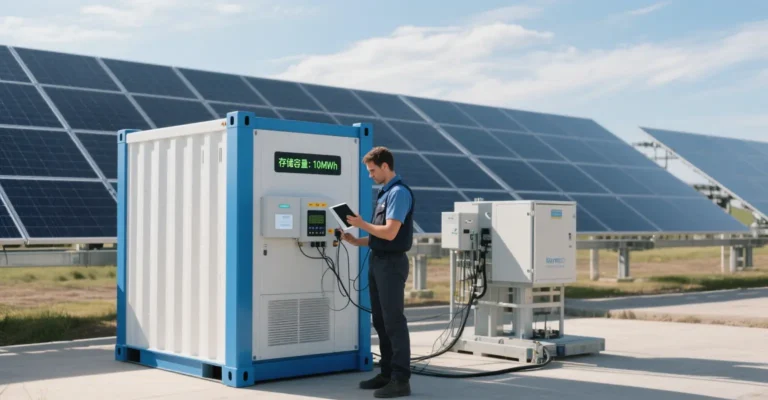
Write the battery warranty in cycles at a stated depth-of-discharge and temperature, not just in months, because a bus that idles all summer accrues few cycles yet still ages. A cycle-based warranty lets you prove compliant use and claim a bad pack instead of eating it. When a traction pack reaches end-of-route life it often still holds 70 to 80% capacity, enough for a stationary buffer at the depot or a solar bank—plan that second-life at purchase so the pack has documented value, not just disposal cost. A fleet that logs cycles and temperature gets a credible, sellable second-life unit; one that flew blind gets a mystery brick. Building the handoff in at procurement is what separates a mature transit operation from a reactive one.
Frequently asked questions
Is lithium safe for children on board? Yes when specified as a safety-critical component with crash protection, thermal isolation and a certified BMS—the standard is higher than for consumer gear.
Do I need lithium for the auxiliary bank too? If you run idle-reduction HVAC, LFP outlasts lead-acid and starts in cold where lead fails; for lights-only duty, lead may still suffice.
Which certification matters most? For traction, the EV battery mark (UL 2580 in North America); for the system, UL 1973 or IEC 62619—matched to your market.
Why not sodium-ion? Sodium is too low-density and too young in the field for a safety-critical, weight-sensitive bus; LFP remains the proven choice.
Written by Karl at China Battery Technology. Tell us your route and duty and we will spec the pack—request a quote for a safety-first bus battery.
Related Reading
- custom lithium battery manufacturer
- LiFePO4 Battery vs NMC: Which Lithium Chemistry Fits Your Use
- 48V Lithium Battery: The Standard for Industrial and Commercial Power