Lithium Battery for UPS and Data Center: Bridge Power Done Right
Lithium Battery for UPS and Data Center: Bridge Power Done Right
A data-center UPS battery exists for one job: bridge the load from the moment the grid fails to the moment the generator is online and stable. It is not the primary power, it is the bridge, and getting the bridge wrong means the lights on a thousand servers blink and a facility that promised five-nines goes dark. This guide explains how to specify lithium UPS batteries for bridge duty, why the runtime math is subtler than it looks, and the integration rules that separate a clean transfer from a cascade failure. Engage a lithium battery manufacturer who has shipped into certified UPS systems, because data-center bridge power tolerates zero improvisation.
What bridge power actually means
In a properly designed facility, the grid feeds the load through the UPS, the battery covers the transfer gap, and the generator takes over within seconds to minutes. The battery’s runtime is sized for that gap plus margin, not for hours of standalone operation. Specifying a lithium bank for bridge duty means sizing it to deliver full power for the generator-start window plus a safety buffer, while staying within the C-rate the cells and BMS can sustain. Oversize the runtime and you pay for capacity you never use; undersize it and a slow generator start becomes an outage. The discipline is to size for the worst realistic transfer, not the hopeful one, and to confirm the generator’s actual start-and-sync time under load, not the brochure figure.
Why lithium beats VRLA in the data center
Legacy UPS banks used valve-regulated lead-acid, which is cheap up front but heavy, short-lived, and heat-sensitive—exactly wrong for a hot aisle. Lithium, typically LFP, lasts three to six times longer, weighs a fraction, and tolerates the temperature swings a data center imposes. The total cost over the facility’s life usually favours lithium despite the higher sticker, because you stop replacing banks every three to five years and you stop reinforcing floors to hold the weight. A home energy storage system buyer sees the same math at smaller scale: the cheaper upfront box is the more expensive box over time.
Sizing runtime and the C-rate trap
Runtime sizing is a C-rate problem. A bank that delivers its nameplate at a gentle 0.2C may deliver far less at the 1C or 2C a full data-center load demands during the bridge. Request the discharge curve at your actual bridge C-rate, not the catalog 0.2C, because the cells that look identical on paper diverge sharply under load. Size the bank so it holds voltage through the whole transfer window with margin, and confirm the BMS and busbar are rated for the peak current, not just the average. The peak is what trips a pack and strands a hall full of servers, and the transfer window is precisely when you cannot afford a trip.
BMS, communication and the UPS handshake
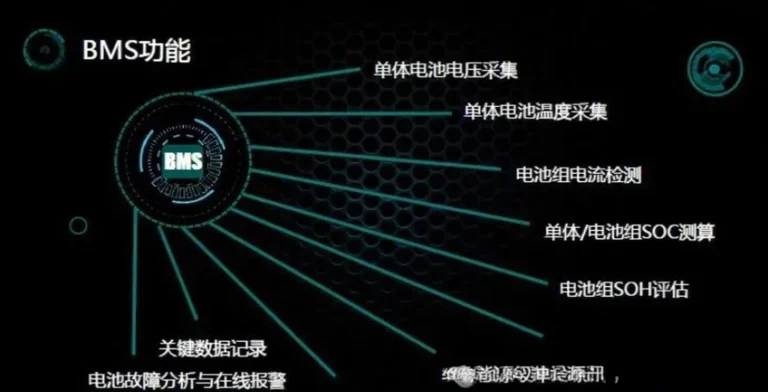
The lithium bank must speak the UPS’s language. The BMS reports state-of-charge and state-of-health over CAN or RS485, and the UPS uses that data to manage the bridge and to decide when to shed non-critical load as the bank depletes. A battery application solutions supplier who integrates the BMS with the UPS controller hands you one coherent behaviour; bolting an unknown BMS to a certified UPS risks a handshake failure at the worst moment. Specify the exact protocol and register map, require the UPS vendor to confirm compatibility, and test the transfer with the real bank before commissioning, because a paper compatibility claim is not a commissioning test.
Thermal and footprint in the white space
Data-center real estate is expensive, and lithium’s smaller footprint and lighter weight free up white space and cut structural load. But the bank still needs a thermal path: it must shed the heat of a high-C bridge discharge and the recharge surge afterwards without cooking. Specify the cabinet ventilation or cooling, keep the bank out of the hottest aisle, and confirm the recharge current the UPS applies does not exceed the cell’s limit. A semi-solid-state battery packs more energy per volume, which can shrink the cabinet further where space is the constraint, but confirm the cell is rated for stationary, high-C bridge duty and a 10-year life before paying the premium.
Generator start and the recharge window
After the generator takes the load, the bank must recharge, and that recharge current is a design parameter the UPS sets and the battery must accept. A slow recharge leaves the facility exposed to a second grid event before the bank recovers; an aggressive recharge stresses the cells and shortens life. Specify the recharge current and confirm the cells accept it at your operating temperature, then model the time to recover enough runtime for the next event. The bridge is only as good as the recovery, and the recovery is only as good as the recharge the UPS applies and the cells tolerate, which is why the recharge window belongs in the spec, not left to default settings.
Redundancy and strings
Data-center reliability comes from redundancy, and the battery is no exception. Distributed BMS architecture lets you isolate a faulty module without dropping the string, and N+1 or 2N battery configuration lets one bank fail without losing the bridge. Decide the redundancy tier against your facility’s availability target, because a single string is a single point of failure that a five-nines promise cannot survive. The cost of the extra string is trivial next to the cost of the outage it prevents, and the buyers who learn this from an incident pay for it many times over.
Bridge power specification scorecard
| Item | What to specify |
|---|---|
| Runtime | Generator-start window + safety margin, at load |
| C-rate | Discharge curve at real bridge C-rate |
| Handshake | UPS-compatible BMS protocol and map |
| Thermal | Cabinet cooling, recharge-current limit |
| Redundancy | N+1 or 2N string topology |
| Telemetry | SoH to BMS and facility monitor |
Use the scorecard as the UPS battery section of your specification. Each row prevents a distinct failure class, and together they convert a hopeful bridge into a dependable one. A supplier who completes the table against shipped data-center programs is the one to put on the bill of materials.
Sodium as a stationary bridge option
A sodium-ion battery targets the fixed, weight-irrelevant, cost-first corner, and a data-center battery room is exactly that environment. Sodium’s lower density is irrelevant where floor space is planned, and its material security and falling cost are attractive for large stationary banks. Its lower C-rate ceiling makes it a poorer fit for very high-power bridge bursts, so it suits facilities with a gentler bridge profile rather than the most aggressive transfers. Treat sodium as a cost-improvement trajectory for the stationary bridge bank, pilot it beside LFP, and let the duty cycle—not the headline—decide the mix. For most data centers today LFP remains the proven default while sodium earns a controlled pilot.
Commissioning and ongoing verification
A lithium UPS bank must be commissioned with a real transfer test: drop the grid, confirm the bridge holds the load through the generator start, and verify the bank recharges within spec. Too many facilities accept a paper test and discover the gap only during a real event. Schedule quarterly bridge tests and trend state-of-health monthly through the BMS, retiring banks before they fall below threshold so the bridge is never the weak link. Pair the telemetry with a cycle- or calendar-based replacement rule and keep the BMS log in a format you control, so a warranty claim is enforceable and a failure is predicted, not endured. The data centers that never blink are the ones that tested the bridge before they needed it.
Common UPS battery sizing errors
Two errors dominate. The first is sizing runtime from the catalog 0.2C capacity instead of the real bridge C-rate, which leaves the bank short exactly when the generator is slow. The second is forgetting the recharge window and specifying a bank that cannot recover before the next event, leaving the facility exposed to a second grid drop. Both are caught by requesting the discharge curve at your load and by modelling the recharge time against your realistic event spacing. Neither shows up in a spreadsheet that uses nameplate amp-hours, which is why the curve and the recovery, not the headline, belong in the specification. A third error is accepting a paper compatibility claim between the BMS and the UPS instead of a commissioning transfer test, and that one surfaces only during a real event, which is the most expensive place to learn it.
Frequently asked questions
How long must a UPS battery run? Long enough to cover the generator start-and-sync window plus margin, not hours of standalone use.
Why does C-rate matter for UPS? The bridge draws at 1C to 2C; cells that look equal at 0.2C diverge sharply under that load.
Is lithium worth more than VRLA? Over the facility life, yes—longer life, less weight, better heat tolerance usually beat the higher sticker.
Should the bank be redundant? For five-nines facilities, N+1 or 2N strings remove the single point of failure the bridge would otherwise be.
Written by Karl at China Battery Technology. Share your load, generator time and availability target and we will size the bridge—request a quote for UPS battery power done right.
Related Reading
- custom lithium battery manufacturer
- Lithium Battery for Medical Devices: Safety and Certification
- Lithium Battery for Drones and UAV: High C-Rate Packs