Home Energy Storage for Pool House: Run the Pump Off Sun
Home Energy Storage for Pool House: Run the Pump Off Sun
Pairing a home energy storage system with a pool house is the most rewarding battery project on a residential site. The loads are predictable, they run in daylight, they are metered separately enough to reason about, and the owner notices the result immediately on the bill. But the same characteristics that make it attractive also make it easy to size wrongly: a variable-speed pump sprints at 2.5 kW for two hours, the heat pump pulls 4 kW when the water is cold, and the whole installation sits in a salt-laden, humid environment that eats cheap electronics. This guide covers the real numbers — what a pool house actually consumes, how many kilowatt-hours of storage shift the bill, which battery chemistry and inverter topology suit the site, and how to keep the pump running when the grid fails.
What a Pool House Really Consumes
Measure before you buy. A typical installation splits into four circuits: the circulation pump and its filter, the heating system (heat pump, gas boiler, or electric element), the pool lighting and any automation controller, and the miscellaneous — bathroom, changing room heaters, a sound system. A variable-speed pump on a timer running 8 hours a day at 35% speed draws about 0.7 kWh/hour, so roughly 5.6 kWh a day. A heat pump on a 20 m³ pool in a temperate climate adds 3–6 kWh a day in the shoulder seasons and up to 12 kWh a day in winter if you hold 28 °C. Lighting and automation are a rounding error at 0.5–1 kWh. totalling 9–18 kWh a day, with the shape heavily skewed toward daylight — which is exactly the shape a solar array plus storage handles well.
Shifting Solar: How Much Storage Actually Pays
The economics depend on the gap between your export tariff and your import tariff. If you export at the same rate you import, storage pays back only through the reduced peak demand charges and through backup value. If you export at a low or nil feed-in rate — the common position in many markets — shifting a self-consumed kilowatt-hour from export to import at, say, ¥0.32/kWh is worth the full spread, and a 10 kWh battery on a 6 kWp array typically lifts self-consumption from 30% to 70–85%. A worked example: 9000 kWh a year of pool load, 55% of it in daylight, means roughly 5000 kWh currently exported and 4000 kWh bought at peak. A 10 kWh pack sized to cover the evening 4-hour pump-plus-heating window captures about 3000 kWh of that at a saving of roughly ¥960 a year at ¥0.32 per kilowatt-hour, against a battery cost that varies widely by market and chemistry. Add the outage value and the case usually closes in 6–10 years, which matches the warranty horizon of a quality pack.
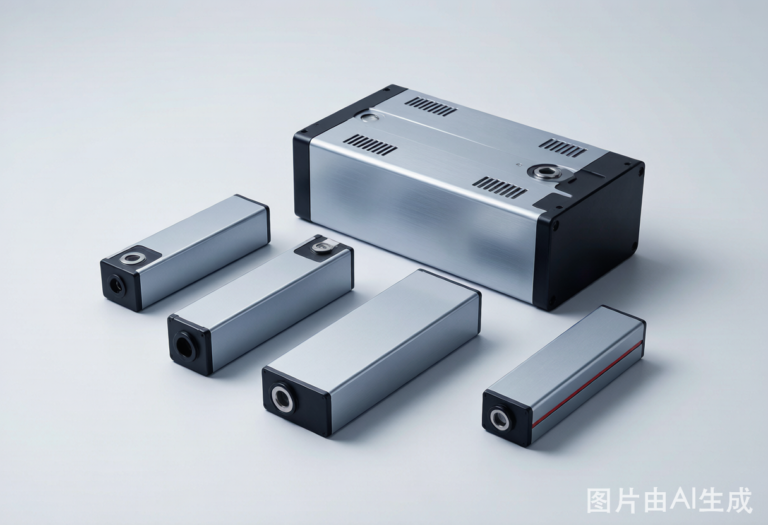
Battery Comparison for a Pool House
| Attribute | LiFePO4 48 V | LiFePO4 51.2 V stack | NMC module | Lead-Acid bank |
|---|---|---|---|---|
| Usable depth of discharge | 90–95% | 90–95% | 80–85% | 50% (to protect life) |
| Round-trip efficiency | 92–96% | 92–96% | 90–94% | 80–85% |
| Cycle life at daily cycling | 6000–8000 | 6000–8000 | 2500–4000 | 1200–1800 |
| Specifically for pool chlorine environment | Good with IP65 enclosure | Good with IP65 enclosure | Moderate | Poor (corrosion) |
| Salt-air corrosion resistance | High if enclosure rated | High if enclosure rated | Moderate | Low |
| Warranty | 10–15 years | 10–15 years | 8–10 years | 3–5 years |
Inverter Topology: AC Coupled or DC Coupled
This decision determines how much of the pool house’s existing kit you replace. AC coupling is the lower-cost retrofit: keep the existing solar inverter and pool equipment on AC, add a battery inverter between the battery and the AC bus, and let the whole thing balance through the AC side. It is simple, it works with an existing pump timer, and it loses maybe 3–5% in conversions. DC coupling replaces the solar inverter with a hybrid unit that charges the battery from the array before exporting, gaining 2–4% efficiency but requiring a re-wire and usually a new array inverter. For a pool house where the pump already has a variable-speed drive and a timer, AC coupling with a 5–10 kWh LiFePO4 48 V cabinet and a hybrid inverter is the usual sweet spot; go DC coupled only if you are replacing the array inverter at the same time and want the highest self-consumption figure.
Sizing for the Outage, Not Just the Bill
Backup is where these installations usually get designed wrong. A pool pump is an inductive load with a starting inrush of 3–4× running current — a 1.1 kW pump can present 4 kW for 100 ms — so the backup inverter needs an intermittent overload rating, not just a continuous one. The sensible design: size the continuous inverter output at the sum of the circuits you want on during an outage (pump 0.9 kW + lighting 0.2 kW + controller 0.05 kW + a socket 1.5 kW ≈ 2.7 kW, round up to 3.6 kW), and size the battery for the runtime you want on those circuits — four hours of 2.7 kW is 10.8 kWh, so a 12 kWh usable pack is about right, or a 10 kWh pack if you accept two hours. If the pool heat pump must stay included, that is 4 kW continuous and the pack jumps to 20–30 kWh, at which point you are designing a small commercial system rather than a residential one.
Placement, Corrosion and Commissioning
Pool houses sit in a chlorinated, humid, sometimes salt-spray environment, which is the worst place for an electronics enclosure. The battery cabinet must be IP65 rated, housed in shade with airflow above it, and sited at least a metre from the pool wall and out of any splash zone. Copper and aluminium must not touch — use the tinned cable and the terminal protection supplied, and inspect the DC terminations every 12 months, because a chloride film on a terminal is a slow, silent failure that shows up as a hot joint. The inverter should be indoors or in a ventilated non-splash-rated enclosure. On commissioning: verify the battery’s state of charge and cell voltages, run the pump through a full timer cycle on backup with the mains isolated, confirm the transfer time — good hybrid units transfer in under 20 ms, so the pump does not drop out — and set the pump timer so the circulation run coincides with the solar window rather than the evening peak. A pool that circulates at 10 am instead of 7 pm costs nothing and shifts a kilowatt-hour a day off the peak tariff.
Broader Context and Long-Term Value
Storage is moving toward higher round-trip efficiency and lower cost per kilowatt-hour, and the reference most installers use for the cost curve is the BloombergNEF annual storage price survey, which tracks installed prices by region. Independent field data on how paired solar plus storage behaves in residential installations is published by the National Renewable Energy Laboratory. For the pool owner the practical takeaway is that a 10 kWh LiFePO4 cabinet has a 6000+ cycle life at daily cycling, which at one cycle a day is better than 16 years of service, and the warranty period is typically matched to that. Beyond the bill, the pool house gains a genuine resilience asset: a filtration system that keeps running through a storm, lighting that stays on when guests are in the pool, and a spare block of stored energy that can back the main house for an hour in an emergency. When sizing, always quote the usable kilowatt-hours at the depth of discharge the manufacturer specifies — a pack marketed as 13.5 kWh may deliver 11.5 kWh usable — because the difference is the number your pump actually sees.
People Also Ask
Will a battery keep my pool pump running in a power cut? Only if the pump is on the backup sub-panel and the inverter is sized for the pump’s starting surge; a variable-speed pump with a soft starter is far easier to back up than a single-speed motor.
How big should the solar array be for a 10 kWh battery? Roughly 1:1 with usable capacity is a safe starting point — a 6–8 kWhp array on a 10 kWh pack gives good self-consumption in most temperate climates and is slightly oversized in sunny ones.
Is a pool house battery safe near chlorine? Yes, provided the cabinet is IP65, shaded, kept out of splash zones, and its terminals inspected annually — the risk is corrosion of terminations rather than the cells themselves.
Written by Karl at China Battery Technology. Request a quote.