Sodium Ion Battery for Electric Wheelchairs: Mobility Power That Lasts
Sodium Ion Battery for Electric Wheelchairs: Mobility Power That Lasts
Mobility is the one battery application where a user cannot tolerate a surprise. A chair that dies at the end of a supermarket run, on a kerb, in the rain, is not an inconvenience — it is a safety event. That is why the specification conversation around a sodium ion battery for an electric wheelchair has to be candid: sodium-ion brings genuine advantages in cold, in cycle life and in abuse tolerance, but it is heavier per kilowatt-hour than lithium iron phosphate and it is not automatically the right cell for every chair. This article separates the cases where sodium is the correct engineering answer from the cases where a lithium pack remains the better choice, then walks through the sizing maths, the controller interface, and what certification to demand.
What a Wheelchair Actually Asks of a Pack
A mid-size power chair with a 100 W drive motor draws 4–8 A at the 24 V bus in steady travel, spikes to 25–40 A over a 6 cm kerb or a gravel path for half a second, and sits on the charger for six hours overnight. The daily energy is small — typically 150–400 Wh for an 8-hour day of independent use — but the duty is unforgiving in three ways: the user may not be able to push the chair if the battery fails, the chair is often used by someone who cannot check a gauge, and the pack frequently sits at partial state of charge for days. That last point favours chemistries with low self-discharge and no cycle-memory effect; both sodium-ion and LiFePO4 handle it well, and lead-acid, still common in cheaper chairs, degrades visibly within two years of that pattern.
Where Sodium-Ion Makes the Strongest Case
Three situations favour sodium-ion. First, cold climates: sodium hard-carbon cells retain 85–92% of their room-temperature capacity at −20 °C, so a winter user in an unheated hallway or an outdoor waiting area gets honest range. Second, chairs that live outdoors — all-terrain or fishing and hunting chairs, mobility platforms used on boats or in market places — where the pack sees vibration, humidity and long idle periods, and where sodium’s tolerance of over-charge and over-discharge means the pack survives a controller fault that would wreck a lithium stack. Third, fleet and rental chairs — hospital dayrooms, rehabilitation centres, tourist operators — where thousands of shallow daily cycles make cycle life the dominant cost and where a pack that can be fully charged without a precise termination circuit is operationally easier. In each of those, the lower energy density costs a couple of kilograms and nothing else.
Where Lithium Still Wins, Honestly
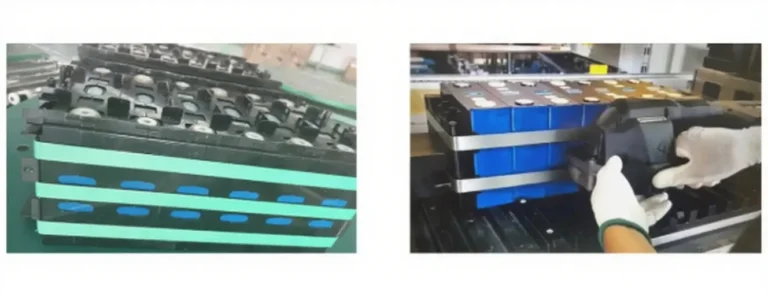
Where a chair must carry the maximum range in the smallest mass, lithium iron phosphate is still the better cell. A LiFePO4 pack at 160–190 Wh/kg gives a 10 kg pack about 1.7 kWh, while a comparable sodium-ion pack of the same mass delivers 1.0–1.6 kWh; for a user who crosses a city on a single charge, that gap is the difference between a 30 km and an 18 km range. Ultralight carbon-fibre chairs where every gram in the seat pan matters are another lithium case, and so is any chair where the pack has to fit a fixed compartment of tight volume — sodium-ion cells are typically larger-format prismatic with lower specific energy, so a drop-in replacement in a space-limited bay may simply not fit. A good supplier will tell you this rather than selling you the chemistry you did not need.
Sizing a Chair Pack from Real Range
Work backwards from the user’s worst day. If a chair travels at 6 km/h and the user needs 25 km with a headwind and two hours of stop-start shopping, the drive energy is roughly 22 Wh/km including rolling resistance and starts, so 25 km needs 550 Wh at the wheel. Add the controller and lighting load of about 30 W over 4 hours (120 Wh), then derate 20% for temperature and battery ageing margin, and you land near 820 Wh of usable capacity. At a usable 80% depth of discharge that is a 1 kWh pack, and at 100 Wh/kg for sodium-ion that is a 10 kg pack — versus around 6 kg for LiFePO4. Budget the extra 4 kg against the two benefits you gained: winter range that does not halve, and a pack that will still hold 80% after 4000 cycles, which at one charge a day is more than eleven years of service.
Controller Interface and BMS
Most chairs run a 24 V or 48 V DC bus from a potted battery with the controller inside the pack housing. If you are converting or replacing, the interface items are: a BMS that reports state of charge over a simple analogue output or CAN so the chair’s gauge means something; a thermal cutoff that opens below −10 °C for charging only, not for discharge; a discharge floor at 15–20% to protect the cells; and a charge termination that switches to a float at a chemistry-correct absorption voltage — roughly 3.6–3.7 V per cell for sodium-ion versus 3.65 V for LiFePO4. The pack must also carry a main contactor that is physically rated above the motor’s stalled current, because a chair that can be driven into a wall needs a breaker that will hold 200 A for the stall duration. And the enclosure has to be IP65 at minimum — a pack in a wheelchair gets rained on.
Pack Comparison for Mobility Use
| Criterion | Sodium-Ion | LiFePO4 | NMC | Sealed Lead-Acid |
|---|---|---|---|---|
| Specific energy | 100–160 Wh/kg | 160–190 Wh/kg | 200–260 Wh/kg | 40–60 Wh/kg |
| Capacity at −20 °C | 85–92% | ~70% | ~60% | ~45% |
| Cycle life | 3000–6000 | 4000–6000 | 1000–2000 | 400–700 |
| Pulse current capability | Good | Excellent | Excellent | Poor |
| Volume fit in tight bay | Poor–moderate | Good | Good | Good |
| Tolerance of charge faults | High | Moderate | Low | High but degrades |
Safety, Certification and Buyer Checklist
Mobility packs are classed as consumer and medical-adjacent products in many markets, which means the cell-level safety test and the transport documentation both matter. Ask the supplier for the cell model and its certification report, for a UN38.3 test summary if the pack ever ships by air or courier, and for IEC 62619 or IEC 62133-2 compliance depending on the market. Field evidence also matters: a pack that has been in service two years should show less than 5% capacity spread between cells and no case deformation. For fleet buyers the practical question is warranty terms in cycles and years, not months — a credible mobility-grade sodium-ion pack carries a 3-year or 1000-cycle warranty. Finally, insist on a physical state-of-charge display inside the chair; a user who cannot see the charge level is a user who will run the pack flat, and a flat pack at a kerb is the failure mode this whole article is trying to prevent. Broader guidance on how storage chemistries are tested and characterised is published by the U.S. Department of Energy battery energy storage programme office, and a mobility pack that goes into a vehicle or a chair also falls under the high-voltage vehicle safety regulations administered by the United Nations Economic Commission for Europe.
People Also Ask
Is sodium-ion safe enough for a wheelchair? Yes — sodium-ion has no flammable organic electrolyte in the same form as lithium and a much higher thermal runaway initiation threshold, so with a correctly rated BMS it is a safe mobility pack, particularly in cold and high-cycle service.
How far will a sodium-ion wheelchair go on one charge? Typically 20–30 km for a standard chair at 80 kg user weight, dropping to 14–18 km in sub-zero conditions where a lithium pack of the same size would give 12–15 km.
Can I swap my chair’s lead-acid battery for sodium-ion? Usually yes if the pack voltage matches (24 V or 48 V) and the new pack is no taller than the original bay; you will need a charger set for sodium-ion or LiFePO4 chemistry, and a check that the chair’s gauge reads voltage, not a manufacturer-specific state-of-charge curve.
Written by Karl at China Battery Technology. Request a quote.