Home Energy Storage for Construction Site Office: Quiet, Clean Power
Home Energy Storage for Construction Site Office: Quiet, Clean Power
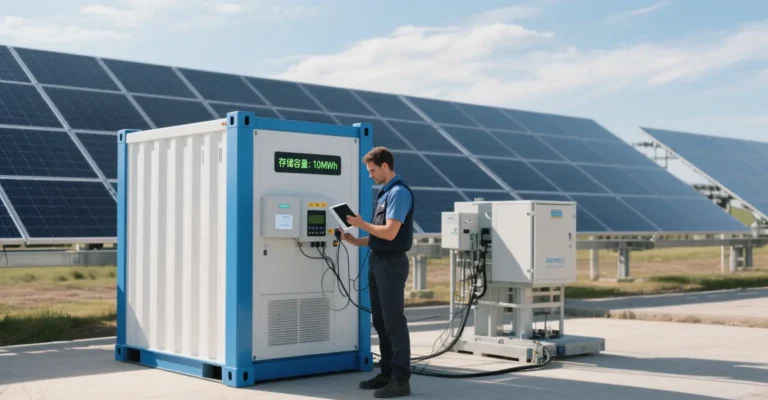
Construction site offices — the trailers where supervisors plan the day, engineers run models, and crews clock in — have traditionally run on diesel generators that rumble all day and bill you in fuel and maintenance. A home energy storage system paired with a small solar array or grid tie-in gives site offices quiet, emission-free power, cuts noise complaints from neighboring properties, and removes the daily fuel run. For a single office trailer or a cluster of them, the same all-in-one battery units used in homes scale neatly to jobsite duty, and many contractors now treat the battery as standard jobsite kit rather than a pilot.
Why Job-Site Offices Are a Good Fit
A site office draws a steady but modest load: lighting, laptops, printers, a microwave, phone chargers, and occasionally a space heater or small AC. That profile suits a battery better than a generator, because most of the draw is low and intermittent. The battery handles the baseline silently, and solar or a short generator top-up covers the peaks. Crews arrive to a powered, climate-comfortable office without idling a generator for ten hours, and the site planner no longer schedules refuel runs around concrete pours.
Typical Loads and Sizing
Size the battery to cover a full workday of office load plus a margin. A typical single trailer consumes 8–15 kWh per day. A 10–20 kWh all-in-one unit covers it with room for a meeting-room projector or a second monitor wall. If you run two or three trailers from one point, step up to 30–60 kWh and split it across a sub-panel. Remember to add the draw of any site WiFi, camera mast, or access-control system, since those run 24/7 and quietly drain a small pack overnight.
Generator vs Battery Comparison
| Factor | Battery + Solar | Diesel Generator |
|---|---|---|
| Noise | Silent | 70–85 dB |
| Daily fuel cost | Near zero (solar) | $15–$40 |
| Maintenance | Minimal | Oil, filters, service |
| Emissions | None on-site | CO2 + NOx |
| Uptime risk | Weather-dependent | Fuel supply |
Deployment Tips
Mount the battery on a skid or in a lockable enclosure rated for dust and rain (IP65), and keep it off the ground to avoid flood and theft. Put the office essentials — router, server, fridge, lights — on a backed-up sub-panel so a grid outage never stops payroll or plans. Choose a unit with remote monitoring so the project manager can check state-of-charge from the site dashboard, and schedule a weekly glance at cycle count to plan end-of-project resale or redeployment.
Cost and Payback
A jobsite battery is rarely a pure cost play in a single short project, but on multi-month builds or repeated deployments it wins. Avoided fuel, avoided generator service, fewer noise complaints, and a reusable asset that moves to the next site all stack up. Contractors who rotate one battery across several projects recover the purchase in two to four jobs, after which it is essentially free power with a strong story for sustainability-minded clients and bids.
Integrating With Site Power
The battery does not replace the site’s main supply; it supplements it. Tie the all-in-one unit into the office sub-panel through a transfer switch so the trailer pulls from the battery first and the grid or generator only when the pack is low. On sun-rich sites, a 1–3 kW solar array on the trailer roof or a nearby rack feeds the battery during the day, often covering the entire office load and leaving the generator for power tools only. This hybrid setup is what makes the economics work on longer projects, and it keeps a silent office running even when the grid drops mid-pour.
People Also Ask
Will a battery power tools too? Not the heavy ones — keep saws and compressors on grid or generator. The battery is sized for office and comms loads; adding tool duty needs a much larger pack.
Is it safe on a busy site? Yes, with a certified inverter, proper enclosure, and clear labeling. LiFePO4 chemistry is stable, and the unit sits away from traffic and welding sparks.
Written by Karl at China Battery Technology. Request a quote.