Home Energy Storage for Treehouses: Off-Grid Living Power
Home Energy Storage for Treehouses: Off-Grid Living Power
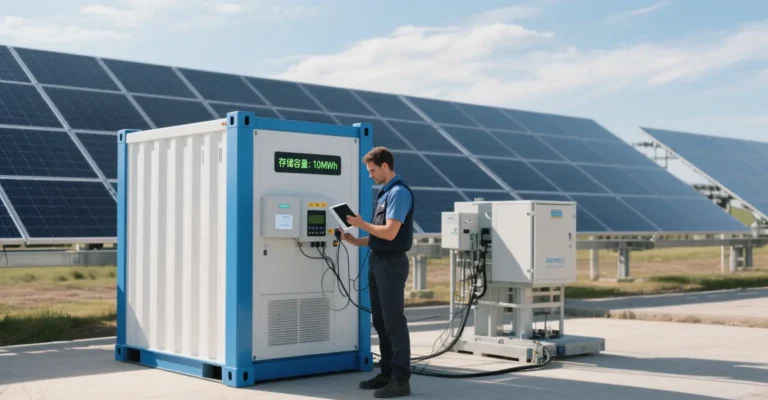
A treehouse changes every assumption that a normal home energy storage system is built around. There is no grid connection, the roof area is small and partly shaded, and every kilogram you add has to be carried up a ladder and supported by a living structure. That rules out the heavy wall-mounted units designed for a garage. What works instead is a compact low-voltage lithium pack with solar input, sized honestly against a small lighting and device load, installed low in the frame where the weight is easiest to carry.
Weight and Structure Come First
Before thinking about capacity, ask your builder what the platform can carry. Lead-acid banks of even modest capacity weigh several times more than an equivalent lithium pack, and that weight sits high in the structure where it does the most damage in wind. A 5 kWh lithium unit typically lands between forty and sixty kilograms and can be bolted low against the trunk or onto a purpose-built platform. Spreading the load across two smaller packs is often easier to engineer than one large box, and it gives you redundancy if one unit ever needs service.
Sizing Solar on a Small, Shaded Roof
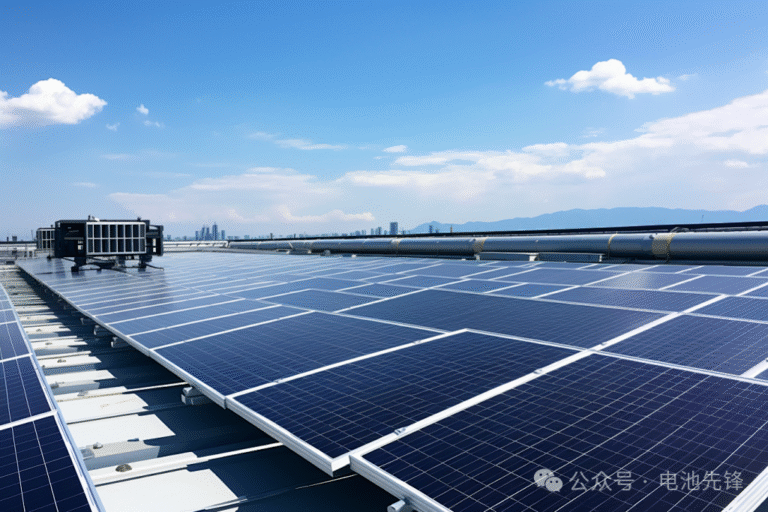
Treehouse roofs are small and frequently shaded by the canopy, so panel wattage is rarely the constraint you wish it were. Measure the unshaded area first and work backwards. Two or three high-efficiency panels in full sun will often outperform a larger array with branches crossing it all afternoon, because partial shading on a series string drags down the whole string. Consider ground-mounting panels in a nearby clearing and running DC back to the battery, which keeps the heat and the weight off the platform while still filling the pack every sunny day.
Chemistry Choice for a Timber Structure
Lithium iron phosphate is the only chemistry worth considering in a wooden building. Its stable cathode resists thermal runaway, it does not vent gas during normal operation, and it carries no risk of electrolyte spill onto timber. Sealed lead-acid alternatives are cheaper up front but heavier, shorter-lived and sensitive to deep discharge, which is exactly what happens when a string of cloudy days empties the bank. Lithium also accepts a partial state of charge without damage, so a pack that never quite reaches full is not being degraded.
Handling Winter and Seasonal Use
Many treehouses are used at weekends and left idle for weeks. Lithium has a very low self-discharge rate, so a pack left at eighty percent in autumn still has charge in spring, whereas lead-acid will have sulphated badly over the same period. The limiting factor is charging temperature: below 0 degrees Celsius the pack should not accept charge. Choose a unit with a low-temperature cut-off and, if the treehouse is used in winter, an integrated heater pad so that morning solar does not find a frozen battery.
Keeping Cable Runs Short and Losses Low
At low voltage, distance is expensive. A 48 V system running thirty metres to a panel array loses a meaningful share of the harvest in the cable unless the conductor is generously sized. Mount the battery as close as practical to the solar input and keep the inverter within a metre or two of the pack. If the treehouse has a 230 V appliance load, run the AC side the long distance instead, since stepping up the voltage first is what keeps the current and the losses manageable.
Storage Options for an Off-Grid Treehouse
| Criteria | Sealed Lead-Acid | Compact Lithium | Portable Power Station |
|---|---|---|---|
| Weight for 5 kWh | 150-200 kg | 40-60 kg | 45-70 kg |
| Usable capacity | 50% recommended | 90-95% | 90% |
| Cycle life | 500-1,000 | 4,000-6,000 | 800-3,000 |
| Self-discharge per month | 5-15% | 1-3% | 2-5% |
| Structural load | Problematic | Manageable | Manageable |
| Expandability | Limited | Modular | None |
What to Ask a Supplier
Ask for the usable capacity in kilowatt-hours rather than the nameplate figure, plus the maximum continuous and surge output. Confirm the operating temperature band for both charge and discharge, the ingress rating if the unit sits in a semi-open space, and whether packs can be paralleled later if your load grows.
People Also Ask
How much battery capacity does a treehouse need? A lighting, phone-charging and small appliance load typically draws 1.5 to 3 kWh per day, so a 5 kWh usable pack gives roughly two days of autonomy without sun.
Can I run a kettle or heater from a treehouse battery? Heating elements draw 2 to 3 kW and will drain a small pack quickly. Size the inverter and battery for that surge or use a gas appliance for boiling water.
Where should the battery be mounted? Low and close to the trunk or a load-bearing post, in a ventilated enclosure out of direct sun, with the shortest possible cable run to the solar input.
Does the system need a generator as well? In climates with long cloudy winters a small generator is cheap insurance, but for weekend and three-season use a correctly sized lithium pack and array is usually enough.
Written by Karl at China Battery Technology. Request a quote.