Semi-Solid-State Battery for Crematorium Backup Power
Semi-Solid-State Battery for Crematorium Backup Power
A cremator is not a load that tolerates a gap. Once a cycle begins, the burners, the induced-draft fan and the emissions monitor all have to run to completion — and a semi solid state battery sized for that duty gives a crematorium enough stored energy in a small plant room to finish every cycle, without the noise and exhaust a diesel set would bring to a memorial building.
What a Cremator Actually Demands From Backup
The electrical profile is dominated by the machine itself. A modern cremator draws a hard surge at light-up as the main burner and its forced-draft fan come up, then settles into a long plateau while the afterburner holds temperature at the level the permit requires. Add the charger, ash handling, chapel lighting and cooling, and you have a site whose average consumption is modest but whose peaks are sharp and unpleasant for the utility connection.
Why an Interrupted Cycle Is Not an Option
Two pressures make continuity non-negotiable. The regulatory one is straightforward: an aborted burn can breach the residence-time and temperature conditions written into the operating permit, and operators are generally required to log and report the event. The other is less quantifiable but matters just as much to the families and staff involved — a cycle stopped partway through is a distressing outcome, and an operator’s reputation rests on it never happening. That is the argument for storage rather than a cheaper standby arrangement.
Why Semi-Solid-State Fits a Tight Urban Site
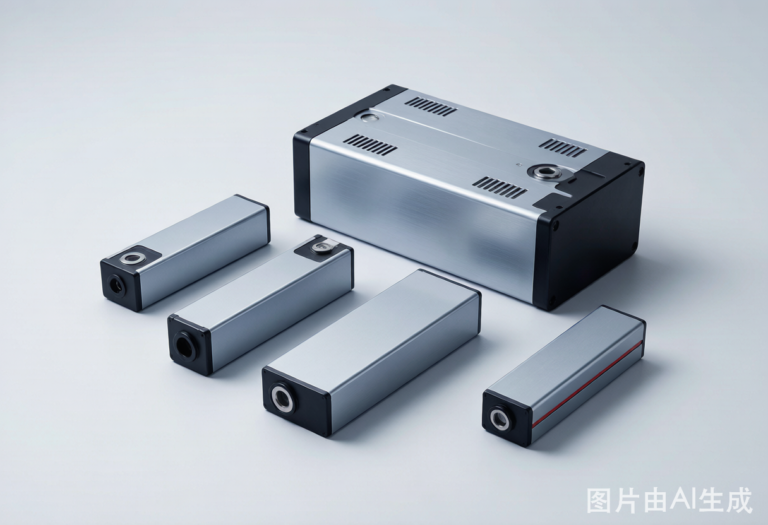
Most crematoria are constrained buildings. They sit on chapel grounds or in older municipal complexes where there is no spare yard for a generator enclosure and no appetite for fuel storage, exhaust routing or a weekly run-test that can be heard in the chapel. Semi-solid-state cells carry more energy per unit volume than conventional lithium iron phosphate, so a bank that covers the full cycle plus building services occupies a cupboard rather than a room, and it can be sited indoors on a concrete slab with ordinary ventilation.
Sizing Around the Afterburner, Not the Average
The mistake we see most often is sizing to the monthly consumption figure. The right number is the energy needed to complete the longest credible cycle from the moment the mains drops, plus the building’s essential services for the same window. In practice price a bank large enough for two full cycles with margin, because a second cycle starting behind the first is the realistic worst case on a busy day.
Emissions Monitoring and the Control Load
The continuous emissions monitoring system, the programmable controller, the operator’s terminal and the network link are small loads that matter disproportionately. They are the equipment that documents compliance and, if they lose power mid-cycle, the record is broken even when the burn itself survives. These circuits should be on the protected bus with a defined autonomy of their own.
Installation and Ventilation in Memorial Buildings
Placement is usually the hardest part of the job. The bank wants a dry, ventilated, lockable space reasonably close to the distribution board and away from public circulation. Confirm floor loading, provide a dedicated circuit with correct protection, and keep the inverter’s audible output away from the chapel and the committal rooms.
| Attribute | Semi-solid-state | LFP lithium | Lead-acid | Diesel genset |
|---|---|---|---|---|
| Energy in a small plant room | High | Medium | Low | — |
| Cycle life at daily use | Long | Long | Short | — |
| Noise during operation | Silent | Silent | Silent | Loud |
| Indoor siting practicality | Good | Good | Poor (gassing) | No |
| Routine maintenance | Minimal | Minimal | High | High |
| Exhaust / fuel handling | None | None | None | Required |
What to Ask a Supplier
Ask for the autonomy calculation written out in hours at a stated load, not a headline kilowatt-hour figure. Ask which circuits are on the protected bus and how the changeover behaves during a burn. Ask for the cell maker’s name and the cycle-life warranty in writing, with the depth of discharge and temperature it assumes. Ask about remote monitoring, and ask who services the installation in your region — a battery that no one will attend is not a backup system.
People Also Ask
How much backup does one cremator need? Enough to complete the longest credible cycle from the moment the mains fails, plus essential building services. Price two full cycles with margin rather than sizing to the site’s average consumption.
Can the bank go inside an existing chapel building? Usually yes, in a dry, ventilated, lockable space near the distribution board. Floor loading and circuit protection are the two items to confirm first.
Is it quieter than a diesel generator? Yes. Storage is silent, produces no exhaust, and needs no fuel storage or periodic run-testing — all of which matter on a site where services run through the day.
What happens to the emissions monitor during an outage? It should stay on the protected bus with its own defined autonomy, so the compliance record survives the event. Confirm this is in the design before signing.
Written by Karl at China Battery Technology. Request a quote.