Lithium Battery for Conveyor Systems: Mobile Material Handling Power
Lithium Battery for Conveyor Systems: Mobile Material Handling Power
Fixed conveyors run off mains power, but the growing fleet of mobile, telescopic and modular belt conveyors does not. Parcel hubs, quarries and construction sites move these machines several times a day, and trailing cables quickly become a trip hazard and a scheduling constraint. A qualified lithium battery manufacturer can specify a pack that delivers a full eight-hour shift of belt duty on one charge, with the burst current needed for loaded start-up.
Why Conveyor Loads Suit Lithium
A conveyor is a deceptively hard load. A loaded belt restart can pull three to five times the running current for several seconds, and the motor driver sees that spike dozens of times per shift. Lithium cells deliver that surge without the voltage sag that makes lead-acid packs brown out and trip the drive. Because the pack sits at partial state of charge for most of the day and never discharges deeply, cycle life is driven by calendar age rather than throughput, which is exactly where LiFePO4 performs best.
Sizing a Conveyor Battery
Start from the running power of the drive motor, add a margin for the loaded-start surge, then multiply by the shift length in hours. A 1.5 kW belt running eight hours needs roughly 12 kWh of usable energy, which after depth-of-discharge and temperature derating means a nominal 15 kWh pack. Specify the continuous and five-second peak current separately — undersizing the peak is the most common field failure, not undersizing the energy.
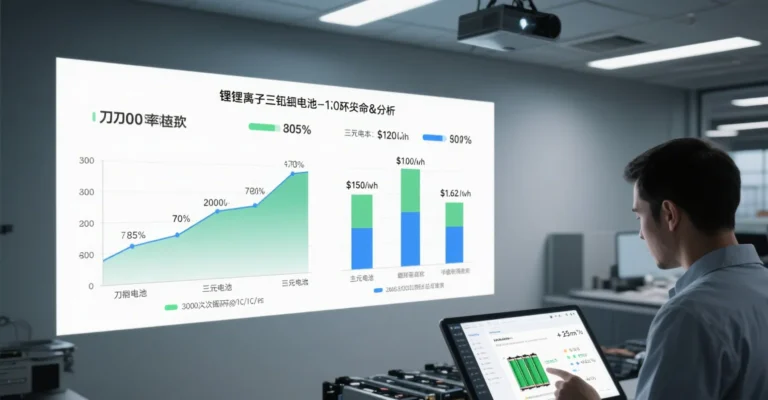
Conveyor Power Comparison
| Attribute | LiFePO4 | NMC | Lead-Acid |
|---|---|---|---|
| Usable energy (DoD) | 90% | 90% | 50% |
| Surge capability | High | Very high | Low |
| Weight for 15 kWh | ~130 kg | ~95 kg | ~450 kg |
| Opportunity charging | Yes | Yes | No |
| Shift-life expectancy | 8–10 yrs | 6–8 yrs | 1.5–3 yrs |
Environment and Mechanical Build
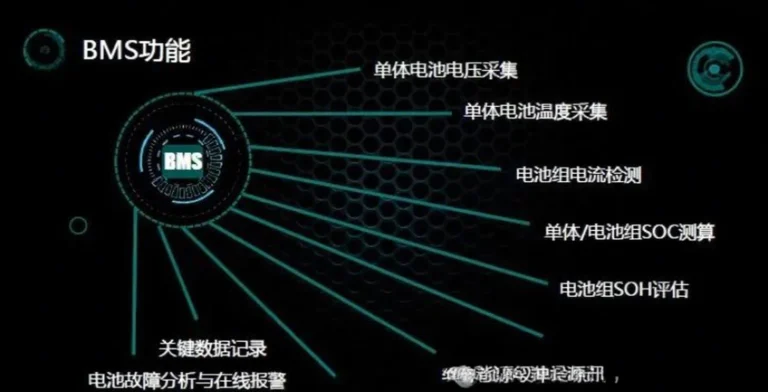
Quarry and aggregate conveyors generate constant vibration and abrasive dust, so the pack needs a welded or riveted steel enclosure, IP66 sealing, and cells potted or clamped against resonance. Internal heaters matter for cold-morning starts below 0 °C, because charging a frozen lithium cell causes permanent plating damage. Confirm the BMS cuts charge — not just discharge — below 0 °C, and that it reports state of charge over CAN or RS485 to the machine controller.
Choosing the Right Supplier
Ask for surge-current test data at the actual ambient temperature range, not a room-temperature datasheet. A credible manufacturer will also provide cell traceability, UN38.3 transport documentation, and a service plan that covers firmware updates and cell-balancing checks. Modular packs that let you swap a single faulty module beat sealed units that must be shipped whole.
People Also Ask
Can a lithium pack run a conveyor for a full shift? Yes. A correctly sized LiFePO4 pack covers eight to ten hours of typical belt duty, and opportunity charging during breaks extends that indefinitely.
What voltage platform should I choose? 48 V and 80 V cover most mobile conveyors. Standardising on one platform across the fleet simplifies chargers, spares and technician training.
Is lithium safe in dusty quarry environments? With an IP66 sealed steel enclosure, LiFePO4 chemistry and a BMS with cell-level fusing, lithium meets the safety requirements of aggregate and mining sites.
Deployment Example and Payback
A parcel distribution centre running twelve telescopic belt loaders replaced its lead-acid banks with 15 kWh LiFePO4 packs three years ago. The measurable gain was not energy cost — it was availability. The previous fleet lost roughly forty minutes per machine per day to cable management and mid-shift battery swaps; the lithium fleet charges during two scheduled breaks and finishes the shift with 35% reserve. Over three years the site avoided two full replacement cycles of lead-acid and recovered the capital difference in twenty-two months.
What to Put in the Enquiry
Send the motor rating, loaded-start surge current, daily operating hours, ambient temperature range, and the mounting envelope. Those five numbers let a manufacturer quote a pack that will not be undersized on peak current — the failure mode that ends most first-generation conveyor electrification projects.
Can the pack be charged from a standard industrial socket? Yes. Most mobile conveyor packs accept 230 V or 400 V three-phase input through an on-board charger sized for a full recharge in four to six hours.
Written by Karl at China Battery Technology. Request a quote.