Lithium Battery for Electric Excavators: Zero-Emission Digging Power
Lithium Battery for Electric Excavators: Zero-Emission Digging Power
Urban job sites are tightening the rules on diesel. Night work near hospitals, indoor demolition, tunnel headings, and low-emission zones all push contractors toward battery-electric machines, and the excavator is the first unit most fleets convert. Choosing the right lithium battery manufacturer matters more here than in almost any other application, because an excavator combines brutal duty cycles, constant vibration, and a full shift of expected runtime in a chassis that has no spare room.
What Makes an Excavator Duty Cycle Hard
An excavator does not draw a steady current. Each dig-swing-dump cycle produces a short, heavy pull as the boom breaks ground, then partial regeneration as the arm lowers and the house swings back. On a 5-tonne machine those spikes can hit three to four times the average draw, repeating several hundred times an hour. A pack designed only for average power will sag, trip on overcurrent, or age prematurely from constant micro-cycling around a narrow state-of-charge band.
The practical answer is to specify continuous and peak discharge separately, then verify the peak at the temperature the machine actually runs at. A pack rated 2C continuous and 4C for ten seconds at 45 °C internal temperature behaves very differently from one rated at 25 °C on a bench.
Why LiFePO4 Dominates This Segment
Lithium iron phosphate has become the default for construction equipment for three reasons. First, thermal stability: a machine that works next to hot hydraulics and occasionally gets struck by falling debris cannot use a chemistry that runs away easily. Second, cycle life: 3,000 to 6,000 full cycles means the pack outlives the typical seven-year rental life instead of needing a mid-life replacement. Third, tolerance for partial charging, which is how machines are really used — topped up at lunch, plugged in overnight, never treated gently.
Where energy density is the binding constraint — very compact machines or mini excavators with tight counterweight envelopes — NMC still earns a place, at the cost of tighter thermal management and shorter life.
Excavator Battery Chemistry Comparison
| Attribute | LiFePO4 | NMC | Lead-Acid |
|---|---|---|---|
| Cycle life | 3000–6000 | 1000–2000 | 300–500 |
| Peak discharge | 3–5C | 4–6C | 1–2C |
| Energy density | Medium | High | Low |
| Thermal safety | High | Medium | High |
| Vibration tolerance | High (prismatic) | Medium | Low (plate shedding) |
| Cost per usable kWh | Low | Medium | High over life |
Sizing for a Full Shift
Start from measured hydraulic energy, not nameplate horsepower. A 3.5-tonne electric mini excavator typically consumes 6–10 kWh per hour of active trenching, less in pipe-laying or grading work where the machine idles between moves. For an eight-hour shift with a 30-minute lunch top-up, most fleets land on 60–100 kWh of usable capacity, sized so the pack never drops below 15% state of charge. Leave headroom for capacity fade so the machine still finishes a shift in year five.
Charging Strategy On Site
Job sites rarely have DC fast charging. A realistic plan pairs a 22 kW AC onboard charger for overnight replenishment with an optional 60–150 kW DC input for opportunity charging during breaks. Specify the pack to accept 1C charge at moderate temperature and to derate gracefully rather than refuse charge when cold — a machine that will not take power at 07:00 in February costs a full day.
Mechanical and Environmental Requirements
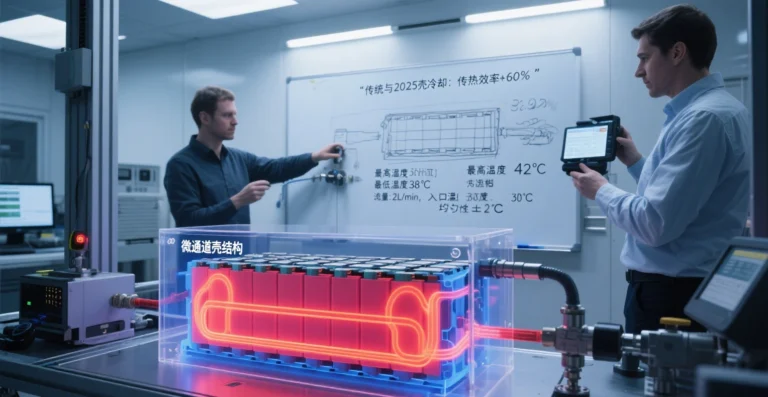
Insist on IP67 or better enclosures, prismatic cells in a compression fixture, and validated vibration testing to IEC 60068-2-6 or an equivalent construction profile. Busbars should be laser-welded, not bolted, because bolted joints loosen under continuous shock. Liquid cooling is usually justified above 50 kWh; below that, forced-air with a well-designed plenum often suffices.
Integration and Diagnostics
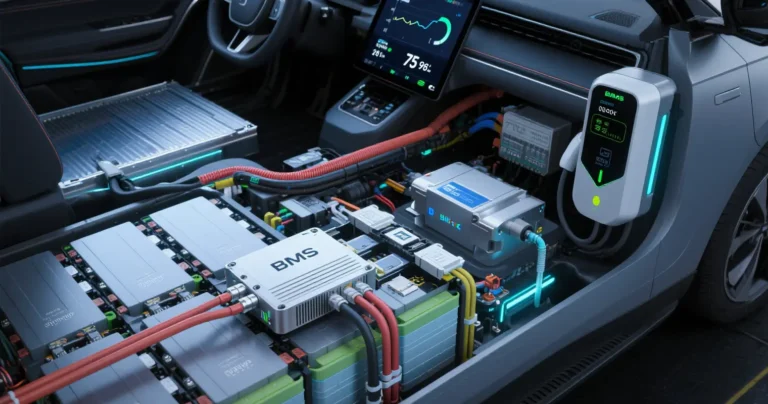
The battery management system must publish state of charge, state of health, cell delta, and fault codes over CAN so the machine display and the fleet telematics both see them. Contractors increasingly want remote visibility of pack health across a rental fleet; a supplier that can expose clean CAN messages and provide a DBC file saves weeks of integration effort.
Choosing the Right Supplier
Ask for cell-level traceability, UN 38.3 and IEC 62619 documentation, and evidence of at least one deployed construction program. Request the derating curves rather than the headline numbers, and confirm spare-module availability for the next decade. A pack that cannot be serviced module-by-module in the field will strand the machine for weeks.
People Also Ask
How long does an electric excavator battery last? A well-specified LiFePO4 pack runs 3,000–6,000 cycles, which for one full charge per working day is roughly 10–20 years of service before it reaches 80% of rated capacity.
Can an electric excavator work a full eight-hour shift? Yes, with 60–100 kWh of usable capacity for a compact machine, plus a short opportunity charge at lunch on heavy trenching days.
Is lithium safe on a construction site? LiFePO4 in an IP67 enclosure with a redundant BMS, cell fusing, and validated crush and vibration testing is already standard on production electric machines from major OEMs.
Written by Karl at China Battery Technology. Request a quote.
Related reading: Lithium Battery for Electric Winch: Cranking Power Without the Voltage Drop