Lithium Battery for Hydraulic Power Unit: Cordless Pressure on Demand
Lithium Battery for Hydraulic Power Unit: Cordless Pressure on Demand
A hydraulic power unit (HPU) is only as mobile as its energy source. Corded 230 V pumps tether crews to an outlet, and petrol units bring fumes, noise and pull-start frustration to jobs done indoors or underground. Switching to a lithium battery for hydraulic power unit duty solves all three at once, and after fifteen years supplying packs as a lithium battery manufacturer we now see battery HPUs on crimping tools, rescue spreaders, rail tensioners, small presses and pipe benders that used to be strictly corded.
Why Hydraulics Are a Hard Load for Batteries
Hydraulic pumps do not sip current. A 1.5 kW motor building 700 bar draws its rated power the moment the relief valve is closed, and the inrush at start-up can be four to six times running current for a few hundred milliseconds. That profile punishes weak cells. Voltage sags, the controller sees an undervoltage fault and the tool stops mid-stroke. The fix is not simply more capacity — it is a pack designed around continuous and peak discharge, with cells and busbars chosen for current rather than for headline watt-hours.
Getting the Voltage and Capacity Right
Most portable HPUs land on 48 V. That keeps current low enough for reasonable cable gauge while staying under the 60 V DC threshold that triggers stricter electrical-safety rules in many markets. A 48 V 30 Ah LiFePO4 pack stores about 1.5 kWh — enough for roughly 60 to 90 full crimp cycles on a cable lug tool, or about 45 minutes of intermittent pumping on a rescue set. Crews who work a full shift away from the van usually carry two packs and hot-swap rather than oversizing a single heavy unit.
Duty Cycle Matters More Than Runtime
Buyers ask for runtime, but hydraulic work is bursty. A crimper runs eight seconds and rests two minutes; a rescue spreader runs hard for ninety seconds during an extrication. What matters is whether the pack can deliver 2C to 3C bursts without thermal drift. We specify cells with a continuous rating at or above the pump’s stalled current, then verify with a real tool rather than a lab load bank — hydraulic pumps generate current spikes a resistive load never reproduces.
Chemistry Comparison for HPU Packs
| Option | Typical pack (48 V) | Peak current | Cycle life | Best fit |
|---|---|---|---|---|
| LiFePO4 prismatic | 20–50 Ah | 3C burst | 3,000–5,000 | Daily industrial use, fixed-site trolleys |
| NMC pouch | 15–30 Ah | 5C burst | 1,200–2,000 | Rescue tools where weight is critical |
| Lead-acid AGM | 33–55 Ah | 1C, heavy sag | 300–500 | Legacy retrofit only |
| Petrol engine HPU | n/a | n/a | Service every 50 h | Open-air sites with no indoor work |
Thermal and Enclosure Design
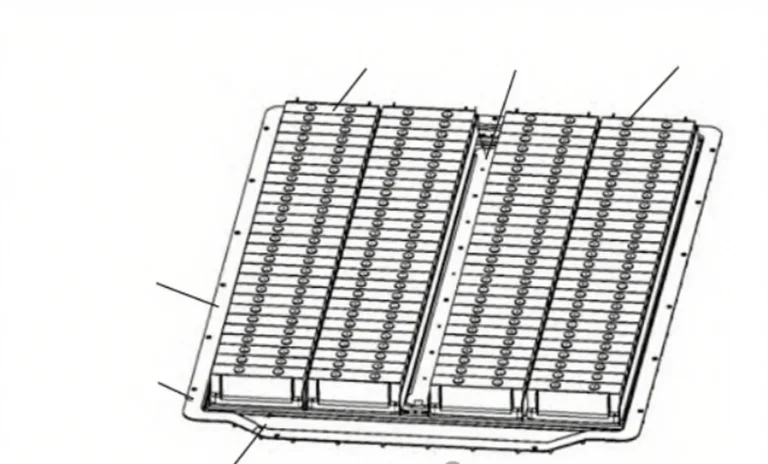
Hydraulic oil warms, the pump housing warms, and if the pack shares that housing it inherits the heat. We keep the battery in a separate ventilated compartment with at least 15 mm air gap from the reservoir, and we ask integrators to place the temperature sensor on the cell face rather than the case wall. On outdoor units an IP65 enclosure with a breather membrane stops condensation cycling water into the terminals — the single most common warranty issue we see on field-repaired packs.
BMS Features Worth Paying For
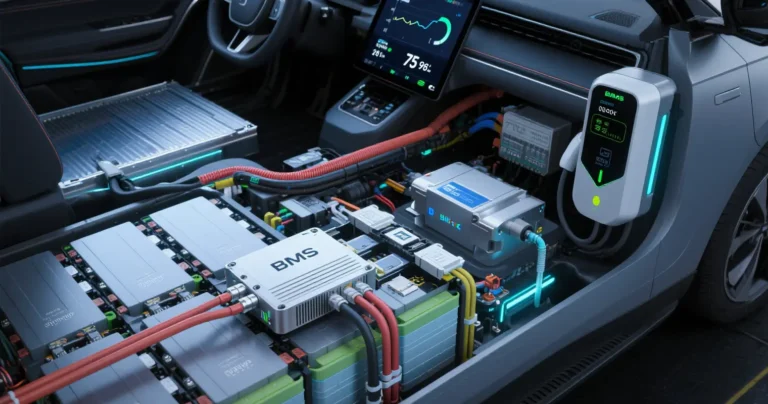
A basic BMS protects the cells; a good one protects the job. Look for a high-current cutoff with a short-circuit response under 300 microseconds, a pre-charge circuit so the pump controller’s capacitors do not weld the contactor, CAN or RS485 reporting so the tool display can show real state of charge, and a low-temperature charge lockout. Below 0 °C, charging LiFePO4 plates lithium metal onto the anode and permanently steals capacity, so a heated pack or a simple lockout is mandatory for winter work.
Certification and Transport
Packs above 100 Wh ship under UN3480 or UN3481 and need a UN38.3 test report. For tools sold into Europe, add IEC 62133-2 for the cells and an EMC assessment for the pump controller. Rescue services in particular will ask for the full test file during tender, so we supply UN38.3, MSDS and CE documentation with every industrial pack rather than leaving it to the integrator to chase.
Total Cost Over Five Years
A 1.5 kWh LiFePO4 pack costs more upfront than two AGM blocks, but AGM at 1C sag will not run the pump properly and dies in about eighteen months of daily cycling. Over five years the lithium pack is typically 40 to 55 percent cheaper once replacement blocks, downtime and disposal are counted — and that ignores the labour saved by never dragging an extension reel across a live site again.
People Also Ask
Can I retrofit a lithium pack into an existing 48 V hydraulic power unit? Usually yes, provided the pump controller accepts the slightly higher fully charged voltage of 54.6 V and you fit a pre-charge circuit. Send us the controller datasheet and we will confirm before quoting.
How many crimps does a 48 V 30 Ah pack deliver? Around 60 to 90 full cycles on a typical 400 kN cable lug crimper, depending on die size and ambient temperature.
Does the pack need cooling? Forced cooling is rarely needed if the enclosure is vented and separated from the oil reservoir. Sealed packs running above 3C bursts benefit from an aluminium cold plate.
What warranty is realistic? Three years or 2,000 cycles is standard on our LiFePO4 industrial packs, with capacity retention above 80 percent at end of term.
Written by Karl at China Battery Technology. Request a quote.
Related reading: Lithium Battery for Electric Winch: Cranking Power Without the Voltage Drop