Sodium-Ion Battery for Grid Balancing: A Practical Guide
Sodium-Ion Battery for Grid Balancing: A Practical Guide
Grid operators need cheap, durable storage for frequency regulation, peak shaving, and renewable smoothing. Sodium ion battery technology is moving from lab to substation because sodium is abundant, non-critical, and performs well in cold climates — all attractive for bulk stationary storage where weight is irrelevant.
Why Sodium for the Grid
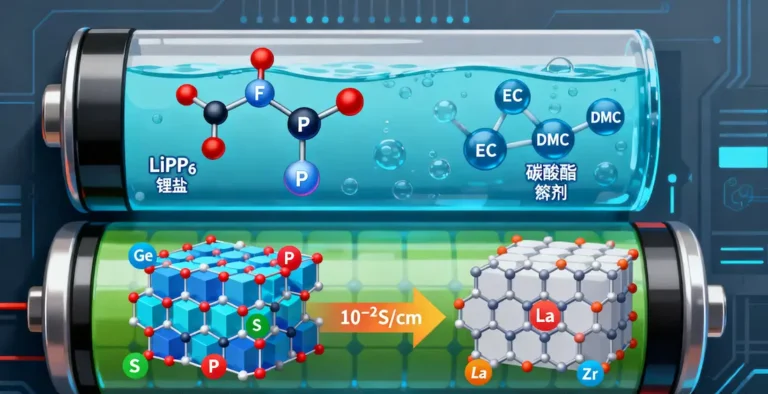
Sodium-ion cells use aluminum-current-collector, iron/manganese cathodes and hard-carbon anodes — materials far cheaper and more geographically secure than lithium, nickel, and cobalt. For grid-scale boxes measured in megawatt-hours, material cost dominates, so sodium’s edge grows with project size. Cycle life of 3000–6000 at 80–90% depth suits daily balancing duty.
Where Sodium Beats Lithium
Sodium-ion keeps >90% capacity at −20 °C without heaters, a real advantage for wind and solar sites in cold regions. It is also intrinsically safer — no dendritic lithium, higher thermal runaway threshold — which simplifies enclosure and fire-suppression design for urban and indoor containers.
Grid Storage Comparison
| Attribute | Sodium-Ion | LFP (LiFePO4) |
|---|---|---|
| Energy density | Low–Medium | Medium |
| Material cost | Lower | Medium |
| Cold performance | Excellent | Good (needs heat) |
| Cycle life | 3000–6000 | 4000–7000 |
| Supply risk | Low | Medium |
Sizing a Balancing Project
For frequency regulation, prioritize power rating and round-trip efficiency; for peak shaving, prioritize usable energy and duration (2–4 hours typical). Sodium’s lower density means a larger footprint, so site the container where land is cheap. Pair with a PCS that supports synthetic inertia and fast setpoint response to capture ancillary-service revenue.
People Also Ask
Is sodium-ion ready for utility scale? Yes — multi-megawatt demonstrations and early commercial containers are operating in Europe and Asia as of 2025–2026.
When should I still choose lithium? When space is tight or you need maximum energy density per cubic meter; LFP remains the safer pick for compact, high-energy sites.
Written by Karl at China Battery Technology. Request a quote.
Related reading: Sodium-Ion Battery for Offshore Platforms: Safer Remote Power