Home Energy Storage System for Basements: Sizing and Setup
Home Energy Storage System for Basements: Sizing and Setup
Basements are the most underused real estate in a detached house, and they are also the best home in which to put a home energy storage system. The floor is concrete, the temperature is stable, the electrical panel is usually nearby, and the whole assembly stays out of the living space. Getting it right is mostly a question of sequencing: size the bank against real metered consumption, respect the spacing and ventilation rules that apply to a basement room, and plan the comms and cutoff topology before the concrete is finished.
Why the Basement Beats the Garage
A garage is often the default because it feels like a utility space, but it carries a hard cost: your car. Charging an electric vehicle in the same room as a battery cabinet exposes both to a shared thermal and impact event, and garage floor drainage means cold water and de-icing salts can reach the cabinet base. A basement or a dedicated utility closet inside the heated envelope keeps the pack at a benign ambient temperature for most of the year, which measurably extends cycle life, and it keeps the batteries within a few metres of the main distribution board where the inverter and transfer switch live. The practical outcome is a shorter, better-documented wiring run and a simpler permit.
Sizing Against Real Metered Consumption
Do not size from an online estimator. Pull twelve months of interval data from the utility portal, or install a plug-in monitor on the main panel for two weeks, and build an hourly load profile. Then separate the loads by priority. Critical loads, which need to survive an outage, are typically the refrigerator, a few lighting circuits, internet and a router, the sump pump if you are in a snowmelt region, boiler controls, and a few receptacles. A conservative critical load for a 150 square metre home is 1.2 to 2.5 kW. Non-critical loads such as the dryer, the oven, an electric vehicle charger and a pool pump are scheduled for daytime solar or shifted to off-peak. With a 6 to 10 kW array, a 10 to 20 kWh lithium iron phosphate bank gives two to four hours of critical coverage and meaningful self-consumption of the solar surplus. Installed cost per kilowatt-hour for that size of system is tracked in the clean transport research published by BloombergNEF, which is a useful reality check before you commit to a larger design.
Chemistry and Module Format for a Basement
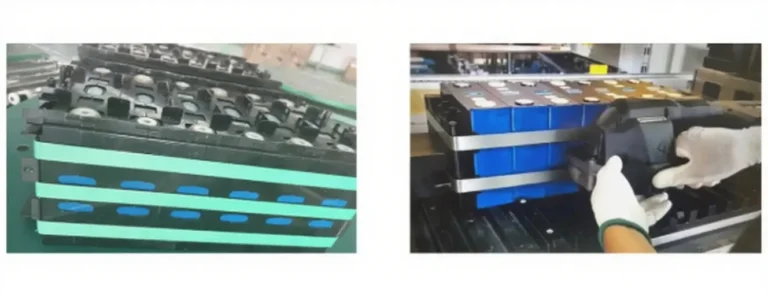
Lithium iron phosphate is the default for stationary home storage because it is the safest common chemistry and it tolerates the partial-state-of-charge cycling that daily solar self-consumption demands, typically 6000 to 8000 cycles at 80% depth of discharge. The question in a basement is form factor. A stacked cabinet system, where modules click into a rack, is easy to service module by module and spreads weight over a wide footprint. A floor-standing all-in-one unit with the inverter built in reduces the component count and the comms, at the price of replacing a whole unit if the inverter board fails. Rack-mount modules behind a closed cabinet are the preference among installers who service their own equipment, because a single bad module can be swapped without touching the DC breakers.
Room Conditions: Ventilation, Flooding and Temperature
Basement rooms flood, so this is the single biggest risk to a residential installation. Raise the cabinet on a galvanised plinth 100 to 150 millimetres above the finished floor, route any drain in the room to a wet vacuum point rather than straight under the cabinet, and consider a small integrated sump pump with a float that is wired to shut the main circuit down. Ventilation is less dramatic than code promoters suggest: most lithium iron phosphate cabinets are passively cooled and only need the room’s normal air exchange, but you must not trap the cabinet in a sealed cupboard with no intake and no clearance. Maintain at least 100 millimetres of clearance at the rear for cabling, and keep the pack away from the humidifier, the water heater and any uninsulated cold-water pipe that will sweat.
Electrical Topology and Codes
The standard layout is a solar array and a battery bank on the DC side of a hybrid inverter, or an AC-coupled setup where a battery-specific inverter sits downstream of the solar inverter. In a basement the DC runs are the reason to get the plan right: keep DC cable runs short and sized for the continuous current with a 1.5 factor, use torque-marked lugs, and put a DC rated fuse or breaker within 150 millimetres of the battery positive terminal. Every cabinet needs a visible, labelled disconnect reachable without opening a panel, and the whole installation should be covered by a permitted, approved design. The relevant standards in most markets are UL 1970 for stationary storage, UL 9540 for system-level fire performance and its installation companion UL 9540A, and IEC 62619 for the cells. Installers in the United States also design against the hybrid inverter and interconnection guidance issued by the U.S. Department of Energy, which is where most of the commissioning pitfalls show up.
Basement Bank Configuration Options Compared
| Configuration | Footprint | Hot-swap module | Best use |
|---|---|---|---|
| Stackable iron phosphate rack | 0.3 to 0.4 sq m | Yes, module level | Servicing by the owner |
| All-in-one floor cabinet | 0.5 to 0.7 sq m | No, whole unit | Rented homes, minimal comms |
| DIY rack with 51.2 V modules | 0.4 to 0.6 sq m | Yes, with spare module | Large 30 kWh plus banks |
| Wall mounted powerwall style | 0.1 sq m on wall | No | Tight basement with low headroom |
| Base load cabinet plus workshop unit | 0.8 sq m total | Mixed | Homes with a workshop or studio |
Choose the configuration before you choose the brand. If you intend to service the bank yourself, a rack with individually fused modules and a visible DC disconnect beats any sealed unit, because a single failing module can be isolated in minutes. If the landlord or the managing agent controls access, buy the all-in-one with the inverter built in and accept the replacement cost. Wall mounted units are tempting in a low headroom basement, but they hang on wall anchors that many older masonry walls cannot take, and the fixing will not be rated for a wet-room vibration load.
Fire Spacing and Emergency Access
Naming the local rule matters more than quoting a national one. In the United States a listed residential storage cabinet typically needs to maintain separation from flammable materials and from ignition sources; many jurisdictions apply a 1.5 metre Separation Distance between a storage cabinet and a property line or an occupied opening, determined by the test report for the specific cabinet. In Europe the equivalent documents are the national wiring regulations plus the fire services’ own guidance, and in Australia the rules are set by state fire authority publication PISA 2016 for lithium storage. Whatever the local requirement, design for serviceability: leave clear floor in front of the cabinet to remove a module, never store paint thinners or petrol within the separation zone, and give the home insurer the installation report and the serial numbers.
Commissioning and Ongoing Monitoring
Commissioning is where hidden faults show up. Before energising, verify every DC torque to spec with a calibrated driver, confirm insulation resistance, and walk the whole string looking for a single module sitting 20 millimetres out on the rack. Bring the system up in stages: first on grid with the battery in self-consumption mode for a full day, then disconnect grid with a critical-load subpanel to prove the transfer time, then re-enable grid and watch the state of charge curve against the forecast. Leave the manufacturer’s monitoring app connected and set alerts for any single module drifting above or below the bank by more than about 2%, because a balancing fault that starts as a 3% delta becomes a customer complaint within a year.
People Also Ask
Will a basement battery add damp to the room? No, provided the cabinet is sealed and raised. Lithium packs generate no gas in normal operation and only negligible heat, so a damp basement is a corrosion concern for the cabinet and the racks rather than a performance problem. Wipe terminals annually with a nylon brush if the room regularly exceeds 70% relative humidity.
How much floor space does a 15 kWh bank need? A typical stackable iron phosphate cabinet of that size occupies about 0.3 to 0.45 square metres of footprint, roughly the area of a small refrigerator, at a height under 1.8 metres. Two cabinets leave a service aisle of at least 750 millimetres.
Can the system back up the whole house, not just critical loads? Yes, but only if the subpanel and the inverter rating support it. Whole-house backup needs roughly 8 to 15 kW of continuous inverter output and a bank sized around 20 to 40 kWh, which changes the basement from a tidy cabinet into a genuine utility room with cooling and careful planning.
Written by Karl at China Battery Technology. Request a quote.