Battery Application Solutions for Textile Machines: Portable Power for Loom and Knitting Cells
Battery Application Solutions for Textile Machines: Portable Power for Loom and Knitting Cells
A modern weaving floor looks nothing like a factory of the 1970s and yet still depends on low-voltage power in places no fixed outlet will ever serve: the pattern shop, the doby frame’s auxiliary cart, the portable gantry that lifts bobbins between machines, and the lightweight tools used to thread a warp. Running extension cords across an aisle where operators push loaded trolleys is both a trip hazard and a maintenance burden. This is the gap that battery application solutions are built to close: a correctly specified pack gives the textile engineer clean, quiet, vibration-tolerant power at the machine, with the cycle life and safety case that an industrial floor requires rather than the consumer-grade behaviour of a handheld tool battery.
The Load Profile of a Textile Cell
Understanding the load is the whole specification exercise. A needle loom’s let-off and take-up drives draw short, repeating torque pulses of 200–600 W at 24–48 V, thousands of times per shift. A circular knitting machine’s servo motors run continuously at 80–300 W with a steady duty cycle. A portable gantry crane lifting 500 kg works in 30-second bursts of 3–5 kW. A pattern Shop threading lamp and clipper works at 15 W all day. These three profiles call for three different packs, and the common mistake is to buy one big generic battery and connect it to all of them. Pulse-load duty favours a pack with low internal resistance and a BMS that does not fold under a 3C transient; continuous duty favours capacity and thermal management; burst duty favours peak power and a pack that can be swapped between shifts. Classifying the profile first avoids roughly 80% of the failed installations we get asked to diagnose.
Voltage Platform: Why 24 V Still Dominates Textile
Textile machinery inherited a 24 V DC control convention from PLC I/O, and it persists because it is safe to work on, cheap to wire, and compatible with the safety relay logic that interlocks a moving machine. Building battery packs at 24 V nominal (eight LiFePO4 cells in series, or seven to eight sodium-ion cells) keeps the harness existing, keeps the operator’s isolation standard unchanged, and avoids the arc-flash conversation that comes with a 400 V system on a shop floor. The current consequence is real: at 24 V and 500 W the cabling carries roughly 21 A, so the pack and the wire must be sized for sustained thermal load rather than peak. Where a gantry or a large loom needs 5 kW, the practical answer is a 48 V pack feeding a step-down regulator at the drive, not a 24 V pack pushed to 200 A. That hybrid architecture keeps the safe low-voltage control layer and still delivers the power the drive actually asks for. Clean DC from the pack also matters on a weaving floor, because large induction motors starting repeatedly next to a machine can push voltage dips onto shared distribution that upset sensitive controller logic; the IEA electricity system analysis records how distribution-side power quality problems propagate into end equipment, which is exactly why an isolated battery pack can be worth more than a larger mains cable.
Shop Floor Power Comparison
| Textile application | Pack bus | Continuous load | Peak burst | Autonomy target |
|---|---|---|---|---|
| Needle loom let-off drive | 24 V | 300 W | 600 W (3C) | 10 h shift |
| Circular knitting servo | 48 V | 250 W | 700 W | 12 h |
| Portable gantry crane | 48 V | 60 W idle | 5 kW for 30 s | 8 lifts/shift |
| Pattern shop tools | 20 V | 15 W | 120 W | All day |
| Bobbin trolley mobility | 24 V | 90 W | 400 W | 6 h |
Enclosure and Contamination Requirements
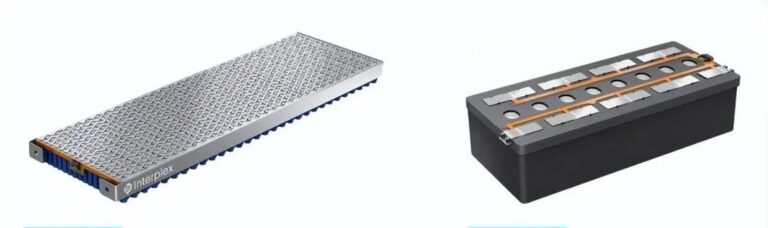
Textile floors are a harsh environment in a specific way: cotton fly, sizing starch, oil mist and heavy vibration. Fly accumulates on connectors and inside cooling paths, which is an ignition source in the wrong conditions, and sizing starch is hygroscopic so it holds moisture against the pack housing. Specify IP54 as an absolute minimum for packs bolted to a machine, IP65 where the unit sits beside a wet spinning frame, and demand potted or conformal-coated PCBs inside the BMS. Vibration matters more than most buyers think: a pack mounted on a loom frame sees broadband 5–200 Hz motion, so cell connections must be welded rather than spot-crimped, the busbar must be a flexible lead rather than a rigid stub, and the housing must not rely on a single plastic clip for retention. Our standard industrial pack for this sector is a steel or aluminium IP65 case with welded nickel-tab cell connections, a gasketed lid, and four bolted vibration mounts.
Battery Application Solutions for Mobile Gantry and Lift Tables
The heaviest textile duty is the mobile gantry that lifts bobbins and roll beams. It needs 3–8 kW for seconds at a time, repeated perhaps forty times a shift, and it must not sag the lift halfway through a raise. Two design rules apply. First, size for the burst, not for the average: a pack rated 200 Ah sounds absurd for a 5 kW lift but is the honest answer because the lift duty is genuinely high-average when you count the hoist motor efficiency and the repositioning travel. Second, fit a hard disconnect that separates contacts before the BMS folds, so a low cell never blocks a lift that is holding a 500 kg beam — operators’ safety depends on the contactor releasing mechanically. A 48 V 150 Ah LiFePO4 pack typically weighs 58 kg and lifts its load fifty times per charge, which for a two-shift plant is one swap per week.
Charging Infrastructure and Shift Swapping
Charging strategy decides whether the pack programme succeeds. A central charging room with a racked charger per pack is the cleanest option and the easiest to make safe, because the heat, the gassing question and the maintenance all stay out of the production aisle. A distributed option is a dock at each machine, which reduces swap time but puts chargers where fly and lint collect. Whichever you choose, plan for opportunity charging: a knitting cell can top up 20% during a pattern change, and a loom’s bobbin change gives 90 seconds of usable charge. Chargers should be temperature-compensated — a pack docked in an unheated machine room at 8 °C will otherwise be charged to a wrong absorption voltage — and they should be interlocked so a pack cannot be charged while still mounted on a running machine, which is a real and surprisingly common accident.
Total Cost of Ownership and Retrofit Margin
The business case is simple and durable. A corded tool approach on a forty-machine floor means 40–60 trailing cables, an annual replacement budget for damaged cables and connectors, and a visible trip-injury exposure. A battery approach means one charging room, roughly one pack per two machines in service inventory, and a predicted pack life of six to eight years in this duty because cycling is shallow and the operating temperature is controlled. Labour saving alone typically pays for the programme inside eighteen months when you count machine downtime avoided during cord faults. The retrofit margin that determines whether a battery application solution is accepted on the floor is ergonomic rather than financial: the pack must be liftable by the operator, mount in under two minutes, and reach full charge before the next shift starts.Pack cost per kWh has fallen steadily for a decade as volume manufacturing matured, a trend BloombergNEF tracks in its annual outlook, and it means the payback case for a textile floor improves every year the programme is deferred.
People Also Ask
Can a battery pack replace the mains supply on an existing loom? Not for the main drive motor directly — keep the mains for the primary drive and use the pack for auxiliary drives, control, lighting and material-handling carts, which is where the cord problem actually is.
How do you stop lint and fly from entering the battery housing? Use a gasketed IP65 enclosure with filtered ventilation, mount the pack so airflow is not blocked by the machine frame, and schedule a compressed-air clean every fortnight; lint accumulation is the single biggest cause of pack failure on textile floors.
Which chemistry suits a vibration-heavy weaving floor best? LiFePO4 for its stable plateau under sustained vibration and long cycle life, with sodium-ion where the pack sits idle for weeks between production runs and cold-store temperature varies widely.