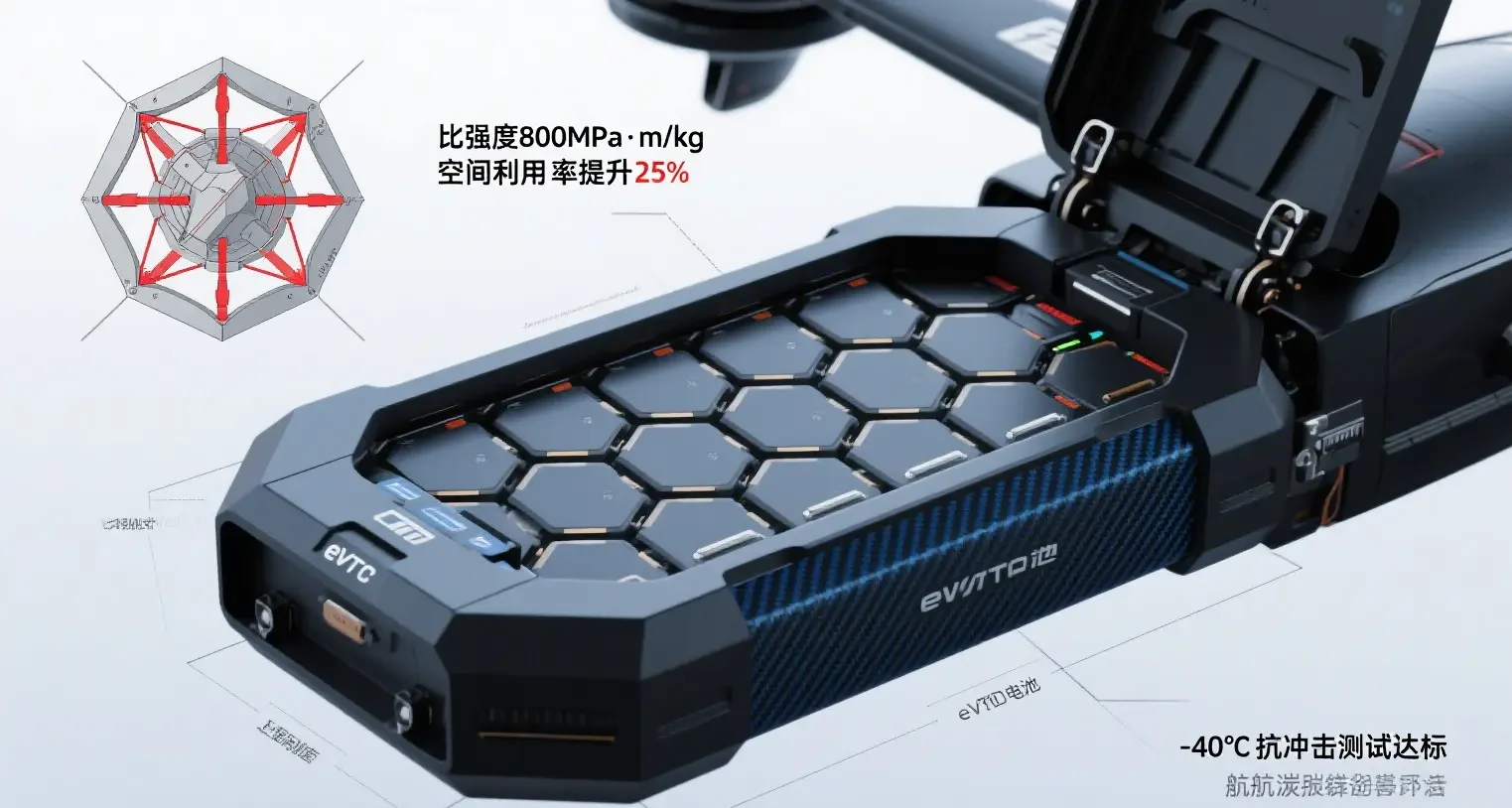
eVTOL Battery Pack Design for 2025
I. eVTOL Battery Pack Requirements for 2025: Deep Binding of Weight, Range and Cell Type
GM simulation studies (based on Simulink models) reveal the core logic of eVTOL battery pack selection: the need to customize the design to the weight and mission profile of the vehicle.
| Model | Battery Design Focus | Key findings |
|---|---|---|
| 1000kg (2 seats) | Energy density priority | A 350Wh/kg soft-pack battery can achieve 80kWh of system energy, supporting a cruising range of 93km; however, redundancy is limited (only 2-4 independent battery packs). |
| 2500kg (4seats) | Energy-power balance | Medium-sized soft-pack battery (50Ah) is the optimal solution: 180km cruising range + 6 independent battery packs for redundancy |
| 3000kg (5seats) | Power output bottleneck | With a hovering power of 900kW, existing high-energy soft-pack/high-power cylindrical batteries face challenges such as sudden voltage drops or insufficient range. |
Subversive conclusion:
- Reducing cruise power by 10kW ≈ increasing range by 6.7km (5 times more effective than reducing hovering power)
- Reason: Cruise energy consumption accounts for more than 70% (hovering only accounts for 15%), optimizing aerodynamic efficiency is the key to breakthrough in range.
II. Flight Power Curve: Engineering Response to Five Stages of Dynamic Loads
eVTOL batteries need to maintain stable output under complex operating conditions, with exponential fluctuations in power demand at each stage:
| flight phase | Power characteristics | Challenges for batteries | Design response |
|---|---|---|---|
| hover over | Peak power(600kW@2500kg) | Requires 4-6C ultra-high rate discharge | Improve power density and optimize collector design |
| climb | 平Average power = cruising × 115% | Continuous high loads lead to accelerated temperature rise. | Enhanced thermal management transient response capability |
| cruise | Stable but accounts for over 70% of energy consumption | SOC mid-range voltage stability | Optimizing BMS Energy Estimation Accuracy |
| decline | Power = Cruising × 65% | Reduced thermal management redundancy under low power requirements | Maintain minimum cooling flow rate |
| landing hover | Same takeoff hover, but lowest SOC | Risk of sudden voltage drop at low SOC (e.g., reaching a cut-off voltage of 2.75V) | Reserve discharge margin, design safety buffer zone |
Engineer’s Insight: Landing hover is a safety red line to ensure that the 20% contingency still meets the power requirements at the lowest SOC.
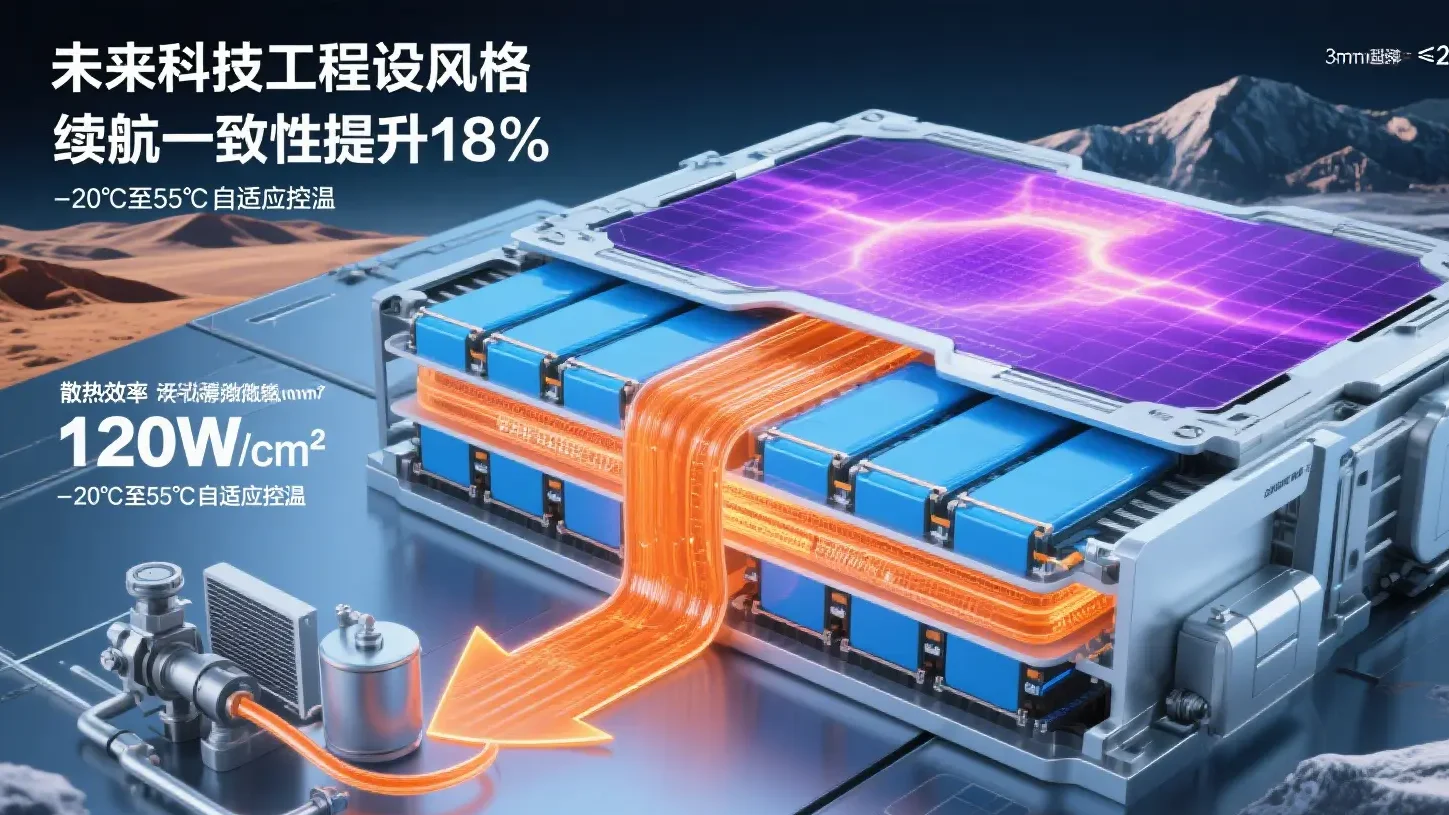
III.Vibration environment: eVTOL battery’s “stealth killer” and protection strategy
Vibration source analysis (far more than automotive conditions)
(1) Rotor harmonic disturbance:
3 paddles @300 RPM → 15Hz fundamental frequency + higher order harmonics (100Hz-1kHz)
(2) Transmission to the battery compartment through the drive shaft system
Pneumatic load coupling:
Hovering ground effect (Z-axis shock) + forward wing-rotor interference (X/Y-axis turbulence)
(3) Structural resonance trap:
Airframe intrinsic frequency 6-35Hz overlapping with rotor harmonics → vibration amplitude amplified by 3-5 times Amplification 3-5 times
Vibration damage mechanisms and cell type differences
| Cell type | Main failure modes | Risk level |
|---|---|---|
| square battery | Stress concentration at edges → Shell cracks/electrolyte leakage | ★★☆ |
| soft-pack battery | Interlayer micro-short circuit + aluminum-plastic film bulging | ★★★ |
| Cylindrical battery | Core shaft pierces diaphragm → Internal short circuit | ★★☆ |
Pack level vibration protection design
(1) Structural vibration resistance:
Frequency avoidance design: avoid 6-35Hz resonance band through modal analysis
High fatigue strength material: titanium alloy bracket (fatigue limit ≥500MPa)
Gluing filling: epoxy resin + ceramic particles composite material, vibration damping 40%.
(2) Electrical Reliability:
Laser welding instead of bolting: 90% reduction of loosening risk points
Anti-micro-wear connectors: Au-Ni alloy plating + self-locking mechanism
(3) Thermal Management Anti-Vibration:
Flexible Cooling Piping: Silicone Conduit + Quick-Plug Self-Sealing Fittings
Phase Change Material (PCM) Buffer Layer: Paraffin-Graphene composite material fills cell gap
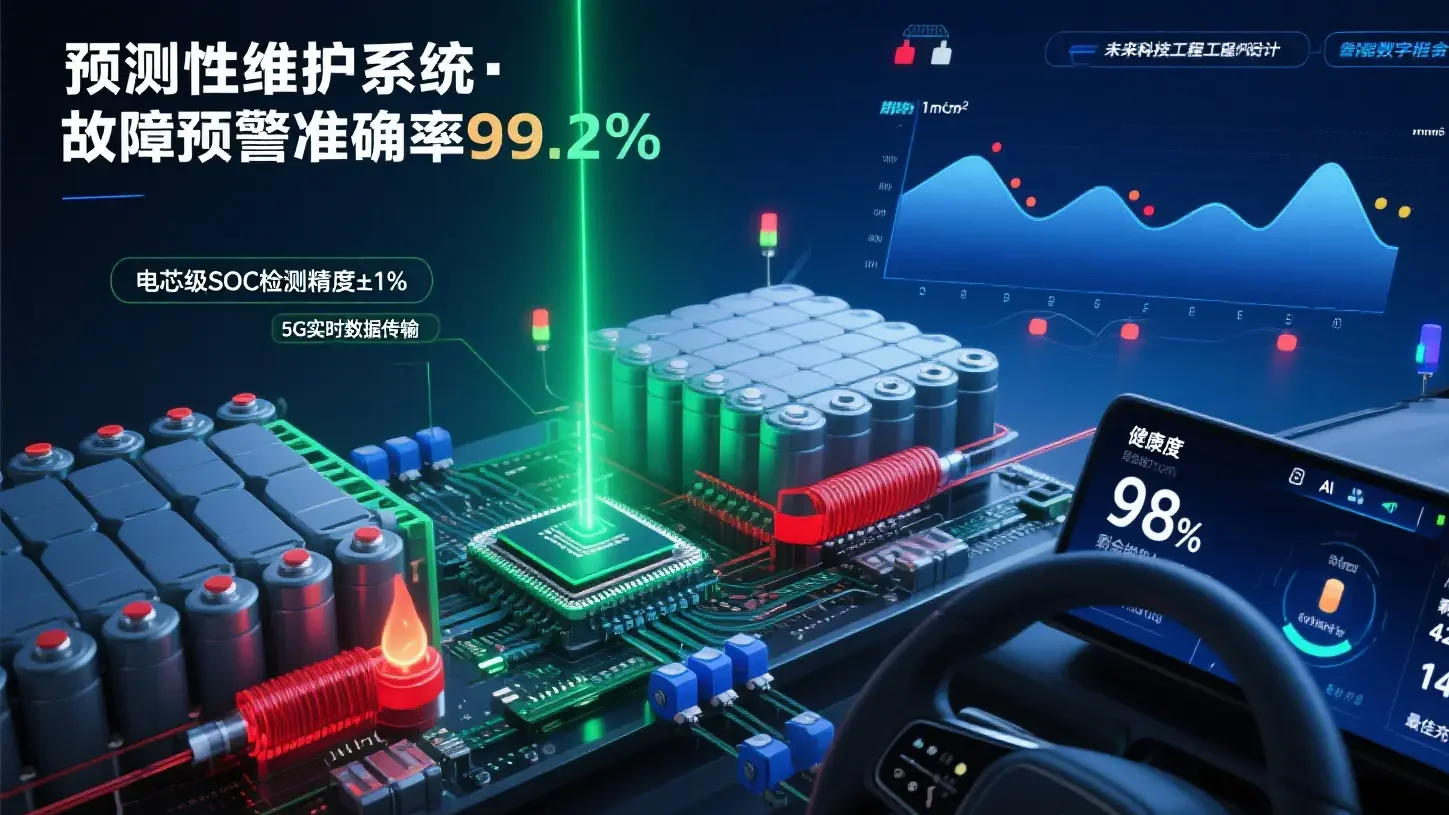
IV. System Design Recommendations: From Cell Selection to Verification System
Cell Selection Decision Tree
A, Vehicle weight –> ≤1500kg –> High energy soft pack battery –> Redundant design: ≥6 independent battery packs
B, Vehicle weight –> ≤1500-2500kg –> Medium size soft pack battery –> Redundant design: ≥6 independent battery packs
C, Vehicle weight –> ≥2500kg –> High hovering power? –> Medium size soft pack battery –> Redundant design: ≥6 independent battery packs
D, Vehicle weight –> ≥2500kg –> high hovering power? –> High power cylindrical battery –> Redundant design: ≥6 independent battery packs
Optimization of key design parameters
Voltage platform:
- Light aircraft (1000kg): 400V (safety priority)
- Medium/heavy aircraft (≥2500kg): 800V (reduced current/heat loss)
Power allocation:
- 71% Flight Power | 20% Emergency Reserve | 4% System Losses | 5% High Rate Unavailable Power
A New Paradigm for Vibration Verification
Traditional automotive vibration standards (e.g. SAE J2380) are not applicable to eVTOL and need to be adopted:
- Multi-axis synchronous shaker: simulates X/Y/Z + rotational composite stresses
- Spectral acceleration: compresses 10-year lifetime vibration to 3 weeks of testing (ISO 19453-3 draft)
- Online diagnostics: real-time monitoring of internal short-circuit signs (voltage dips/temperature anomalies) during vibration
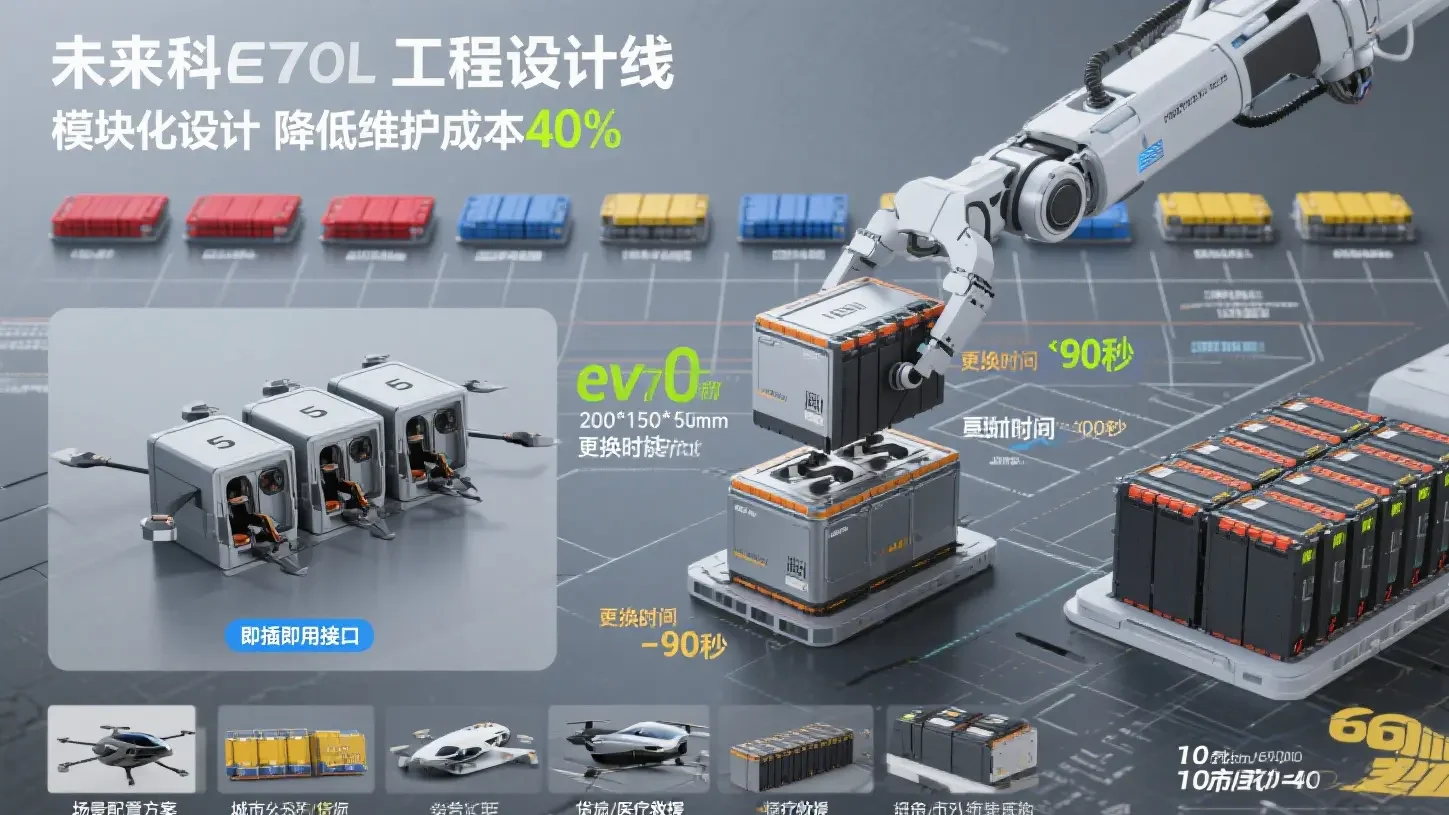
Future breakthrough direction: engineering decoupling of triangular conflicts
1. Material Innovation:
Silicon Carbon Anode Pre-Lithiation: Compensate for Active Lithium Loss, Enhance Low SOC Power Capability
Solid Electrolyte Coating: Inhibit vibration-induced dendrite growth (e.g. Synventive SERS Technology)
2. Structural revolution:
honeycomb sandwich battery pack: integrated load-bearing and vibration-damping functions (30% weight reduction).
3. Intelligent O&M:
Digital Twin Alert: Predicts loose bolts/cracked weld joints based on historical vibration data.
Engineers assert that the ultimate form of the eVTOL battery pack will be an integrated “energy-power-mechanical” triple function design – when the battery box is both an energy carrier and a wing structure with built-in vibration dampers, the trillion-dollar market for urban air transportation will truly take off! The trillion-dollar market of urban air transportation can really set sail!
Related guide: Battery Application Solutions
Related reading: Explosive Demand for Energy Storage Lithium Batteries Drives Restructuring of LFP Battery Industry Supply-Demand Dynamics